CM Saini Calls for Tree Planting on Nature Conservation Day
Synopsis
On World Nature Conservation Day, 28 July 2026, Haryana Chief Minister Nayab Singh Saini called on state residents to plant trees, conserve natural resources, and commit to building a clean and green environment, framing nature as the greatest legacy for future generations.
Key Takeaways
Haryana Chief Minister Nayab Singh Saini extended greetings on World Nature Conservation Day, 28 July 2026 .
He described nature as 'the greatest legacy for the safe future of generations to come'.
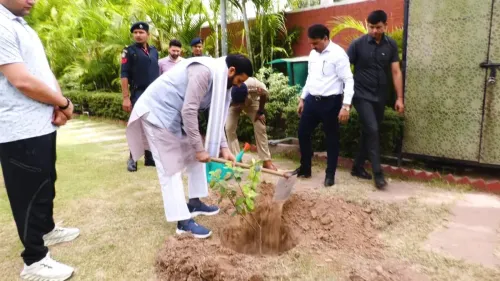
Citizens were urged to plant saplings, protect green cover, and participate in building a clean environment.
India pledged at COP26 (2021) to reach net-zero by 2070 and expand forest cover — a target state drives are meant to support.
The National Afforestation Programme (2000) and the Green India Mission provide policy frameworks for such state-level conservation efforts.
Monsoon season makes late July the prime window for tree plantation campaigns across Haryana .
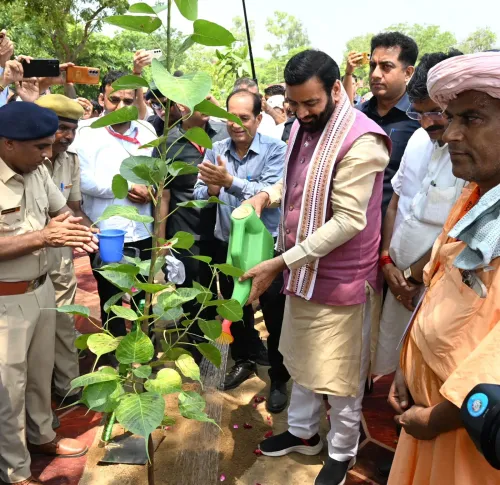
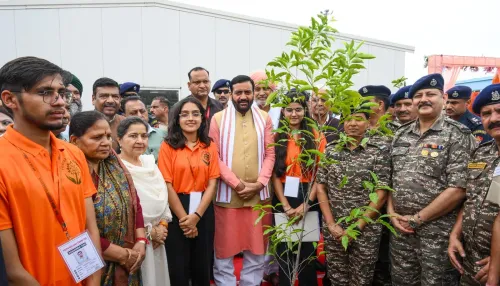
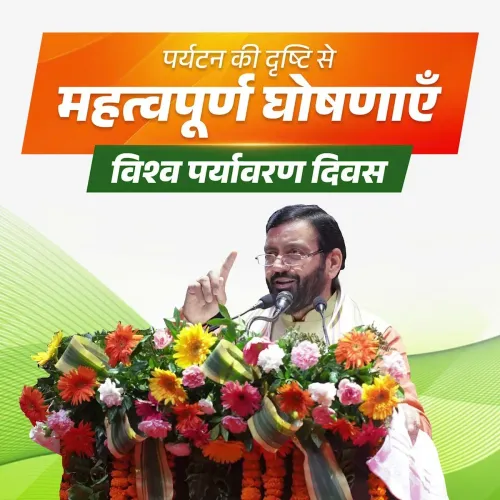
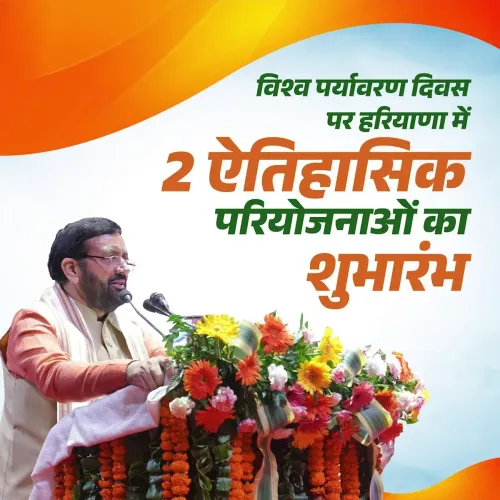
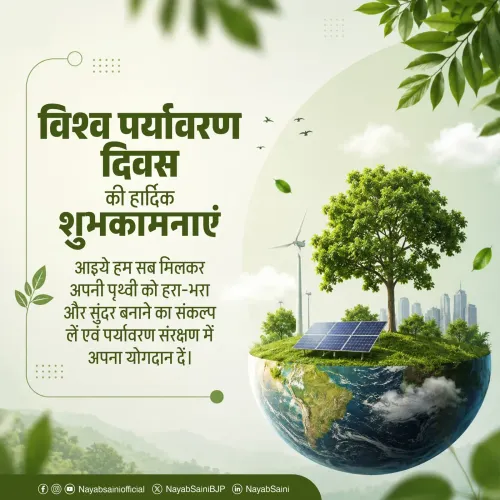
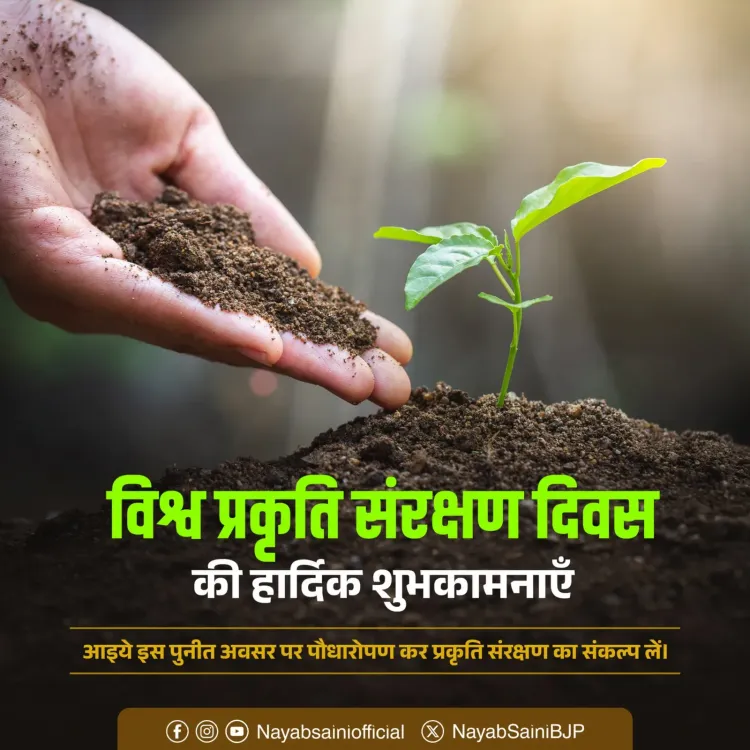
Haryana Chief Minister Nayab Singh Saini on Tuesday, 28 July 2026 extended greetings to all residents of Haryana on the occasion of World Nature Conservation Day, urging citizens to plant trees, protect green cover, and take collective responsibility for preserving the environment for future generations.
Writing in Hindi, CM Saini stated: 'प्रकृति केवल हमारे जीवन का आधार नहीं, बल्कि आने वाली पीढ़ियों के सुरक्षित भविष्य की सबसे बड़ी धरोहर भी है' ('Nature is not merely the foundation of our lives, but the greatest legacy for the safe future of generations to come'). He called on people to pledge active participation in building a 'clean and green environment' by planting as many saplings as possible and ensuring their upkeep.
Context
World Nature Conservation Day is observed every year on 28 July to raise awareness about protecting natural resources and biodiversity. The day serves as a reminder that healthy ecosystems underpin food security, water availability, and climate stability. Leaders at state and national levels across India routinely use the occasion to reinforce environmental messaging among their constituencies.
Haryana, a northern Indian state with extensive agricultural land and a growing industrial corridor, faces dual pressures on its natural resources — intensive farming practices and rapid urbanisation. Both factors make conservation messaging particularly relevant to the state's long-term sustainability goals.
Policy Backdrop
India launched the National Afforestation Programme in 2000 to restore degraded forest lands through participatory management. At COP26 in 2021, India pledged to achieve net-zero emissions by 2070 and committed to expanding forest and tree cover as a key plank of its climate strategy. State governments, including Haryana, are expected to align their afforestation drives with these national commitments.
The Green India Mission, one of eight missions under India's National Action Plan on Climate Change, provides a framework for states to expand green cover and improve ecosystem services. Monsoon season, which coincides with late July, is traditionally the most active period for state-level tree plantation drives across the country.
Stakeholders and Impact
The appeal is directed at all residents of Haryana, framing environmental stewardship as a 'shared responsibility' rather than a government-only mandate. By invoking the welfare of future generations, CM Saini positions conservation not as a regulatory obligation but as a civic and moral duty. Farmers, urban communities, and industrial stakeholders in the state are all implicated in the call to action.
Environmental groups and local bodies are likely to use such high-profile messaging to mobilise community plantation events during the ongoing monsoon window, when soil conditions are most suitable for sapling survival.
What's Next
The statement may precede or accompany state-organised plantation drives coordinated with district administrations across Haryana. Integration with central schemes such as the Green India Mission and the National Afforestation Programme could give such drives both funding and institutional backing. Observers will watch whether the symbolic message translates into announced targets for saplings planted or forest cover expanded in the state during this monsoon season.
Point of View
When tree plantation success rates are highest — suggests the statement may be a precursor to a formal state-level afforestation drive rather than a standalone gesture. By framing conservation as intergenerational duty rather than policy compliance, Saini appeals to both rural farming communities and urban voters simultaneously. The message also keeps Haryana's green credentials visible at a moment when the state's industrial growth is drawing increasing scrutiny on environmental grounds.
NationPress
28 Jul 2026
Frequently Asked Questions
What is World Nature Conservation Day and when is it observed?
World Nature Conservation Day is observed every year on 28 July to promote awareness about protecting natural resources, biodiversity, and healthy ecosystems worldwide.
What did Haryana CM Nayab Singh Saini say on Nature Conservation Day 2026?
CM Nayab Singh Saini called on all Haryana residents to plant trees, protect green cover, and take collective responsibility for the environment, describing nature as the greatest legacy for future generations.
What is the Green India Mission?
The Green India Mission is one of eight national missions under India's National Action Plan on Climate Change, designed to expand forest and tree cover and improve ecosystem services across states.
How does Haryana's tree plantation drive connect to India's climate goals?
India pledged at COP26 in 2021 to achieve net-zero emissions by 2070 and expand forest cover; state-level plantation drives in Haryana contribute to meeting these national afforestation targets.
Why is monsoon season significant for tree plantation in Haryana?
Monsoon rains improve soil moisture, significantly increasing sapling survival rates, making July and August the most effective months for tree plantation campaigns across Haryana and the rest of India.