CM Saini Calls Haryana a Development Model for Punjab
Synopsis
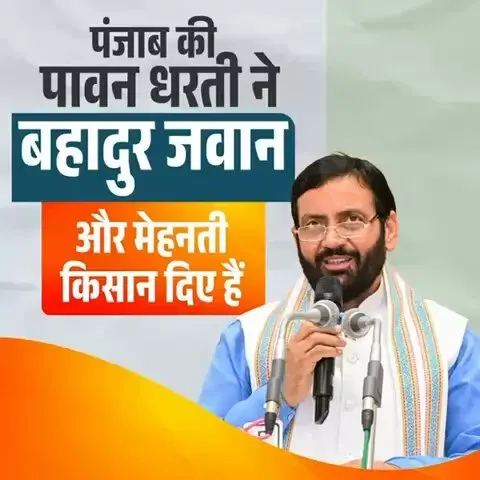
Haryana Chief Minister Nayab Singh Saini declared his state a development model for Punjab on 20 November 2026, reigniting the long-running economic and governance comparison between the two states carved from the same territory in 1966.
Key Takeaways
CM Nayab Singh Saini posted on X on 20 November 2026 calling Haryana 'a model of development for Punjab.' Haryana was separated from Punjab under the Punjab Reorganisation Act of 1966 .
By the early 2000s , Haryana's per capita income had surpassed Punjab's, driven by rapid industrialisation.
Saini became Chief Minister in March 2024 after Manohar Lal Khattar's resignation.
The statement follows a pattern of Indian state leaders using inter-state comparisons to highlight their governance record.
Upcoming state economic surveys will offer concrete data to test Saini's claim.
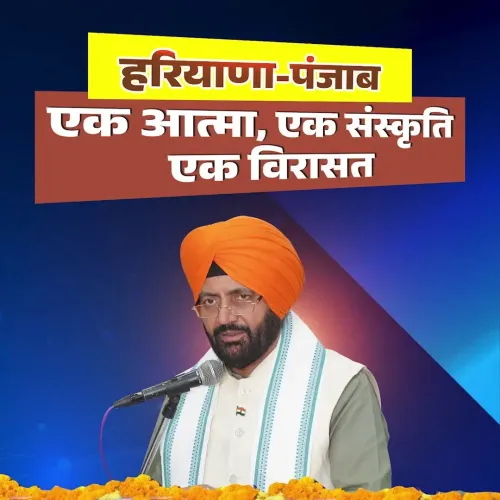
Sixty years after being carved from the same territory, Haryana Chief Minister Nayab Singh Saini has drawn a sharp, public line between his state's trajectory and that of its neighbour — posting on X on Friday, 20 November 2026 that 'Haryana: A Model of Development for Punjab.'
A Sibling Rivalry Rooted in 1966
The two states share more than a border. Haryana was carved out of Punjab on 1 November 1966 under the Punjab Reorganisation Act, splitting a single administrative unit into two distinct entities with separate governments, separate budgets, and — over the following decades — sharply diverging economic fortunes.
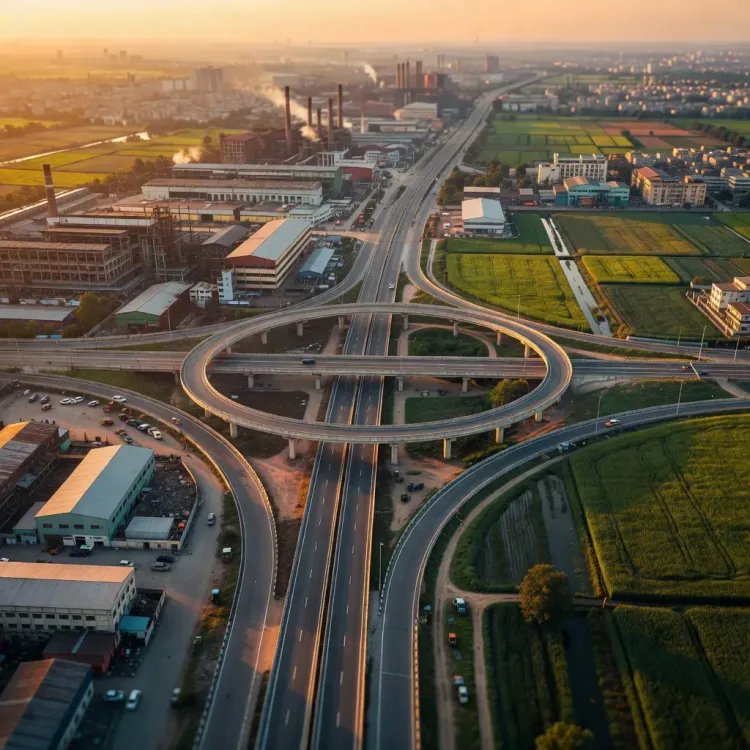
By the early 2000s, Haryana's per capita income had overtaken Punjab's — a reversal that few would have predicted at the time of partition. While Punjab leaned heavily on its agricultural base, Haryana accelerated industrialisation, drawing investment into corridors around Gurugram, Faridabad, and Manesar. The gap, once narrow, became a talking point for Haryana's ruling establishment.
Saini's Political Calculation Behind the Comparison
Saini, who took charge as Chief Minister in March 2024 following the resignation of Manohar Lal Khattar, leads a state that BJP has governed for over a decade. Invoking Punjab — currently under a rival party — is a well-worn but potent move in Indian state politics: it frames the neighbouring government as a cautionary tale and positions Haryana's record as a replicable success story.
Indian state leaders routinely deploy such comparisons around budget cycles, election seasons, and economic survey releases. The timing of this post, absent an immediately verifiable trigger, signals an ongoing effort by the Saini administration to cement Haryana's brand as a governance benchmark in the northern belt.
What the Numbers Will Need to Show
Bold declarations invite scrutiny. The real test will come when both states release their next economic surveys — the documents that quantify industrialisation rates, farmer welfare indicators, per capita income, and infrastructure spend side by side. Saini has planted a flag; the data will determine whether it holds.
Frequently Asked Questions
What did Haryana CM Nayab Singh Saini say about Punjab?
On 20 November 2026, Saini posted on X that Haryana is 'a model of development for Punjab,' positioning his state's economic record as a benchmark for the neighbouring state.
How does Haryana's economy compare to Punjab?
By the early 2000s, Haryana's per capita income had overtaken Punjab's, largely due to rapid industrialisation around Gurugram and Faridabad, while Punjab remained more dependent on agriculture.
When was Haryana separated from Punjab?
Haryana was carved out of Punjab on 1 November 1966 under the Punjab Reorganisation Act, creating two separate state administrations.
Who is Nayab Singh Saini and when did he become Haryana CM?
Nayab Singh Saini is a BJP leader who became Chief Minister of Haryana in March 2024, succeeding Manohar Lal Khattar after his resignation.
Why do Indian state leaders compare their states to neighbours?
Inter-state comparisons are a common political tool in India, used to highlight governance achievements and frame rival-party-governed states as underperforming — especially ahead of elections or budget discussions.