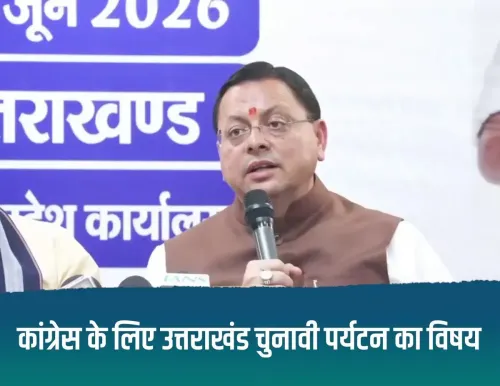
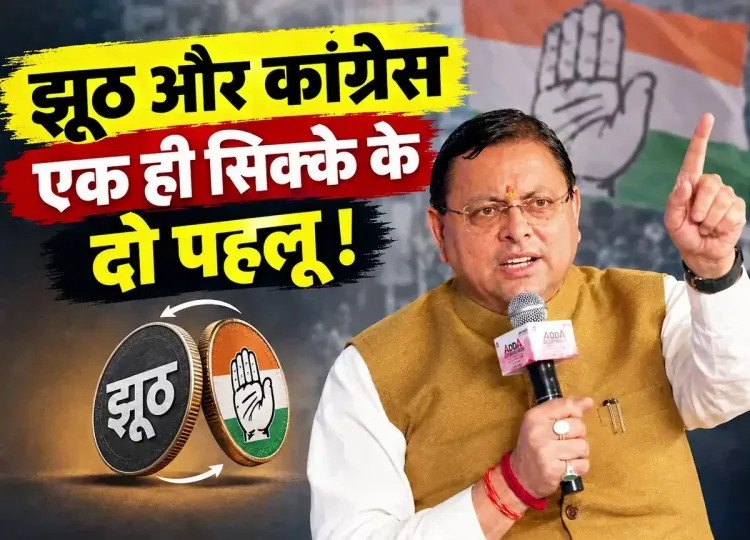
CM Dhami: BJP freed 13,000+ acres of encroached land in Uttarakhand
Synopsis
Uttarakhand CM Pushkar Singh Dhami claimed his government reclaimed over 13,000 acres of encroached public land and accused the Congress of orchestrating 'baseless false politics' after previously mismanaging state land holdings.
Key Takeaways
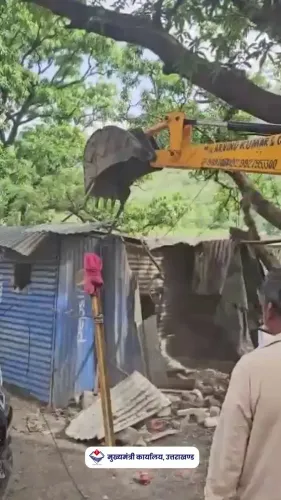
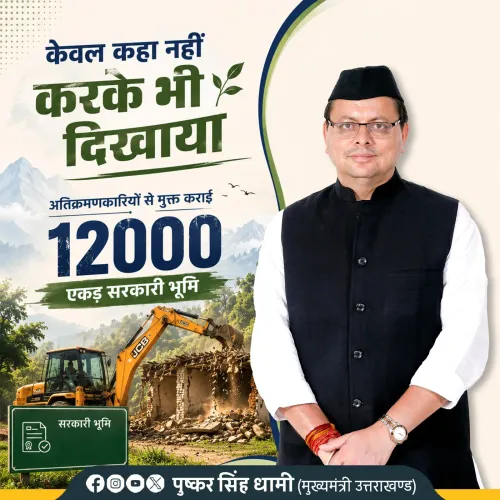
CM Pushkar Singh Dhami says the BJP government has freed more than 13,000 acres of encroached government and public land in Uttarakhand .
He accused the Indian National Congress of having 'dispersed and destroyed' public land during its own tenure in the state.
Dhami dismissed Congress criticism as 'baseless false politics' with no factual grounding.
The BJP has positioned anti-encroachment drives as a governance flagship in Uttarakhand since coming to power in 2017 .
The exact 13,000-acre figure is yet to be independently verified; court challenges and assembly debates remain to watch.
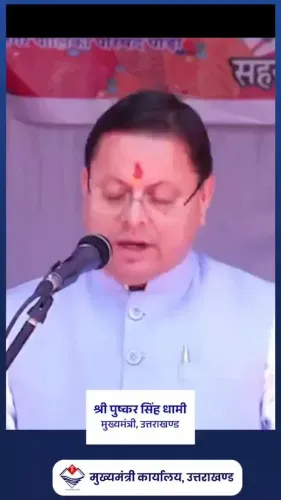
A land-recovery drive has become the latest flashpoint in Uttarakhand politics. Uttarakhand Chief Minister Pushkar Singh Dhami struck back at the opposition on Thursday, 24 September 2026, claiming his government has freed more than 13,000 acres of encroached public land — and accusing the Indian National Congress of crying foul only because it once presided over the very plunder it now protests.
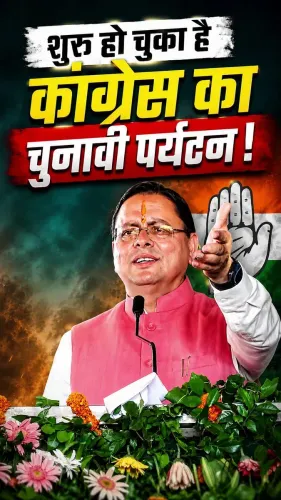
Posting in Hindi, CM Dhami framed the Congress reaction in pointed terms: 'kांग्रेस के पेट में दर्द उठ रहा है' — 'Congress is getting a stomach-ache' — a colloquial jab suggesting the opposition is pained precisely because the drive is working. He charged that during its own tenure, Congress 'only dispersed and destroyed government and public lands', while today it pursues 'baseless, false politics' against anti-encroachment action.
The land-recovery drive and what it targets
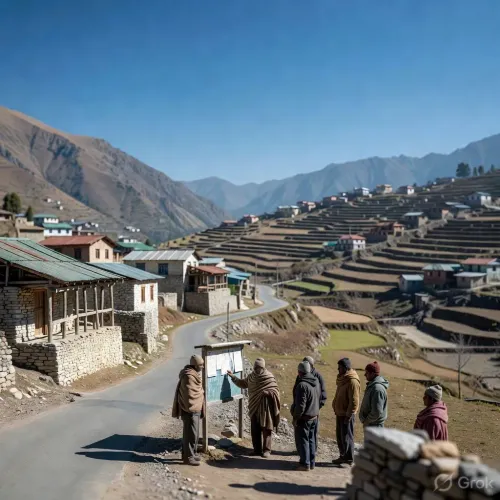
Uttarakhand has long grappled with encroachment on government and forest land — a problem compounded by the state's rugged Himalayan terrain, disputed boundaries, and decades of weak enforcement. After the BJP came to power in the state in 2017, successive administrations launched identification and reclamation drives targeting illegally occupied government plots and forest parcels. The 13,000-acre figure cited by CM Dhami represents the cumulative result of those efforts, though independent verification of the exact acreage is pending.
The political logic is straightforward: land recovery plays well with ordinary residents who see encroachment as a drain on public resources. By announcing a number as large as 13,000 acres, the Chief Minister anchors the debate on administrative achievement rather than process or method — forcing the opposition to argue against reclamation itself, a difficult position to hold publicly.
Congress's counter and the pattern across BJP-governed states
The Indian National Congress, which governed Uttarakhand in multiple stints before 2017, has not been silent — its criticism is precisely what triggered CM Dhami's sharp rebuttal. The opposition's objections likely centre on due process, the impact on vulnerable occupants, and the pace and targeting of evictions, though Dhami dismisses these concerns as politically motivated cover.
This is a pattern that has played out in several BJP-ruled states: anti-encroachment operations become a governance flagship, the ruling party contrasts the tally with perceived inaction under prior regimes, and the opposition pivots to procedural objections. The exchange rarely stays administrative for long — it becomes a proxy for the wider argument over who actually governs for the public good.
What keeps the story live: any court challenges to specific evictions, the state assembly's next session, and whether Congress can produce a counter-narrative grounded in data rather than allegation. The 13,000-acre figure is now in the public domain — the opposition's best answer is a credible audit, not another press statement.
Point of View
Concrete number, he forces Congress onto the defensive without detailing eviction methods or legal processes. This fits a broader BJP playbook of using anti-encroachment optics to signal strong governance, particularly in states where land disputes are visceral for voters. The real test will come in the state assembly, where opposition members can demand ward-level data, survey records, and rehabilitation details. Until then, the 13,000-acre headline does the political work it was designed to do.
NationPress
24 Sept 2026
Frequently Asked Questions
How much encroached land has the Uttarakhand government reclaimed?
CM Pushkar Singh Dhami stated that the BJP government has freed more than 13,000 acres of encroached government and public land in Uttarakhand, though independent verification of the precise figure is pending.
Why is Congress criticising the Uttarakhand anti-encroachment drive?
The Indian National Congress has raised objections to the drive, prompting CM Dhami to accuse the party of 'baseless false politics' and of having itself mismanaged public land during its own tenure in the state.
When did BJP start anti-encroachment drives in Uttarakhand?
After the BJP formed the government in Uttarakhand in 2017, successive administrations launched drives to identify and reclaim encroached government and forest land across the state.
What kind of land is being reclaimed in Uttarakhand?
The drives target government-owned plots and public land, including forest areas, that had been illegally occupied over the years — a persistent problem in Uttarakhand given its difficult Himalayan terrain and historically weak enforcement.
What will happen next in the Uttarakhand land encroachment dispute?
Key developments to watch include potential court challenges to specific evictions, opposition demands for ward-level data in the state assembly, and whether Congress can present a credible counter-narrative grounded in verified records.