CM Saini Echoes PM Modi's Bastar Warning on Internal Security
Synopsis
Haryana CM Nayab Singh Saini amplified PM Narendra Modi's Bastar speech on Diwali, sharing a quote arguing that strong internal security is the prerequisite for deterring external enemies — a message with resonance across India's insurgency-affected heartland.
Key Takeaways
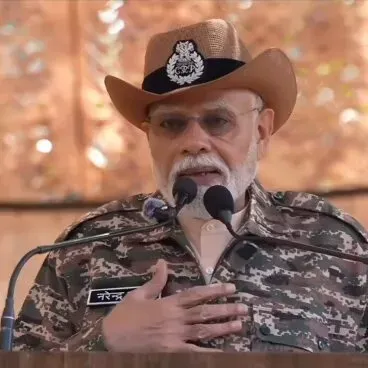
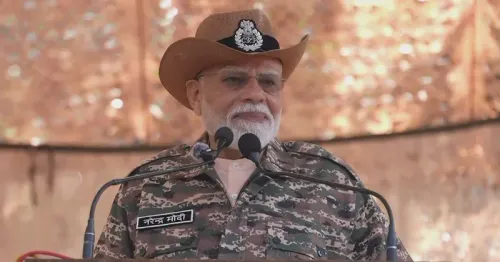
Haryana CM Nayab Singh Saini shared a quote from PM Narendra Modi delivered in Bastar, Chhattisgarh on 8 November 2026 .
Modi's quoted line argues that a strong internal security apparatus prevents external enemies from gaining any foothold.
Bastar has been a focal point of Maoist insurgency and central government security-plus-development interventions since 2014 .
The post was tagged #Diwali and #Bastar , consistent with BJP's pattern of high-level festival visits to insurgency-affected zones.
CM Saini's amplification extends the security message to Haryana , a state with its own acute proximity to India's external threat vectors.
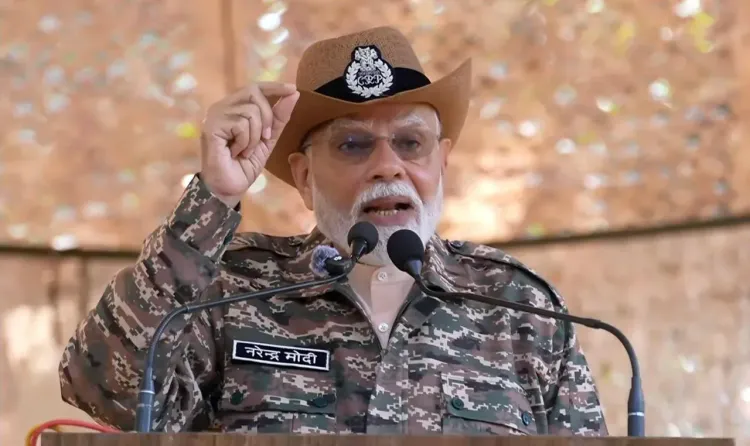
A line from Prime Minister Narendra Modi — delivered in Bastar, Chhattisgarh — is resonating far beyond the red-corridor district it was spoken in. Haryana Chief Minister Nayab Singh Saini amplified the Prime Minister's words on Sunday, 8 November 2026, sharing a pointed quote that frames internal stability as the first line of national defence.
The quote Saini shared, translated from Hindi, reads: 'Jab rashtra ki aantarik suraksha mazboot hoti hai toh baahri dushman kuch nahi kar paata... aantarik suraksha kamzor padti hai toh baahri dushman bhi sar uthane lagte hain.' — 'When a nation's internal security is strong, the external enemy can do nothing... when internal security weakens, even external enemies begin to raise their heads.'
Why Modi Chose Bastar to Say This
Bastar is not a random backdrop. For decades, the forested districts of southern Chhattisgarh have been the heartland of Maoist insurgency in India — a theatre where security forces have fought a grinding, long-running conflict against left-wing extremists. A Prime Ministerial visit to Bastar carries unmistakable weight: it signals that the central government views the region not as a forgotten frontier but as a strategic priority.
Since 2014, New Delhi has pursued a twin-track approach in left-wing extremism districts — intensified security operations alongside accelerated development spending on roads, schools, and connectivity. The logic is precisely what Modi's quote encapsulates: a stable interior denies adversaries — both internal and external — the foothold they need.
Saini's Amplification: Security as a Festival Message
The post is tagged #Diwali and #Bastar, a pairing that is deliberate. High-level visits to insurgency-affected zones during major festivals are a recurring BJP gesture — part symbolic reassurance to residents, part assertion of governmental reach into areas once considered no-go zones. CM Saini, who consistently echoes central government security messaging from Chandigarh, is extending that signal to Haryana's own audience — a state that sits on India's northwestern flank and carries its own acute awareness of what external threat means.
The broader argument threading through the quote is one the BJP has made persistently: that counter-insurgency success in places like Bastar and broader political stability are not separate from India's posture toward hostile neighbours — they are the same story told at different scales.
What Follows in Chhattisgarh
Watchers of the region will be tracking whether the Bastar visit signals a fresh push on anti-Naxal operations or the rollout of new development projects. Security forces operating in the region and the residents of Bastar — who have lived under the shadow of insurgent violence for generations — stand most directly affected by whatever policy signals follow from such a high-profile visit.
When a Prime Minister travels to the most contested district in one of India's most conflict-scarred states and delivers a line about internal strength neutralising external threat, the message is not just for Bastar. It is for every border, every fault-line, every adversary watching.
Point of View
CM Saini signals Haryana's alignment with that framing at a moment when the state's own strategic geography — bordering Delhi and close to Pakistan — makes such messaging locally resonant. The Diwali timing is not incidental; festival-period outreach to conflict zones is a practised soft-power move that blends governance reassurance with political symbolism. If a fresh operational push or development package follows the Bastar visit, this post will read as the rhetorical opening of that campaign.
NationPress
8 Nov 2026
Frequently Asked Questions
What did PM Modi say in Bastar about internal security?
PM Modi stated that when a nation's internal security is strong, external enemies cannot act against it, but when internal security weakens, external enemies begin to raise their heads — a quote shared by Haryana CM Nayab Singh Saini on 8 November 2026.
Why is Bastar significant for India's internal security?
Bastar in Chhattisgarh has been the epicentre of Maoist insurgency in India for decades and has been a priority zone for the central government's combined security and development operations since 2014.
Why did CM Nayab Singh Saini share this quote on Diwali?
Saini's post tagged both #Diwali and #Bastar, in line with BJP's recurring practice of marking festival occasions with high-level outreach to insurgency-affected areas as a gesture of reassurance and political messaging.
What is the BJP's policy approach toward left-wing extremism areas like Bastar?
Since 2014, the central government has followed a dual approach in left-wing extremism districts — ramping up security operations alongside accelerated development spending on infrastructure, roads, and connectivity.
What does PM Modi's visit to Bastar signal for future operations?
A Prime Ministerial visit to Bastar typically signals continued or intensified focus on anti-Naxal operations and development projects in Chhattisgarh, though specific details of any 2026 announcements were not verified at the time of publication.