CM Saini: Haryana farmers to swap ploughs for drones
Synopsis
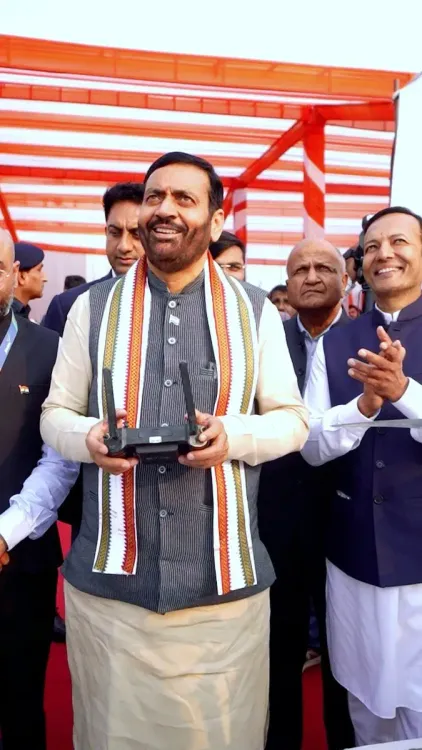
Haryana CM Nayab Singh Saini on 16 November 2026 called for farmers and rural youth to transition from tractors to drones, aligning the state with India's national precision-agriculture push under the Kisan Drone initiative.
Key Takeaways
CM Nayab Singh Saini posted on 16 November 2026 framing drone adoption as the natural evolution of Haryana's farming identity.
Haryana agriculture contributes over 20% of the state's GSDP, making it a high-stakes arena for precision-farming technology.
The Kisan Drone initiative, backed by Union Budget 2022-23 subsidies, provides the national policy foundation for such training.
Drone Rules 2021 created the regulatory space for widespread UAV use in Indian agriculture.
Drone piloting creates a new skilled-employment category for rural youth, reducing dependence on purely manual farm labour.
State-level training centres and new Haryana-specific subsidy notifications are the concrete next steps to watch.
The hands that guided ploughs and steered tractors across Haryana's fields are now being pointed skyward — toward drone controllers. Haryana Chief Minister Nayab Singh Saini signalled a fresh chapter in the state's agricultural story on Monday, 16 November 2026, posting a vision of rural transformation where farming youth step into the cockpit of precision agriculture.
Posting on X, CM Saini wrote: 'बदलते हरियाणा की नई उड़ान' — 'the new flight of a changing Haryana' — adding that 'the hands that held the plough and the tractor will now fly drones.' The imagery is deliberate and pointed: Haryana's identity is inseparable from its agrarian roots, and the Chief Minister is framing drone adoption not as a replacement of farming tradition but as its natural, technology-powered evolution.
From plough to payload: what drone farming means for Haryana
Haryana is one of India's most mechanised farm states, with agriculture accounting for over 20 per cent of its gross state domestic product. Wheat and rice dominate the landscape. Introducing drones into that ecosystem means faster, more precise pesticide and fertiliser spraying, real-time crop health monitoring, and — crucially — a new category of skilled rural employment for young people who might otherwise leave the village.
The national policy scaffolding for exactly this shift has been in place for several years. The Drone Rules of 2021 opened regulatory space for UAV use in agriculture. The Union Budget of 2022-23 backed the Kisan Drone initiative under the Sub-Mission on Agricultural Mechanization, bundling subsidies with structured training programmes targeting farmers and rural youth. Multiple states have since launched drone training centres, with a particular focus on women-led self-help groups and young agrarians.
Haryana's bet on precision agriculture
CM Saini, who took charge in March 2024, has consistently positioned agricultural modernisation as a centrepiece of his administration's development agenda. This post arrives at a moment when the national consensus on precision farming has hardened: cut chemical overuse, reduce input costs, improve yields, and generate non-farm income inside villages — all through the same device a Haryana farmer's son or daughter can learn to operate in a matter of weeks.
The arc from tractor to drone is shorter than it looks. Both are tools of scale; one mechanical, one digital. The difference is that a drone pilot can serve multiple farms, generate service income, and feed data back into a smarter agricultural supply chain. That is the rural economy Saini is pointing toward.
Whether the state announces a new Haryana-specific drone training target or subsidy structure to follow this post is the detail to watch — but the direction of travel is unmistakable. The plough hasn't been retired; it just got a co-pilot.
Point of View
The Chief Minister is doing something strategically smart: making a Centre-driven initiative feel locally owned. The broader arc here is the BJP's sustained effort to demonstrate that agricultural modernisation and farmer welfare are not in tension but are the same story told in two registers — tradition and technology. The real test will be whether subsidy disbursal and training infrastructure follow the rhetoric at the speed the post implies.
NationPress
16 Nov 2026
Frequently Asked Questions
What did Haryana CM Nayab Singh Saini say about drones for farmers?
On 16 November 2026, CM Saini posted that Haryana farmers and rural youth who have worked with ploughs and tractors will now be empowered to fly drones, describing it as the state's 'new flight of change.'
What is the Kisan Drone scheme in India?
The Kisan Drone initiative is a central government programme under the Sub-Mission on Agricultural Mechanization that provides subsidies for drone-based pesticide spraying, crop monitoring, and training for farmers and rural youth, backed by the Union Budget 2022-23.
How are drones used in agriculture in Haryana?
Agricultural drones in Haryana are used for precise pesticide and fertiliser spraying, real-time crop health monitoring, and generating service-based income for trained drone pilots in rural areas.
What is Haryana's agriculture contribution to its economy?
Agriculture contributes over 20 per cent of Haryana's gross state domestic product, with wheat and rice as the dominant crops, making the state one of India's most mechanised farming economies.
When did India ease drone rules for agriculture?
India notified the Drone Rules in 2021, significantly easing regulations and opening the door for widespread UAV use in agricultural applications across the country.