CM Saini Invites All to Rakhigarhi Mahotsav 2026
Synopsis
Haryana Chief Minister Nayab Singh Saini has publicly invited citizens to the Rakhigarhi Mahotsav 2026, a cultural festival at one of the largest known Indus Valley Civilisation sites in Hisar district, Haryana.
Key Takeaways
Haryana CM Nayab Singh Saini issued a public invitation on 19 October 2026 for the Rakhigarhi Mahotsav 2026 .
Rakhigarhi in Hisar district is one of the largest identified settlements of the Indus Valley Civilisation , dating to approximately 3300–1300 BCE .
The festival is framed under the Saraswati-Sindhu Civilisation identity, a consistent cultural-branding theme of the Haryana government.
Saini has held office as Haryana CM since March 2024 and has regularly highlighted the state's ancient heritage.
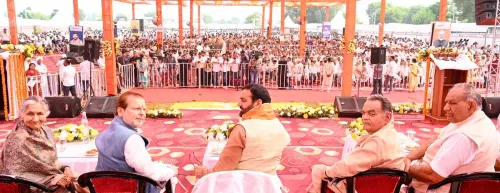
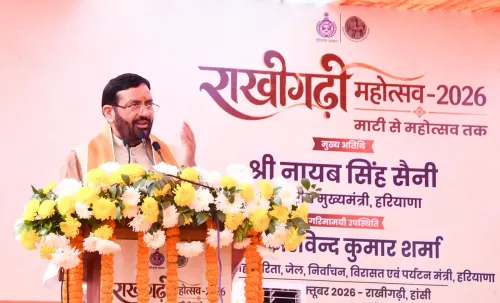
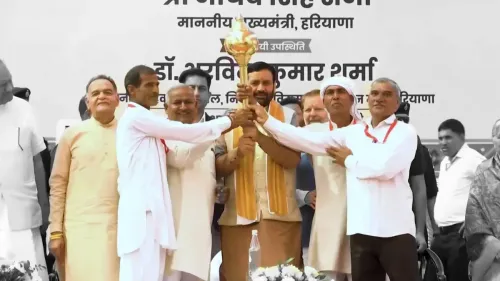
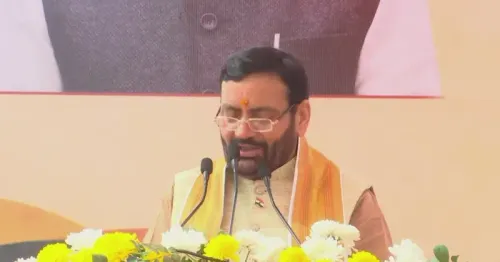
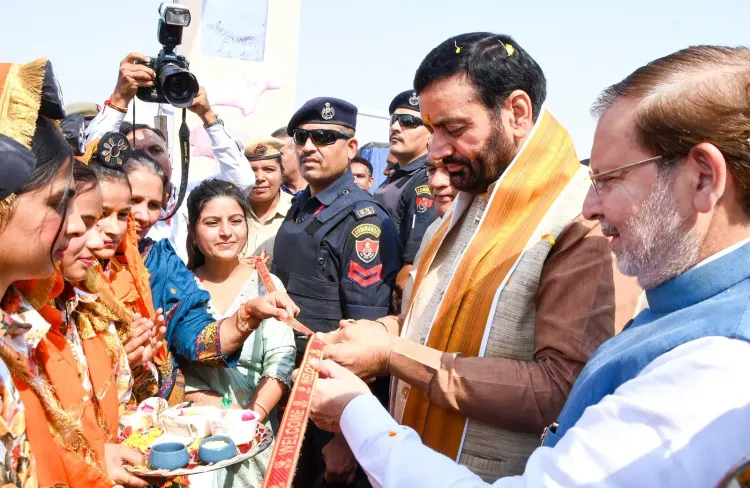
The invitation was shared on X with four images , signalling broad public outreach for the event.
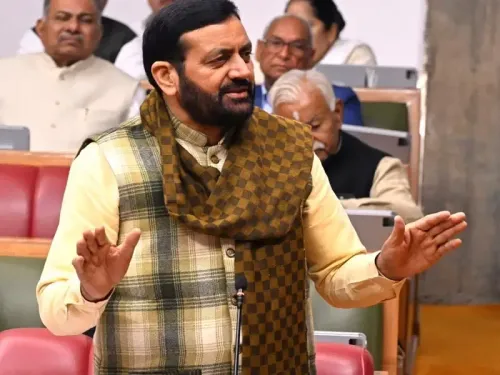
One of the oldest urban civilisations on earth has a festival named in its honour — and Haryana Chief Minister Nayab Singh Saini wants every Indian to be part of it. On Monday, 19 October 2026, Saini extended a formal public invitation to the Rakhigarhi Mahotsav 2026, a cultural festival held at the Rakhigarhi archaeological site in Hisar district, Haryana — one of the largest known settlements of the Indus Valley Civilisation.
Posting in Hindi on X, Saini wrote: 'हरियाणा के गौरवशाली सरस्वती-सिंधु सभ्यता के पुरास्थल में आयोजित राखीगढ़ी महोत्सव 2026 में आप सभी सादर आमंत्रित हैं' — 'You are all respectfully invited to the Rakhigarhi Mahotsav 2026, organised at the glorious Saraswati-Indus Civilisation heritage site of Haryana.' The post was accompanied by four images and tagged under #IndusValleyCivilization and #SaraswatiIndusCivilization.
Rakhigarhi: A 5,000-Year-Old Stage
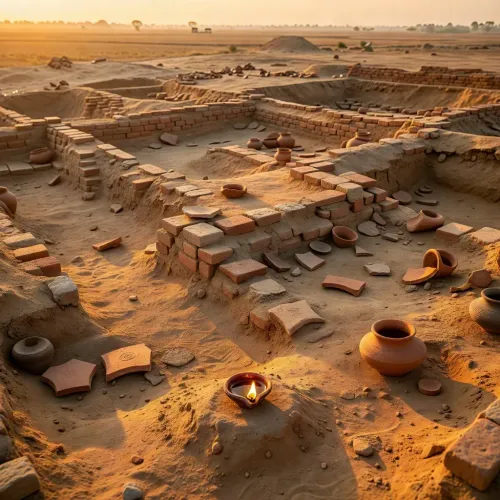
Rakhigarhi is no ordinary backdrop. Situated in Hisar district, it is recognised among archaeologists as one of the largest Harappan settlements ever identified — sprawling across multiple mounds that preserve evidence of urban planning, drainage systems, and craft production dating to roughly 3300–1300 BCE. The site sits at the heart of what many researchers call the Saraswati-Sindhu (Saraswati-Indus) civilisational corridor, a designation the Haryana government has consistently foregrounded in its cultural branding.
That nomenclature is deliberate. By invoking the Saraswati river — a river celebrated in ancient texts whose course through present-day Haryana has been a subject of sustained archaeological and geological inquiry — the state government ties the region's modern identity directly to Bronze Age antiquity. It is a framing Saini has leaned into consistently since taking office in March 2024.
Festivals as Heritage Diplomacy
The Rakhigarhi Mahotsav fits a well-established pattern: state governments staging cultural festivals at prominent archaeological sites to drive domestic tourism, stir civic pride, and keep pre-modern history in public conversation. For Haryana, a state that sits on some of the subcontinent's richest prehistoric real estate, the festival is both a tourism play and an identity statement. Heritage tourists, students, researchers, and local residents all form the natural audience.
Saini's public invitation signals that the 2026 edition is being positioned for maximum reach — broadcast through the Chief Minister's own social media channel rather than left to departmental communications. The kicker, of course, is the site itself: few festival venues in South Asia can claim five millennia of continuous human story beneath their feet.
Point of View
Which links regional governance to ancient civilisational identity — in this case using the Saraswati-Sindhu framing to position Haryana as the heartland of one of the world's oldest urban cultures. Hosting festivals at Harappan sites serves a dual purpose: driving domestic heritage tourism and reinforcing a pre-colonial historical consciousness that the party has made central to its political identity. For Saini personally, it builds a soft-power legacy in a state where cultural pride and local identity remain potent electoral assets. The real measure will be how the 2026 edition expands on past festivals in terms of footfall, academic engagement, and infrastructure at the site.
NationPress
19 Oct 2026
Frequently Asked Questions
What is Rakhigarhi Mahotsav?
Rakhigarhi Mahotsav is a cultural festival organised by the Haryana government at the Rakhigarhi archaeological site in Hisar district, celebrating the heritage of the Indus Valley (Saraswati-Sindhu) Civilisation.
Where is Rakhigarhi located?
Rakhigarhi is located in Hisar district, Haryana, and is recognised as one of the largest known settlements of the Indus Valley Civilisation, dating to approximately 3300–1300 BCE.
Who is organising Rakhigarhi Mahotsav 2026?
The festival is being promoted by the Haryana state government under Chief Minister Nayab Singh Saini, who issued the public invitation on 19 October 2026.
What is the significance of the Saraswati-Indus Civilisation tag used for Rakhigarhi?
The Saraswati-Indus (or Saraswati-Sindhu) label reflects the Haryana government's emphasis on the ancient Saraswati river corridor running through the state, linking present-day Haryana to the Bronze Age civilisation and reinforcing regional cultural identity.
Is Rakhigarhi open to tourists?
Yes, Rakhigarhi is a publicly accessible heritage site in Hisar district and is one of the premier destinations for visitors interested in Harappan civilisation in India.