CM Nayab Saini Launches AI Sandbox in Gurugram
Synopsis
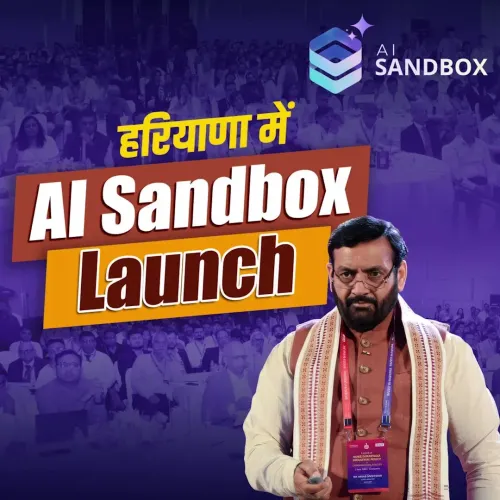
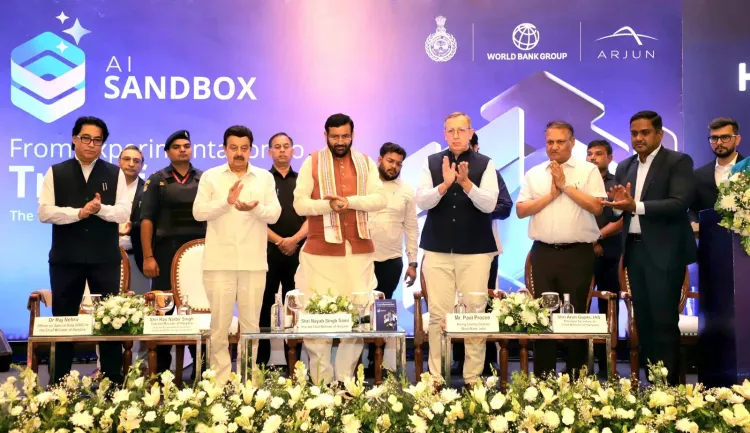
Haryana Chief Minister Nayab Saini inaugurated the AI Sandbox in Gurugram on 1 June 2026, a state-backed platform where government departments will test AI-driven solutions to real administrative challenges in a controlled environment, advancing the state's AI Haryana vision.
Key Takeaways
Chief Minister Nayab Saini launched the Haryana AI Sandbox in Gurugram on 1 June 2026 .
The platform will allow government departments to present real operational challenges for AI-based solutions from startups, researchers, and technology firms.
All solutions will be tested in a 'safe and controlled environment' before wider deployment.
The initiative is framed under three pillars: AI Sushasan , AI Antyodaya , and AI Haryana .
The sandbox aligns with India's national Digital India and India AI Mission frameworks, following NITI Aayog's 2018 AI strategy.
Gurugram 's status as a major NCR technology hub makes it the base for this state-level innovation platform.
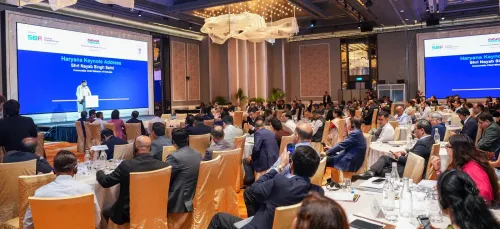
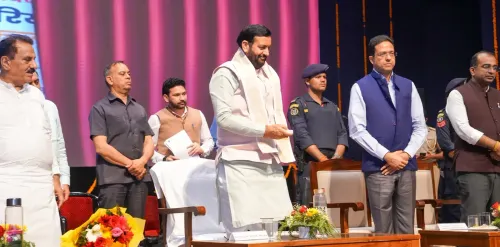
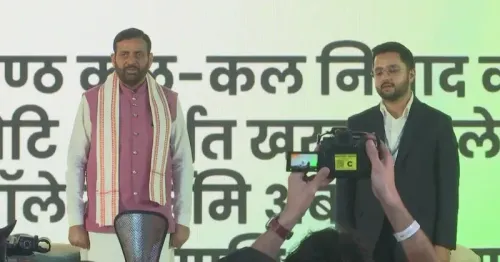
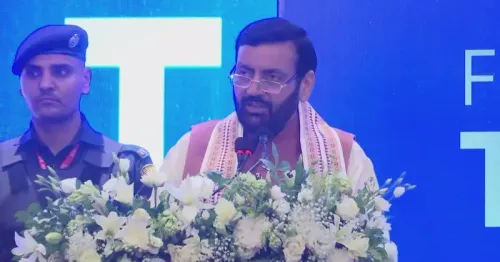
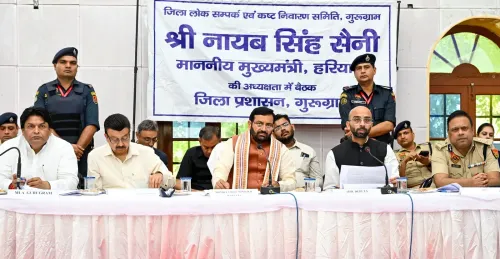
The Chief Minister's Office of Haryana announced on Monday, 1 June 2026 that Chief Minister Nayab Saini inaugurated the Haryana AI Sandbox in Gurugram, a state-backed controlled testing platform designed to apply artificial intelligence to real governance challenges.
Context
Addressing the launch, CM Saini framed the initiative within the state's broader technology vision, saying — in translation — that 'through AI Sushasan (good governance), AI Antyodaya, and AI Haryana, all must together realise the dream of a developed India in its modern form.' He added that 'the Haryana AI Sandbox has been built with exactly this thinking and vision.'
The platform is positioned as a bridge between government departments and the private technology ecosystem, allowing real departmental problems to be matched with solutions from innovators, researchers, and companies in a safe, regulated environment.
Policy Backdrop
India's National Strategy for Artificial Intelligence, released by NITI Aayog under the #AIForAll framework in 2018, laid the foundation for responsible AI adoption in governance and public service delivery. Haryana's initiative builds on that national architecture, aligning with the central government's Digital India programme and the India AI Mission.
The concept of a sandbox — a controlled space where solutions are tested for effectiveness and safety before wider deployment — has gained traction among Indian states seeking to manage the risks of AI adoption in sensitive public-sector applications. Gurugram, as a major IT and startup hub within the National Capital Region, provides a natural base for such an initiative given its concentration of technology firms and talent.
Stakeholders and Impact
Under the announced model, state government departments will bring their operational challenges to the platform, while AI startups, academic researchers, technology experts, and private companies will compete to offer solutions. Those solutions will then be evaluated in a 'safe and controlled environment,' according to the Chief Minister's Office, before any decision on wider adoption.
The design deliberately separates problem-identification (government) from solution-building (private and academic sector), a structure intended to prevent vendor lock-in and encourage competitive innovation. Frontline departments dealing with service delivery, agriculture, health, or infrastructure could potentially be early participants, though no specific departments were named at launch.
What's Next
The immediate focus will be on which departments bring the first real-world challenges to the sandbox and whether early pilot solutions demonstrate measurable improvements in service delivery or administrative efficiency. A broader question is whether Haryana's model — combining AI Sushasan (AI-enabled good governance) and AI Antyodaya (AI for the last mile) under a single state-level framework — can serve as a template for other states with comparable tech ecosystems. Any announcements on formal partnerships with technology companies or academic institutions will be closely watched as indicators of the platform's operational readiness.
Point of View
The state is attempting to avoid the pitfalls of top-down technology procurement. The three-pillar framing — AI Sushasan, AI Antyodaya, AI Haryana — signals that the government wants AI adoption to be seen as both an efficiency and an equity story, not merely a modernisation showcase. Positioned in Gurugram and timed ahead of the 2026 policy cycle, the launch also strengthens Haryana's claim to leadership among states competing to attract AI investment. The real test will come when the first departmental pilots conclude and results are made public.
NationPress
20 Oct 2026
Frequently Asked Questions
What is the Haryana AI Sandbox?
The Haryana AI Sandbox is a controlled testing platform launched by Chief Minister Nayab Saini in Gurugram on 1 June 2026, where state government departments can bring real administrative challenges and have them addressed by AI startups, researchers, and technology companies in a safe, regulated environment.
Who launched the Haryana AI Sandbox and where?
Chief Minister Nayab Saini launched the Haryana AI Sandbox in Gurugram, as announced by the Chief Minister's Office of Haryana on 1 June 2026.
What is AI Antyodaya in Haryana?
AI Antyodaya is one of three pillars of Haryana's AI governance vision, focused on using artificial intelligence to reach and benefit the last mile — the most marginalised sections of society — alongside AI Sushasan (good governance) and the broader AI Haryana framework.
How does the Haryana AI Sandbox work?
Government departments bring their real operational problems to the platform, while innovators, researchers, and technology companies propose solutions. Those solutions are then tested in a controlled environment to assess their effectiveness and suitability before any wider rollout.
How does Haryana's AI Sandbox fit into India's national AI policy?
The initiative aligns with NITI Aayog's 2018 National Strategy for Artificial Intelligence and the central government's Digital India and India AI Mission frameworks, reflecting a broader pattern of Indian states creating controlled innovation environments to apply AI to governance challenges.