CM Saini Reviews Public Grievances at Gurugram District Meet
Synopsis
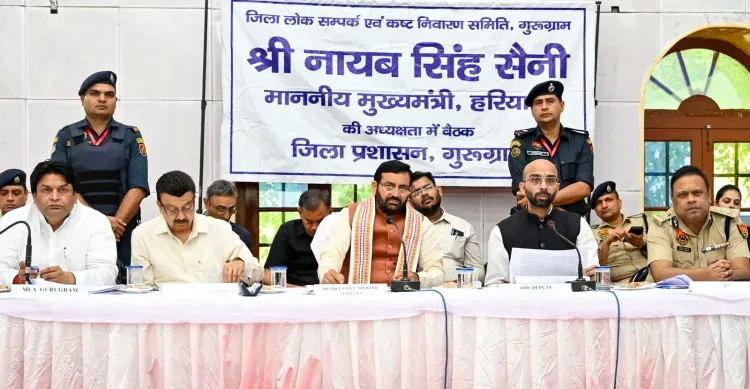
Haryana Chief Minister Nayab Singh Saini on June 1, 2026, attended the District Public Contact and Grievance Redressal Committee meeting in Gurugram, reviewing citizen complaints and directing officials to ensure time-bound, transparent resolution as a top governance priority.
Key Takeaways
CM Nayab Singh Saini attended the District Public Contact and Grievance Redressal Committee meeting in Gurugram on June 1, 2026 .
He reviewed multiple public complaints and issued directions to officials for swift and effective resolution.
Saini stated that time-bound grievance disposal and transparent, accountable governance are among his government's top priorities.
Haryana's grievance infrastructure includes the CM Window portal and is backed by Right to Service legislation mandating time-bound responses.
Gurugram , a major NCR commercial hub, faces significant urban administration challenges, making such reviews particularly impactful for residents.
District-level public contact meetings are a recurring governance tool under BJP -governed states to enforce official accountability.
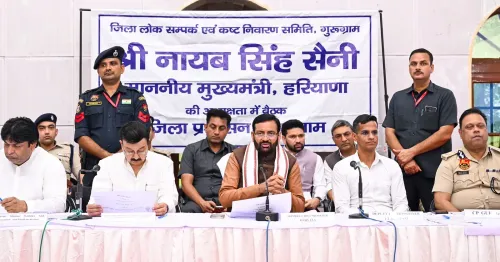
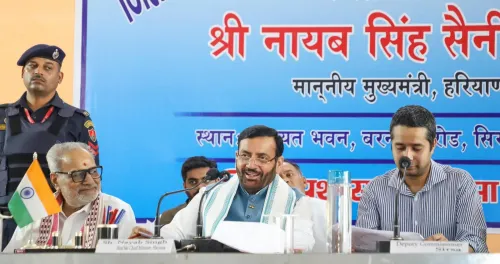
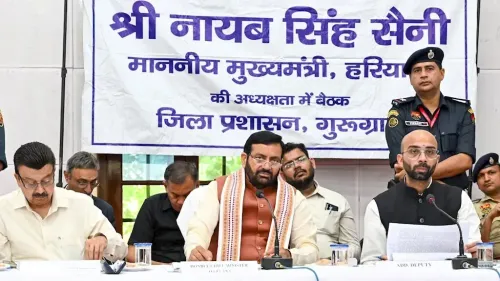
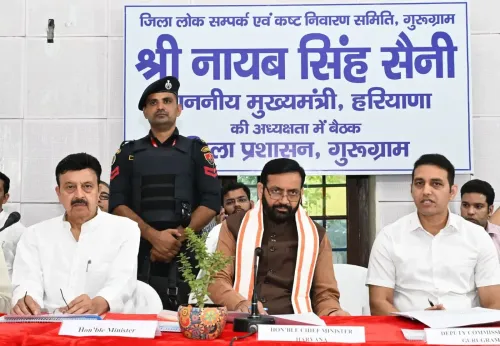
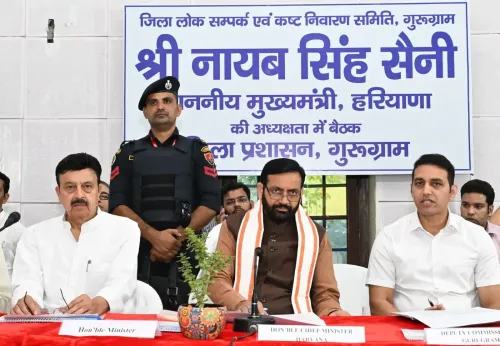
Haryana Chief Minister Nayab Singh Saini on Monday, June 1, 2026, attended the District Public Contact and Grievance Redressal Committee meeting in Gurugram, reviewing a range of public complaints and directing officials to resolve them swiftly and effectively.
Posting about the meeting on X, Saini stated: 'Jansamasyaon ka samayabaddh nivaran aur logon ko pardarshi evam jawabdehi prashasan uplabdh karana hamari sarkar ki sarvochch prathamiktaon mein shamil hai' — ('Time-bound resolution of public problems and providing people with transparent and accountable governance is among the topmost priorities of our government.')
Context
The District Public Contact and Grievance Redressal Committee (Jila Lok Sampark evam Kasht Nivaran Samiti) is a structured forum that brings together senior district officials and elected representatives to hear and act on citizen complaints. Gurugram, a major commercial and IT hub in the National Capital Region, presents a particularly complex set of urban administration challenges — from infrastructure to civic services — making such review sessions consequential for a large resident population.
CM Saini assumed office in March 2024, succeeding Manohar Lal Khattar, and has consistently framed responsive administration as a defining commitment of his tenure. Monday's meeting is part of that ongoing outreach pattern.
Policy Backdrop
Haryana has maintained district-level grievance mechanisms and public contact platforms — including the CM Window online portal — since the mid-2010s, building a layered system for citizens to log complaints and track their status. These state-level tools run parallel to the central government's CPGRAMS portal and are reinforced by Right to Service legislation that mandates time-bound disposal of applications.
Across BJP-governed states, district-level public contact meetings have become a recurring governance instrument, used to enforce accountability among officials and signal administrative responsiveness directly to voters. The approach is designed to reduce bureaucratic delays and surface ground-level problems before they escalate.
Stakeholders and Impact
The primary beneficiaries of these committee meetings are ordinary citizens — residents with unresolved complaints related to land records, civic amenities, welfare scheme access, and local administrative disputes. District officials receive direct instructions from the Chief Minister, raising the institutional weight of compliance.
For Gurugram's large and diverse population — spanning migrant workers, corporate professionals, and long-standing residents — accessible grievance channels carry particular importance given the pace of the district's urban growth and the administrative pressures that accompany it.
What's Next
The Haryana government's emphasis on time-bound grievance disposal means that the directions issued at Monday's meeting will be tracked against resolution timelines. Periodic reporting of district-wise disposal statistics and any expansion of digital complaint-tracking tools will indicate how effectively the commitments made in such meetings translate into outcomes on the ground.
Point of View
Especially in a high-profile NCR district that draws national attention. The emphasis on transparency and accountability echoes a broader BJP governance narrative that has been consistent across states, linking administrative efficiency to electoral credibility. For Saini, who took charge in 2024 and faces the task of consolidating his own political identity, such direct public-contact exercises help establish a distinct governing style. The real test, however, lies in measurable outcomes: grievance disposal rates and citizen satisfaction, not just the optics of the meeting itself.
NationPress
15 Oct 2026
Frequently Asked Questions
What is the District Public Contact and Grievance Redressal Committee in Haryana?
It is a district-level forum — formally called the Jila Lok Sampark evam Kasht Nivaran Samiti — where senior officials and elected representatives meet to hear and act on citizen complaints, ensuring time-bound resolution of public problems.
Why did CM Nayab Singh Saini visit Gurugram on June 1, 2026?
CM Saini attended the District Grievance Redressal Committee meeting in Gurugram to review public complaints and direct officials to resolve them swiftly and transparently.
What is the CM Window portal in Haryana?
The CM Window is an online grievance portal maintained by the Haryana government that allows citizens to log complaints and track their resolution status, complementing district-level in-person review meetings.
What did CM Saini say about governance priorities at the Gurugram meeting?
Saini stated that time-bound resolution of public problems and providing transparent, accountable governance to citizens are among the topmost priorities of his government.
Who is Nayab Singh Saini and when did he become Haryana CM?
Nayab Singh Saini is a BJP leader who became Chief Minister of Haryana in March 2024 , succeeding Manohar Lal Khattar .