CM Saini Flags Off Emergency Response Vehicles in Gurugram
Synopsis
Haryana Chief Minister Nayab Singh Saini flagged off Emergency Response Vehicles in Gurugram on 2 June 2026, reinforcing the BJP government's push for faster on-ground emergency services in the state's most urbanised NCR district.
Key Takeaways
CM Nayab Singh Saini flagged off Emergency Response Vehicles in Gurugram on 2 June 2026 .
The launch targets faster police, fire, and medical emergency response in one of Haryana's most densely populated districts.
Haryana has been upgrading its emergency infrastructure since the 108 ambulance network expansion between 2018 and 2022 .
The BJP-led government has framed fleet-based emergency deployment as a core law-and-order and health-delivery priority since 2014 .
Analysts will watch whether the rollout is extended to Faridabad and Panchkula based on Gurugram response-time data.
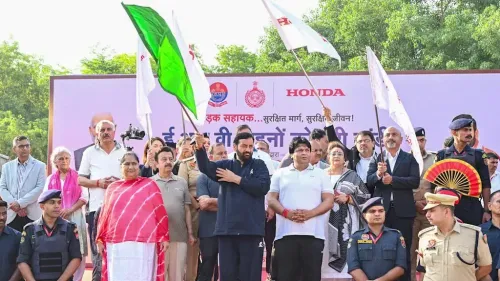
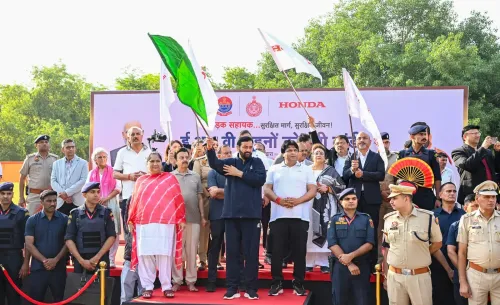
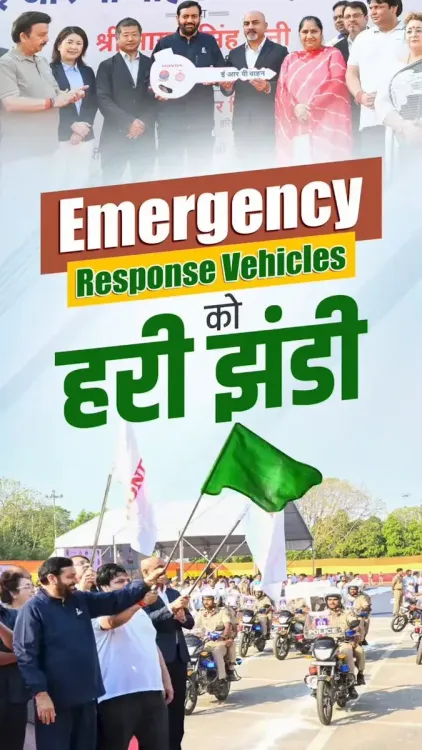
Haryana Chief Minister Nayab Singh Saini on Tuesday, 2 June 2026, flagged off a fleet of Emergency Response Vehicles in Gurugram, signalling the state government's push to strengthen quick-reaction capabilities across the National Capital Region district.
Context
Saini shared the development on X with the caption 'गुरुग्राम में Emergency Response Vehicles को हरी झंडी' — loosely translated as 'Green flag to Emergency Response Vehicles in Gurugram' — accompanied by a video of the flagging-off ceremony. The post underscores the administration's emphasis on visible, on-ground delivery of public-safety infrastructure.
Gurugram is one of Haryana's most densely populated urban centres, situated within the National Capital Region. Rising urban density, high-speed highway traffic, and growing industrial activity have placed sustained pressure on the district's emergency-services network over the past decade.
Policy Backdrop
Haryana has been incrementally upgrading its emergency-response architecture since the state-wide 108 ambulance network was expanded and helpline systems were modernised between 2018 and 2022. The BJP-led government, in power since 2014, has consistently framed such vehicle launches as part of its law-and-order and health-delivery agenda.
The flagging-off of dedicated Emergency Response Vehicles fits within that broader pattern — moving beyond helpline upgrades toward a fleet-based, rapid-deployment model for police, fire, and medical calls. CM Saini, who assumed office in March 2024 succeeding Manohar Lal Khattar, has continued this infrastructure-first approach to urban governance in NCR districts.
Stakeholders and Impact
The primary beneficiaries are Gurugram's residents — a population that includes millions of daily commuters, industrial workers, and households spread across rapidly expanding sectors and townships. Faster emergency response directly affects survival outcomes in medical crises and can reduce property and casualty losses in fire and accident situations.
Emergency responders — paramedics, firefighters, and police personnel — stand to gain operationally from modern, purpose-built vehicles that improve on-scene capability and reduce transit time. Civil-society groups and resident welfare associations in Gurugram have long flagged average response times as a critical urban-services gap.
What's Next
The key metric to watch is whether Gurugram's average emergency response time improves measurably in the months following deployment. State authorities are expected to track fleet utilisation data as a baseline for deciding whether similar Emergency Response Vehicle programmes are extended to other high-density Haryana districts such as Faridabad and Panchkula.
If the Gurugram rollout demonstrates a reduction in response times, it could become a template for the state's broader urban-safety strategy ahead of the next electoral cycle, reinforcing the BJP government's governance narrative in NCR.
Point of View
Tangible infrastructure delivery in a high-profile NCR constituency. For CM Saini, who took charge in March 2024 with a mandate to demonstrate administrative continuity, such launches serve a dual purpose: they address a genuine urban-services gap while reinforcing the party's law-and-order credentials ahead of future electoral cycles. The move also fits a broader national pattern of state governments investing in emergency-response modernisation as urban populations demand faster public-safety outcomes. Whether the initiative translates into measurable response-time improvements will determine its lasting political and policy value.
NationPress
21 Oct 2026
Frequently Asked Questions
What did Haryana CM Nayab Singh Saini flag off in Gurugram?
CM Nayab Singh Saini flagged off a fleet of Emergency Response Vehicles in Gurugram on 2 June 2026 to strengthen the district's quick-reaction capability for police, fire, and medical emergencies.
Why does Gurugram need Emergency Response Vehicles?
Gurugram is one of Haryana's most densely populated urban centres in the National Capital Region, where rising traffic, industrial activity, and population density have increased demand for faster emergency services.
What is Haryana's 108 ambulance service?
The 108 ambulance network is a state-wide emergency medical transport service that Haryana expanded and modernised between 2018 and 2022 as part of broader upgrades to its emergency-response infrastructure.
Who is Nayab Singh Saini and when did he become Haryana CM?
Nayab Singh Saini is a BJP leader who was sworn in as Haryana Chief Minister in March 2024, succeeding Manohar Lal Khattar.
Will similar Emergency Response Vehicles be deployed in other Haryana cities?
State authorities are expected to assess Gurugram's response-time data before deciding whether to extend the Emergency Response Vehicle programme to other high-density districts such as Faridabad and Panchkula.