CM Saini Pays Tribute to Munshi Premchand on Remembrance Day
Synopsis
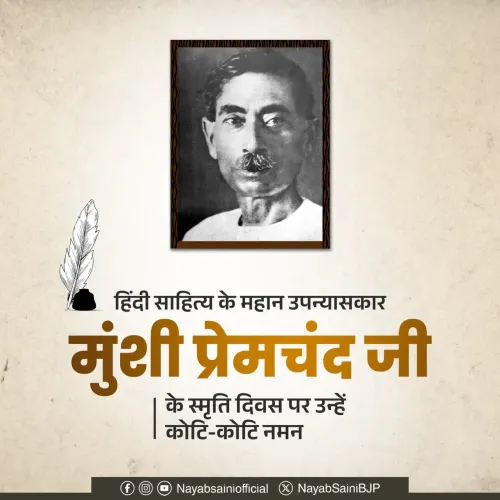
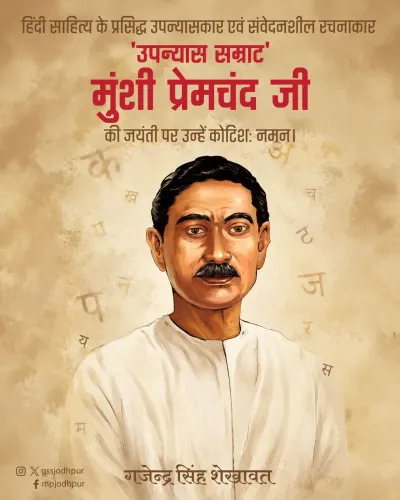
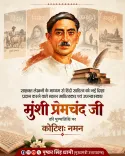
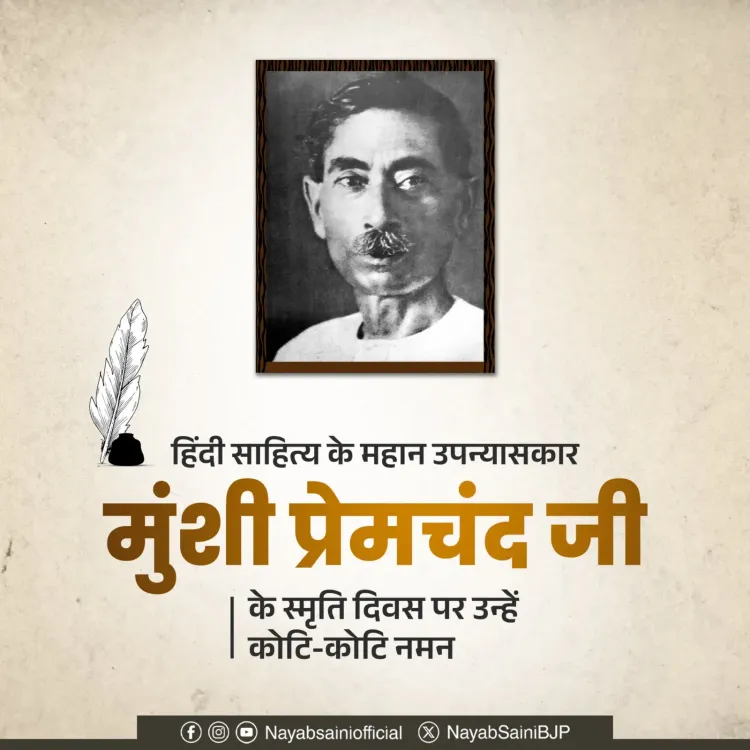
Haryana Chief Minister Nayab Singh Saini paid tribute to Munshi Premchand on his Smriti Diwas on October 8, honouring the 'Upanyas Samrat' as an invaluable heritage of Hindi literature whose works continue to inspire readers and future generations.
Key Takeaways
Haryana CM Nayab Singh Saini paid tribute to Munshi Premchand on his Smriti Diwas, October 8, 2026 .
Premchand, born July 31, 1880 in Lamhi, Varanasi , died on October 8, 1936 — the day marked annually as his remembrance day.
Widely titled Upanyas Samrat (Emperor of Novels), Premchand authored more than 300 short stories and 14 novels .
CM Saini described Premchand's pen as 'an invaluable heritage of Hindi literature' that will inspire future generations.
Premchand's works — including Godaan , Gaban , and Manasarovar — gave literary voice to India's rural poor, peasants, and marginalised communities.
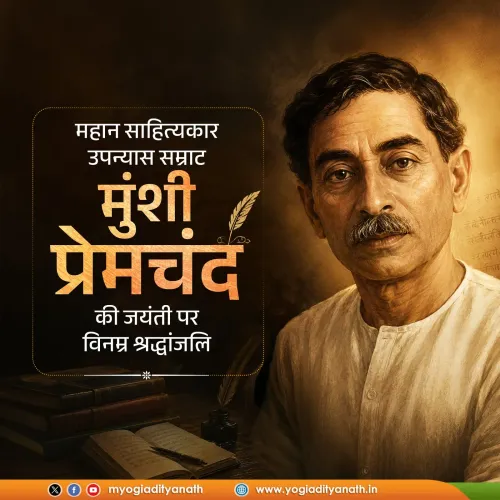
On the remembrance day of one of Hindi literature's most enduring voices, Haryana Chief Minister Nayab Singh Saini paid tribute to Munshi Premchand — the writer widely known as Upanyas Samrat (Emperor of Novels) — on Thursday, October 8, 2026, honouring a legacy that has shaped Indian storytelling for over a century.
Posting in Hindi, CM Saini wrote: 'On the remembrance day of the great writer of Hindi literature and 'Upanyas Samrat' Munshi Premchand ji, I bow to him a crore times. Through his timeless works, he gave words to the realities of society, human sensibilities, and the various facets of life. His powerful pen is an invaluable heritage of Hindi literature, which will always continue to inspire readers and future generations.'
The Man Who Wrote India's Conscience
Munshi Premchand, born Dhanpat Rai Shrivastava on July 31, 1880, in Lamhi, Varanasi, became the defining voice of Hindi and Urdu fiction in the early twentieth century. His death anniversary falls on October 8 — the day he passed away in 1936 — and is observed annually as his Smriti Diwas (Remembrance Day).
His novels and short stories — among them Godaan, Gaban, and the celebrated short story collection Manasarovar — cut through caste, class, and gender with a precision that felt radical then and remains relevant now. He wrote more than 300 short stories and 14 novels, giving marginalised voices — peasants, widows, the rural poor — a literature that claimed them.
Why Leaders Still Invoke Premchand
Tributes to Premchand on his remembrance day are a recurring feature of Indian political and cultural life, cutting across party lines. His work is embedded in school curricula across Hindi-speaking states, making him a shared civic reference point rather than a partisan one. For a Haryana CM addressing a largely rural, Hindi-speaking electorate, invoking Premchand connects governance culture to a deep literary inheritance — one that explicitly championed the dignity of the agrarian poor.
The tribute lands on a day when Premchand's relevance is again being debated in literary circles: his portrayal of caste discrimination, bonded labour, and rural debt feels startlingly contemporary against India's current economic landscape. A writer who died nearly 90 years ago still generates fresh academic editions, film adaptations, and school debates — a rare staying power in any literature.
Point of View
' CM Saini gestures toward a cultural continuity that transcends immediate politics. The tribute also reflects a broader BJP pattern of using India's cultural and literary heritage to project civilisational pride alongside governance messaging. Nearly 90 years after his death, Premchand remains a unifying rather than divisive reference — which is precisely why leaders across the spectrum reach for his name.
NationPress
8 Oct 2026
Frequently Asked Questions
When is Munshi Premchand's death anniversary?
Munshi Premchand passed away on October 8, 1936 , and this date is observed annually as his Smriti Diwas (Remembrance Day) across India.
Why is Munshi Premchand called Upanyas Samrat?
Premchand earned the title Upanyas Samrat , meaning 'Emperor of Novels,' for his prolific and transformative contribution to Hindi and Urdu fiction, including more than 14 novels and 300 short stories .
What did Haryana CM Nayab Singh Saini say about Munshi Premchand?
CM Saini described Premchand's pen as 'an invaluable heritage of Hindi literature' and said his timeless works gave words to social realities, human sensibilities, and life's many dimensions, adding that they will always inspire future generations.
Which are Munshi Premchand's most famous works?
Premchand's most celebrated works include the novels Godaan and Gaban , and the short story collection Manasarovar , all of which explored caste, class, and rural life in India.
Where was Munshi Premchand born?
Munshi Premchand was born on July 31, 1880 , in the village of Lamhi, near Varanasi , in present-day Uttar Pradesh.