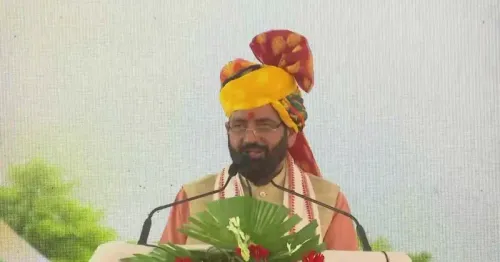
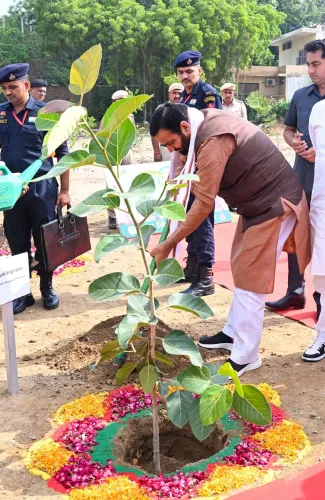
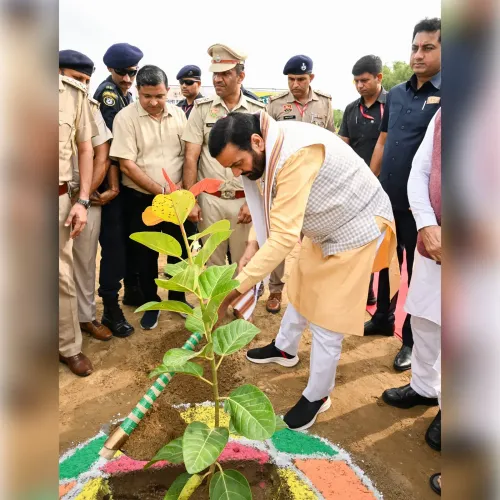
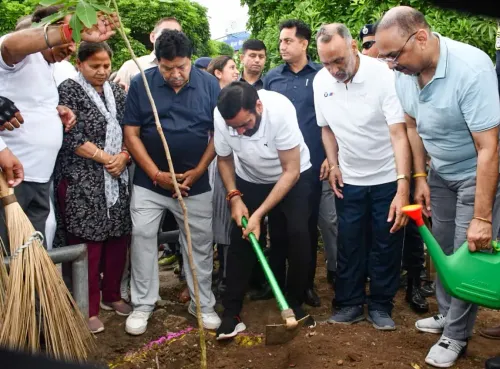
CM Saini Plants Haryana's 77th Van Mahotsav in Manesar
Synopsis
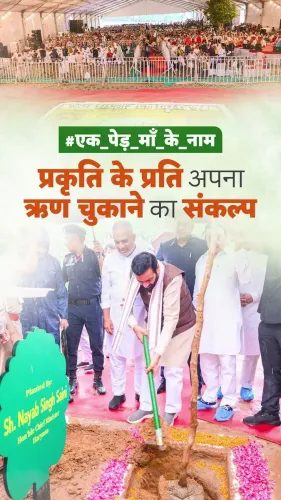
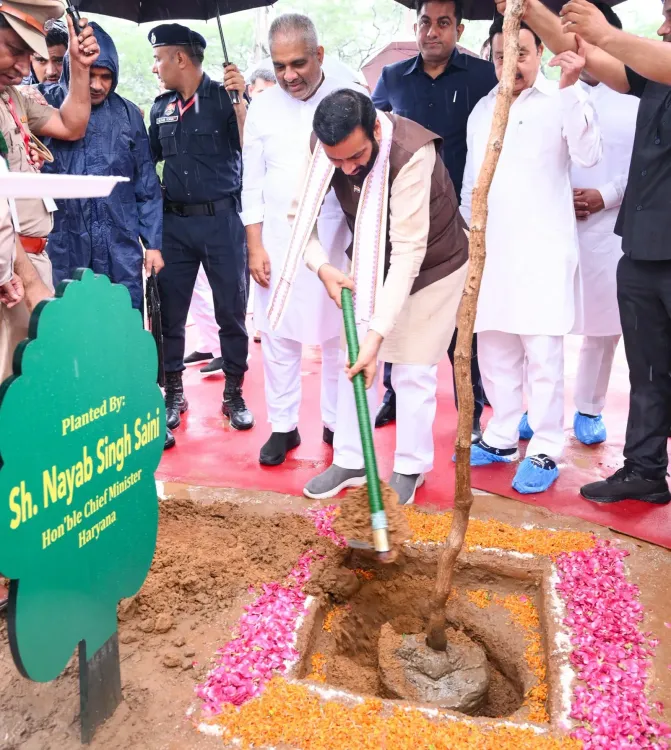
Haryana CM Nayab Singh Saini attended the 77th State-Level Van Mahotsav in Manesar on 7 August 2026, invoking PM Modi's 'Ek Ped Maa Ke Naam' campaign and calling afforestation a debt owed to nature rooted in Sanatan culture.
Key Takeaways
Haryana CM Nayab Singh Saini participated in the 77th State-Level Van Mahotsav at Manesar, Gurugram district on 7 August 2026 .
He framed the event as a resolve to repay humanity's debt to nature, not just a routine plantation drive.
The event drew inspiration from PM Modi's 'Ek Ped Maa Ke Naam' campaign, launched by the central government in 2024 .
Van Mahotsav is an annual afforestation festival first initiated in 1950 by K.M.
Saini called for every citizen to plant at least one sapling and commit to nurturing it.
Haryana's stated goal is a balance between development and environmental conservation for future generations.
A pledge to repay a debt to nature — that is how Haryana Chief Minister Nayab Singh Saini framed his participation in the 77th State-Level Van Mahotsav at Manesar on Friday, 7 August 2026, turning a tree-planting ceremony into a call for a statewide green movement.
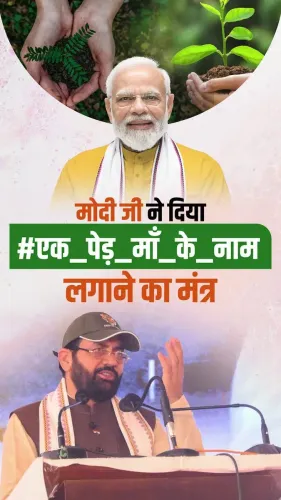
Posting on X in Hindi, Saini wrote: 'Yeh keval paudhe lagane ka karyakram nahin balki prakriti ke prati apna rin chukane ka sankalp hai' — 'This is not merely a tree-planting programme but a resolve to repay our debt to nature.' He credited Prime Minister Narendra Modi's 'Ek Ped Maa Ke Naam' ('One Tree in a Mother's Name') campaign as the inspiration, saying Haryana is shaping afforestation into a mass people's movement with the hashtag #Plant4Mother.
Van Mahotsav's 76-Year Journey to Manesar
Van Mahotsav is no newcomer to India's environmental calendar. The festival was first launched in 1950 by then-Union Minister K.M. Munshi as a national afforestation drive, making this year's edition the 77th in an unbroken tradition. Holding the state-level event in Manesar — an industrial town in Gurugram district known more for its auto-manufacturing corridors than its canopy — carries its own symbolism: green ambition planted squarely in the heart of Haryana's industrial belt.
'Ek Ped Maa Ke Naam' Comes to Haryana
The central government launched the 'Ek Ped Maa Ke Naam' campaign in 2024, urging every Indian to plant at least one tree in honour of their mother. Haryana's adoption of the campaign follows a broader pattern among BJP-governed states of localising Modi's national environmental messaging — weaving it into state festivals, school programmes, and civic events to amplify reach. Saini explicitly tied the drive to Sanatan cultural values, arguing that reverence for nature is 'not a modern idea but the foundational instinct of our ancient culture.'
A Green Haryana for the Next Generation
The Chief Minister set out a dual goal: balance between development and environmental conservation, aimed at building a 'green, clean, and prosperous Haryana' for future generations. He closed with a direct public ask — plant at least one sapling, commit to nurturing it, and join what he called this 'mahayagya' (great collective endeavour) of nature conservation. The Haryana state forest department and citizens across the state are the primary actors expected to carry the pledge forward.
Seventy-six years after K.M. Munshi planted the idea of Van Mahotsav, the question Haryana now answers is whether a hashtag and a state ceremony can turn that tradition into measurable canopy cover — and the next plantation target and environment budget will tell that story.
Point of View
Haryana reinforces the vertical alignment between state and central leadership that defines BJP's cooperative federalism optics. The choice of Manesar — an industrial node — as the venue is also pointed: it signals that development and ecology are not in opposition, a message the government has been keen to project ahead of any scrutiny of Haryana's industrial expansion. Watch whether this translates into verifiable plantation numbers in the next state environment budget.
NationPress
7 Aug 2026
Frequently Asked Questions
What is Van Mahotsav and when did it start?
Van Mahotsav is an annual tree-planting festival in India, first launched in 1950 by Union Minister K.M. Munshi to promote afforestation across the country. The 77th edition was held in 2026 .
Where was the 77th State-Level Van Mahotsav in Haryana held?
The 77th State-Level Van Mahotsav was held in Manesar , an industrial town in Gurugram district, Haryana , on 7 August 2026 .
What is the 'Ek Ped Maa Ke Naam' campaign?
' Ek Ped Maa Ke Naam ' — 'One Tree in a Mother's Name' — is a national tree-plantation campaign launched by Prime Minister Narendra Modi's central government in 2024 , urging every Indian to plant a tree in honour of their mother.
What did Haryana CM Nayab Singh Saini say at Van Mahotsav 2026?
CM Nayab Singh Saini said the event is 'not merely a tree-planting programme but a resolve to repay our debt to nature.' He called on every citizen to plant at least one sapling and described nature conservation as a foundational value of Sanatan culture.
What is Haryana's environmental goal under CM Saini?
CM Saini stated Haryana's goal is to build a 'green, clean, and prosperous Haryana' for future generations by balancing development with environmental conservation , aligned with central plantation campaigns.