CM Nayab Saini Reviews Key Projects, Orders NAPS Job Fairs
Synopsis
Haryana Chief Minister Nayab Singh Saini on 26 May 2026 chaired a high-level Pragati review in Chandigarh, ordering departments to fast-track health, education and infrastructure projects with no compromise on quality or timelines, while also directing expansion of district-level job fairs under the National Apprenticeship Promotion Scheme.
Key Takeaways
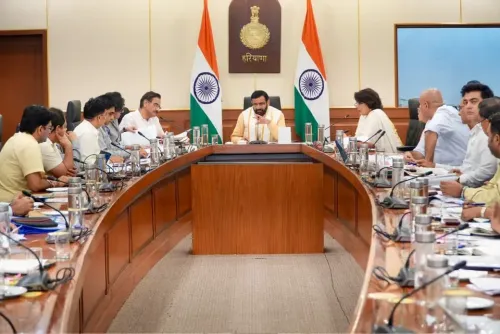
CM Nayab Saini chaired a high-level Pragati review meeting in Chandigarh on 26 May 2026 .
Sectors reviewed include health, education, infrastructure, cooperatives, fire services, and disaster management .
Saini declared there will be 'no compromise on quality or timelines' and that health infrastructure must meet the highest standards.
The National Apprenticeship Promotion Scheme (NAPS) was also reviewed, with directives to increase district-level job fairs .
Departments were instructed to improve inter-departmental coordination and strengthen skill-based employment opportunities for youth.
The Pragati platform, introduced nationally in 2015 , provides the formal accountability framework for these reviews.
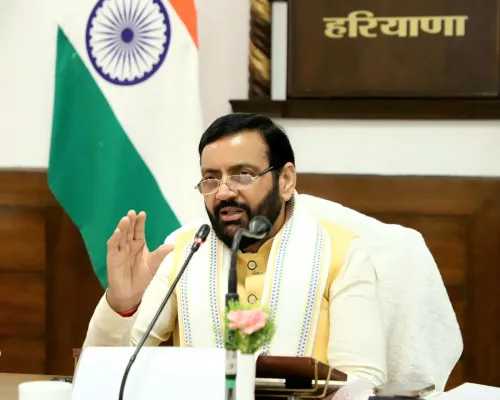
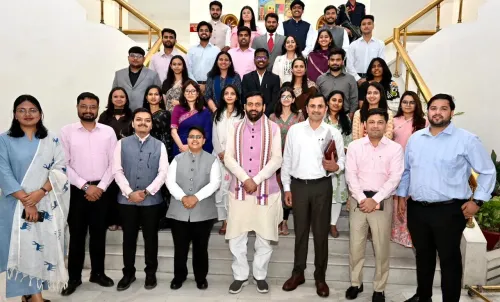
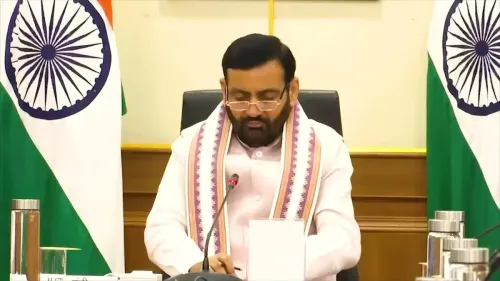
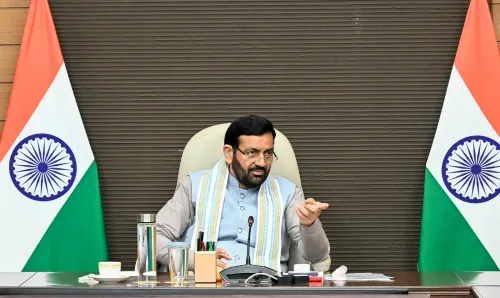
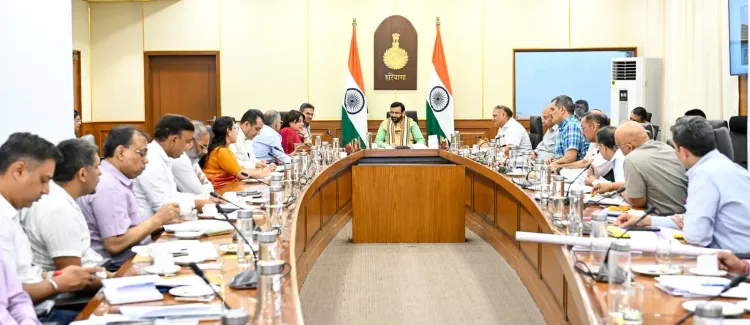
Chief Minister Nayab Singh Saini chaired a high-level 'Pragati' review meeting in Chandigarh on Tuesday, 26 May 2026, assessing the progress of major ongoing development projects across Haryana and directing departments to accelerate execution. The Chief Minister's Office of Haryana announced that sectors spanning health, education, infrastructure, cooperatives, fire services, and disaster management came under scrutiny, with Saini issuing a firm directive that quality and deadlines would not be compromised.
Context
The meeting, described as a uchch stariya 'Pragati' samiksha baithak (high-level Pragati review meeting), follows the governance model of the PRAGATI platform — Pro-Active Governance and Timely Implementation — first introduced nationally in 2015 to enable structured, top-down monitoring of infrastructure and public-service projects. Haryana has periodically adopted this format to keep departmental progress aligned with policy commitments. CM Saini stated plainly that 'health infrastructure must meet the highest standards' and that there would be 'no compromise on quality or timelines.'
Saini took charge as Chief Minister in March 2024, succeeding Manohar Lal Khattar, and has since anchored his administration's identity around visible delivery of development projects. The Pragati review mechanism gives his office a formal instrument to hold line departments accountable in real time.
Policy Backdrop
Alongside infrastructure oversight, CM Saini reviewed the National Apprenticeship Promotion Scheme (NAPS), a central programme launched in 2016 by the Ministry of Skill Development and Entrepreneurship to expand formal apprenticeship training by sharing stipend costs with employers. The scheme sits within the broader Skill India framework and is intended to bridge the gap between academic qualifications and industry-ready skills for young job-seekers.
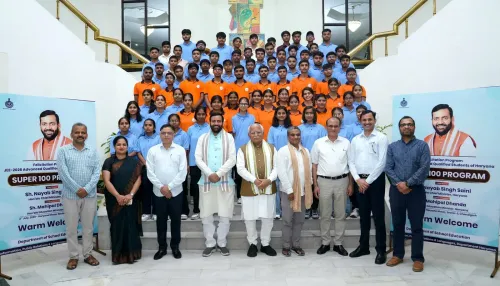
Saini directed departments to increase district-level job fairs under NAPS, improve inter-departmental coordination, and strengthen skill-based employment opportunities for youth across the state. The simultaneous review of both infrastructure delivery and youth employment signals an effort to integrate Haryana's state-level execution with central government priorities on skilling and timely project completion.
Stakeholders and Impact
The directives touch several layers of Haryana's administration and population. Departments handling health and education infrastructure face the most immediate pressure, with the Chief Minister's office placing the quality of health facilities at the top of the compliance agenda. Infrastructure and disaster management agencies were similarly put on notice to meet benchmarks.
For Haryana's youth, the NAPS-focused instructions carry direct relevance: expanded district-level job fairs would widen access to apprenticeship registrations, particularly in smaller towns and rural areas that are often underserved by centrally organised skilling events. Employer communities and vocational training institutes are also indirect stakeholders in any expansion of NAPS outreach.
What's Next
The immediate deliverables flowing from the meeting include a ramp-up in district-level job fairs under NAPS and measurable acceleration in the construction timelines of health, education, and infrastructure projects. Departments are expected to report back through the Pragati framework, which is designed to generate periodic accountability checkpoints rather than one-off reviews.
Whether the directives translate into verifiable progress will depend on follow-through at the district and departmental level. Upcoming quarterly project reviews and the frequency of job fairs in smaller districts will serve as the clearest indicators of whether CM Saini's instructions from the 26 May meeting produce measurable outcomes on the ground.
Point of View
High-visibility reviews that keep bureaucracies on notice. Pairing infrastructure oversight with a NAPS review in a single sitting is a deliberate signal: Saini is framing his administration's credibility on two simultaneous fronts, delivery of physical assets and youth employment, both of which are electorally sensitive in Haryana. The emphasis on district-level job fairs rather than state-level aggregates suggests an awareness that skilling outreach has been uneven outside urban centres. If follow-through materialises, it would strengthen Haryana's alignment with the national Skill India narrative; if not, the gap between directive and delivery will become a ready line of political critique.
NationPress
10 Oct 2026
Frequently Asked Questions
What is the Pragati review meeting held by Haryana CM Nayab Saini?
The Pragati review is a high-level governance meeting modelled on the national PRAGATI platform introduced in 2015, used to monitor the progress of ongoing development projects and hold departments accountable on quality and timelines. CM Saini chaired such a meeting in Chandigarh on 26 May 2026 covering health, education, infrastructure, and other sectors.
What is the National Apprenticeship Promotion Scheme (NAPS) reviewed by CM Saini?
NAPS is a central government scheme launched in 2016 by the Ministry of Skill Development and Entrepreneurship to promote formal apprenticeship training by sharing stipend costs with employers. CM Saini reviewed its implementation in Haryana and directed expansion of district-level job fairs to connect more youth with skill-based employment.
What did Haryana CM Nayab Saini say about health infrastructure at the Pragati meeting?
CM Saini stated that health infrastructure in Haryana must meet the highest standards and that there would be no compromise on quality or timelines for any ongoing development project.
What are district-level job fairs under NAPS in Haryana?
District-level job fairs under NAPS are state-organised events that bring together employers and apprenticeship-seeking youth at the district level, making it easier for young people in smaller towns and rural areas to register for formal skill training and employment opportunities under the national scheme.
Who is Nayab Singh Saini and when did he become Haryana Chief Minister?
Nayab Singh Saini is a BJP leader who became Chief Minister of Haryana in March 2024, succeeding Manohar Lal Khattar. His administration has focused on development project delivery and youth employment as key governance priorities.