CM Nayab Saini Pays Tribute to Revolutionary Batukeshwar Dutt
Synopsis
Haryana Chief Minister Nayab Singh Saini on 20 July 2026 honoured revolutionary Batukeshwar Dutt on his Punyatithi, calling the HSRA leader's courage and sacrifice against British rule a lasting source of inspiration for every Indian citizen.
Key Takeaways
Haryana CM Nayab Singh Saini paid tribute to revolutionary Batukeshwar Dutt on his death anniversary, 20 July 2026 .
Batukeshwar Dutt and Bhagat Singh threw smoke bombs in the Central Legislative Assembly on 8 April 1929 to protest British repressive legislation.
Dutt endured imprisonment in the Cellular Jail, Andaman and Nicobar Islands , and participated in hunger strikes for political prisoners' rights.
CM Saini described Dutt's struggle as 'a source of inspiration for every Indian,' reflecting the BJP government's practice of honouring armed revolutionaries.
Such tributes are part of a broader national effort to integrate the legacy of HSRA revolutionaries into mainstream independence narratives.
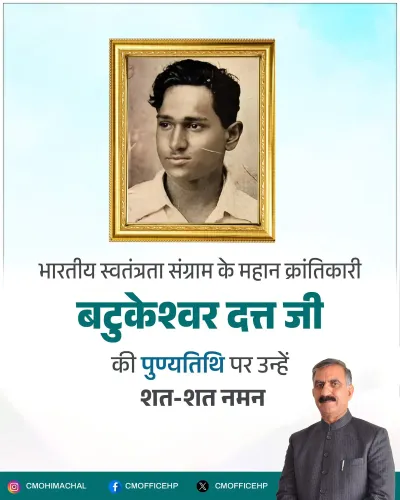
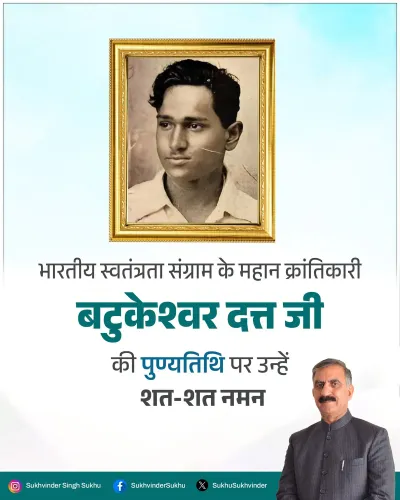
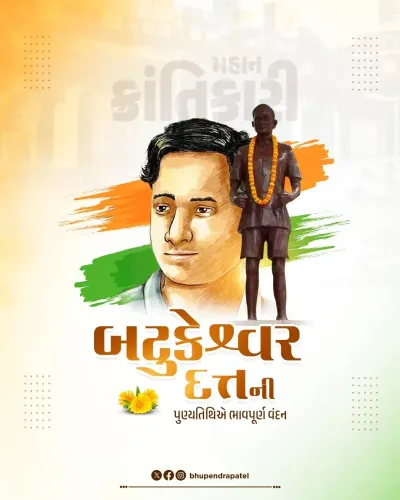
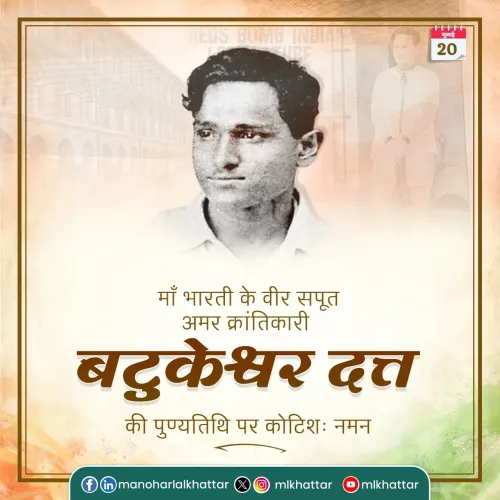
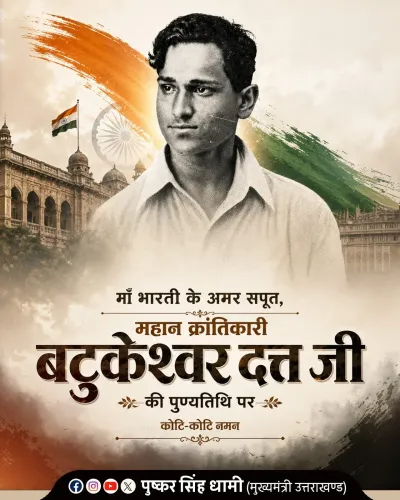
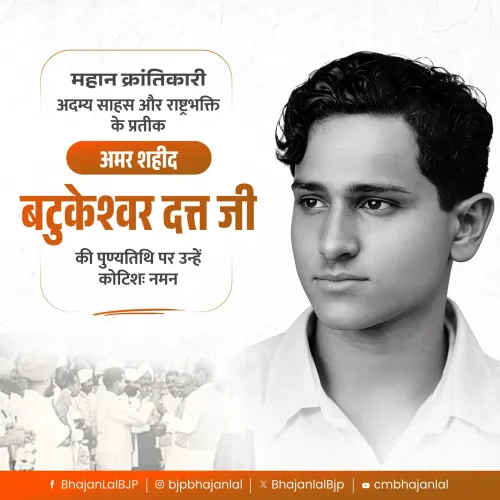
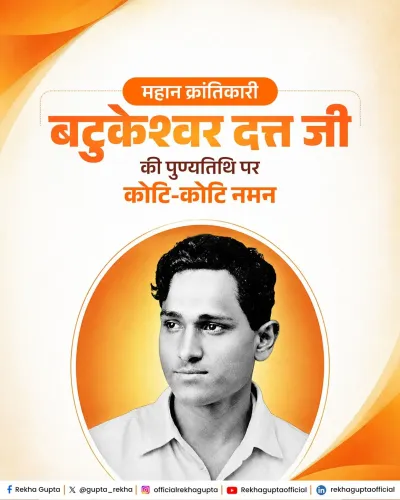
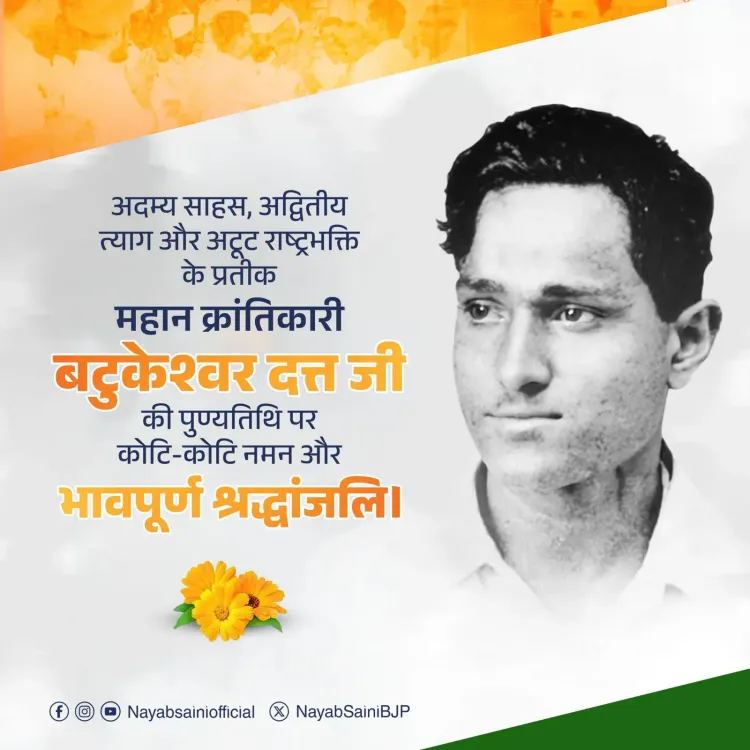
Haryana Chief Minister Nayab Singh Saini on Monday, 20 July 2026, paid homage to freedom fighter Batukeshwar Dutt on his death anniversary, honouring the revolutionary's courage and sacrifice in the struggle for India's independence.
Context
In his post, CM Saini described Dutt as a revolutionary of 'indomitable courage, unparalleled sacrifice, and unwavering resolve' — ('अदम्य साहस, अद्वितीय त्याग और अटूट संकल्प') — whose actions 'shook the roots of British rule.' He offered 'crores of salutations and heartfelt tribute' ('कोटि-कोटि नमन एवं भावपूर्ण श्रद्धांजलि') to the departed leader, calling his struggle, sacrifice, and dedication to the nation 'a source of inspiration for every Indian.'
Batukeshwar Dutt passed away on 20 July 1965, and his Punyatithi — the annual death anniversary observed in the Hindu tradition — has since been marked by political leaders across party lines as a moment to recall armed resistance during the independence movement.
Policy Backdrop
Batukeshwar Dutt is most remembered for the 8 April 1929 act in which he and fellow revolutionary Bhagat Singh threw non-lethal smoke bombs inside the Central Legislative Assembly in New Delhi to protest the passage of the repressive Public Safety Bill and the Trade Disputes Bill. The act was designed to 'make the deaf hear,' as their accompanying leaflet declared, and both men courted arrest rather than flee.
Dutt subsequently endured years of imprisonment, including transportation to the Cellular Jail in Andaman and Nicobar Islands, and participated in hunger strikes alongside other political prisoners demanding the rights of political detainees. Even after independence, he lived in relative obscurity, a fact that drew attention to how some armed revolutionaries were overlooked in post-colonial public memory.
Stakeholders and Impact
Indian political leaders routinely issue public tributes on the Punyatithi dates of independence-era revolutionaries, situating armed resistance within the broader national narrative alongside the mainstream non-violent movement. Haryana BJP governments have maintained this commemorative practice for national figures irrespective of regional origin, reinforcing a pan-India identity around the freedom struggle.
For citizens — particularly students and younger generations — such official tributes serve to keep lesser-celebrated figures like Dutt visible in public consciousness. His story, intertwined with that of Bhagat Singh and the Hindustan Socialist Republican Association (HSRA), represents a strand of revolutionary nationalism that continues to resonate strongly in states like Haryana and Punjab.
What's Next
Commemorations of HSRA revolutionaries are expected to intensify as the country approaches the centenary of several landmark events from the late 1920s and early 1930s. Observers will watch for any state or central government announcements regarding new memorials, educational initiatives, or formal recognition programmes dedicated to figures like Batukeshwar Dutt in the coming years.
The tribute also signals continued political emphasis on reclaiming the legacy of armed freedom fighters as an integral — not peripheral — part of India's independence story, a narrative thread that governments at both the state and national level have woven into public messaging with growing frequency.
Point of View
Complementing the non-violent Gandhian legacy. Haryana's geographical and cultural proximity to Punjab, the heartland of HSRA activity, gives such gestures added political resonance. By framing Dutt's sacrifice as an inspiration for 'every Indian,' Saini reinforces a pan-national identity around the freedom struggle rather than a narrowly regional one. The consistency of this commemorative practice across Punyatithi dates suggests it is now institutionalised political messaging rather than spontaneous tribute.
NationPress
19 Oct 2026
Frequently Asked Questions
Who was Batukeshwar Dutt?
Batukeshwar Dutt was an Indian revolutionary and member of the Hindustan Socialist Republican Association (HSRA) who, alongside Bhagat Singh, threw smoke bombs in the Central Legislative Assembly on 8 April 1929 to protest British repressive laws. He was imprisoned for years, including a stint in the Cellular Jail in the Andaman and Nicobar Islands, and died on 20 July 1965.
Why is 20 July observed in connection with Batukeshwar Dutt?
20 July marks the Punyatithi — death anniversary — of Batukeshwar Dutt, who passed away on 20 July 1965. Indian political leaders and citizens observe the day to honour his contributions to the freedom struggle.
What did Nayab Singh Saini say about Batukeshwar Dutt?
Haryana Chief Minister Nayab Singh Saini described Dutt as a revolutionary of 'indomitable courage, unparalleled sacrifice, and unwavering resolve' whose struggle against British rule is 'a source of inspiration for every Indian.'
What was the Central Legislative Assembly bombing of 1929?
On 8 April 1929, Batukeshwar Dutt and Bhagat Singh threw non-lethal smoke bombs inside the Central Legislative Assembly in New Delhi to protest the Public Safety Bill and the Trade Disputes Bill. Both men courted arrest deliberately to publicise their cause.
Why do BJP leaders frequently tribute HSRA revolutionaries?
BJP-governed states have made it a consistent practice to honour armed independence-era revolutionaries on their birth and death anniversaries, integrating figures like Bhagat Singh, Batukeshwar Dutt, and other HSRA members into the mainstream national narrative alongside the non-violent freedom movement.