CM Saini Marks World Groundwater Day, Urges Conservation
Synopsis
Haryana Chief Minister Nayab Singh Saini marked World Groundwater Day on June 10, 2026, calling groundwater an invaluable heritage and urging citizens to end reckless extraction. He reaffirmed his government's commitment to water conservation amid acute groundwater stress in the state's agricultural districts.
Key Takeaways
CM Nayab Singh Saini extended World Groundwater Day greetings on June 10, 2026 , calling for collective responsibility in water conservation.
He described groundwater as an 'invaluable heritage and the security of our future,' not merely a resource.
Haryana faces severe groundwater depletion, especially in districts like Fatehabad and Sirsa , driven by the paddy-wheat cropping cycle.
The state is aligned with central schemes including Atal Bhujal Yojana and Jal Jeevan Mission , both launched in 2019 .
The National Aquifer Mapping and Management Programme (since 2012 ) provides hydrogeological data to guide groundwater regulation in Haryana.
Future indicators include Central Ground Water Board assessments and potential new state budget allocations for water conservation.
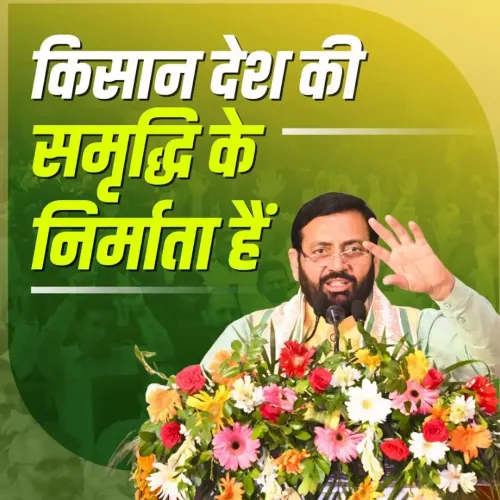
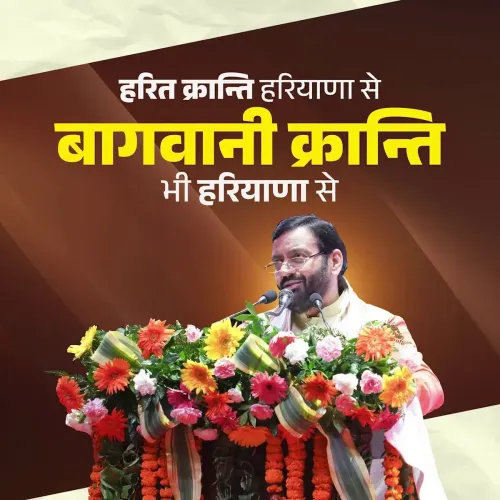
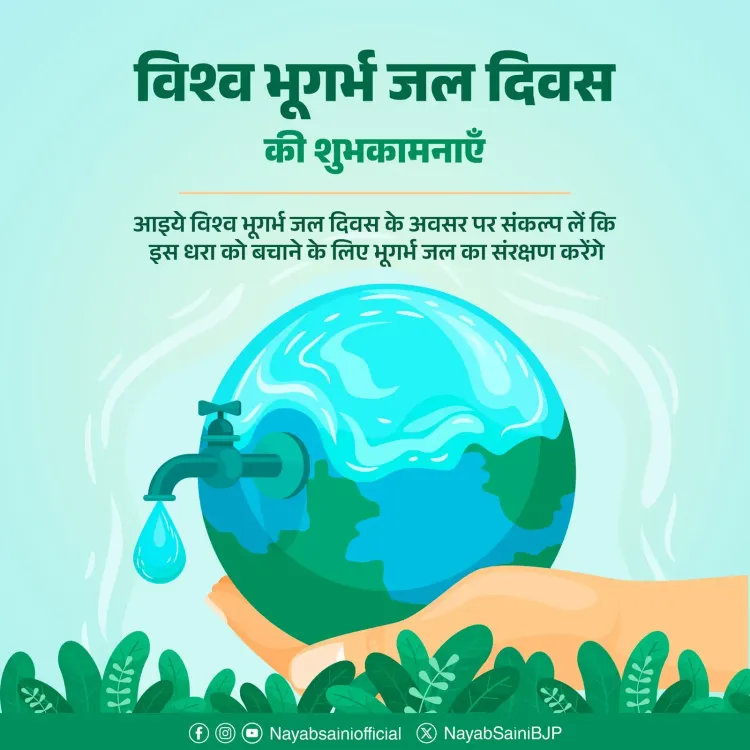
Haryana Chief Minister Nayab Singh Saini on Wednesday, June 10, 2026, extended greetings to the people of Haryana on World Groundwater Day, calling groundwater an 'invaluable heritage and the security of our future' and urging citizens to stop its reckless extraction.
Context
Posting in Hindi on the occasion, CM Saini wrote: 'प्रकृति का जल बचाना आज मानवता के सामने सबसे बड़ी चुनौती है' ['Saving nature's water is today the greatest challenge before humanity']. He described groundwater not merely as a resource but as an 'invaluable heritage and the security of our future,' adding that stopping its indiscriminate exploitation and conserving every drop is the collective responsibility of all citizens.
The Chief Minister also affirmed that his government remains 'sensitive towards water conservation and is continuously working towards it,' signalling continued state-level commitment to the cause.
Policy Backdrop
Haryana is among the most groundwater-stressed states in India, with districts such as Fatehabad and Sirsa facing acute depletion driven by the dominant paddy-wheat cropping cycle and over-extraction for irrigation. The state has aligned with two major central programmes: the Atal Bhujal Yojana, launched in 2019 to promote sustainable groundwater management through community-led interventions in over-exploited blocks, and the Jal Jeevan Mission, also launched in 2019, aimed at providing piped drinking water to every rural household.
The National Aquifer Mapping and Management Programme, which began in 2012, has generated critical hydrogeological data to support informed groundwater regulation across states including Haryana. Together, these frameworks represent a supply-side recharge and demand-side regulation approach that the state has built upon with its own extraction controls and awareness campaigns.
Stakeholders and Impact
The communities most directly affected are Haryana's farmers, who depend on groundwater for irrigation across the state's agricultural belt, and rural households that rely on groundwater for drinking and domestic use. Groundwater depletion in the broader Indo-Gangetic plains has become a pressing concern, with erratic monsoons and rising agricultural demand placing aquifers under sustained stress.
India's water conservation goals are also framed under Sustainable Development Goal 6 (clean water and sanitation), making state-level action part of a larger international commitment. CM Saini's message reinforces the shared responsibility of government and citizens in meeting these targets.
What's Next
Observers will watch for the Central Ground Water Board's annual groundwater assessment reports, which track aquifer levels across states and inform regulatory decisions. Any new budget allocations or tightening of extraction permit rules by the Haryana government in the coming months will indicate how the Chief Minister's stated commitment translates into concrete policy action.
With groundwater stress intensifying across northern India, Haryana's ability to combine awareness campaigns with enforceable conservation measures will be a key test of whether political messaging on World Groundwater Day leads to measurable outcomes on the ground.
Point of View
The messaging echoes a broader national shift toward rights-based and intergenerational water discourse. The post stops short of announcing new policy, which means its real significance will depend on whether it precedes concrete regulatory or budgetary action. For a BJP-governed state where farmer welfare is central to electoral politics, water conservation rhetoric must eventually translate into measurable supply-side and demand-side interventions to retain credibility.
NationPress
26 Oct 2026
Frequently Asked Questions
Why is World Groundwater Day observed?
World Groundwater Day is observed annually on June 10 to raise awareness about the importance of groundwater as a critical freshwater resource and to promote sustainable management and conservation practices globally.
What is the groundwater situation in Haryana?
Haryana is one of India's most groundwater-stressed states, with districts like Fatehabad and Sirsa facing acute depletion due to intensive paddy-wheat farming and over-extraction for irrigation.
What is Atal Bhujal Yojana?
Atal Bhujal Yojana is a central government scheme launched in 2019 to improve groundwater management through community-led interventions and aquifer mapping in water-stressed blocks across seven states, including Haryana.
What did Haryana CM Nayab Singh Saini say on World Groundwater Day 2026?
CM Nayab Singh Saini called groundwater an invaluable heritage and the security of our future, urged citizens to stop reckless extraction, and reaffirmed his government's commitment to water conservation.
How is India addressing groundwater depletion?
India is addressing groundwater depletion through schemes like Atal Bhujal Yojana and Jal Jeevan Mission, the National Aquifer Mapping and Management Programme, and state-level extraction controls, all aligned with SDG 6 targets on clean water.