CM Saini's Cabinet Clears Rs 5,714 Cr Water Secure Haryana Plan
Synopsis
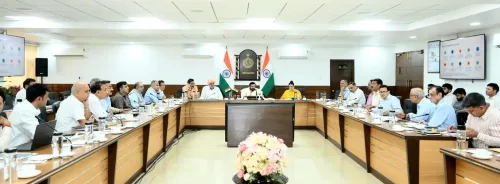
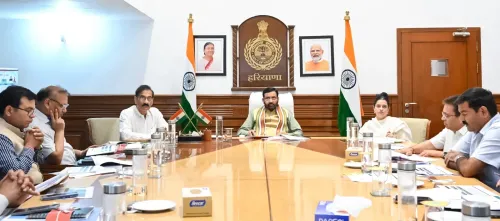
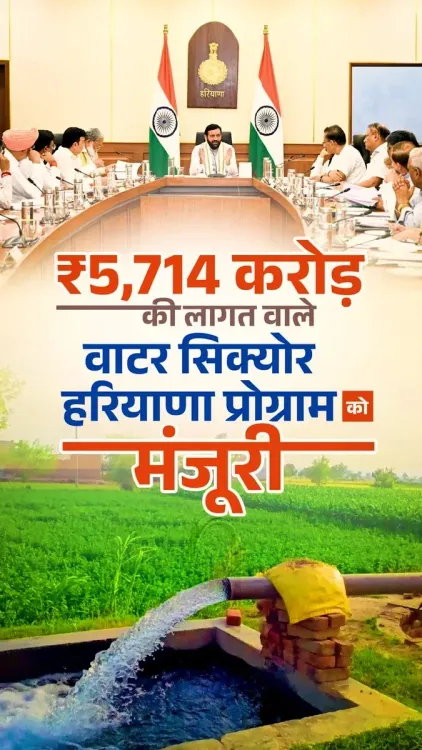
Haryana's cabinet, led by Chief Minister Nayab Singh Saini, has approved the World Bank-backed 'Water Secure Haryana Program' at an estimated cost of Rs 5,714.80 crore, targeting the state's deepening groundwater crisis driven by decades of water-intensive agriculture.
Key Takeaways
The Haryana cabinet approved the 'Water Secure Haryana Program' on 13 August 2026 .
The program carries an estimated cost of ₹5,714.80 crore and will be implemented with World Bank support.
CM Nayab Singh Saini described it as a significant step toward strengthening water security in the state.
Haryana's aquifers face critical stress due to paddy-wheat farming, making water security a direct threat to farm incomes.
The program builds on earlier central schemes including Atal Bhujal Yojana and Jal Jeevan Mission , both launched in 2019 .
Phased rollout timelines and district-level project approvals are yet to be made public.
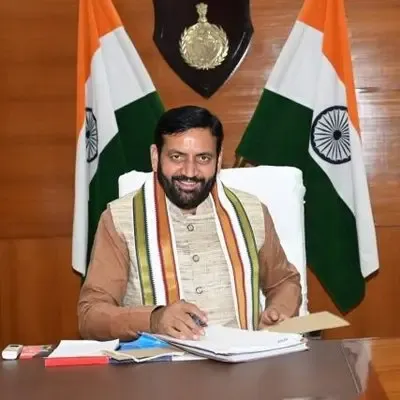
Haryana's groundwater crisis just got a serious policy response. Haryana Chief Minister Nayab Singh Saini announced on Thursday, 13 August 2026 that the state cabinet has approved the 'Water Secure Haryana Program' — a large-scale water security initiative to be implemented with World Bank support at an estimated cost of ₹5,714.80 crore.
Posting in Hindi on X, CM Saini described the approval as 'jal suraksha ko sudridh karne ki disha mein ek mahatvapurn kadam' — 'an important step towards strengthening water security' in the state. The cabinet's green light marks the formal entry of multilateral financing into Haryana's water management architecture at a scale the state has not seen in recent years.
Why Haryana's aquifers are under pressure
Haryana sits at the heart of India's breadbasket, and that distinction comes at a steep cost. Decades of paddy-wheat cultivation — both water-intensive crops — have drawn groundwater faster than monsoon recharge can replenish it. Several districts in the state have been flagged for critical or over-exploited aquifer status, making water security not just an environmental concern but a direct threat to farm incomes and rural livelihoods.
The state has previously tapped central programs — the Atal Bhujal Yojana, launched in 2019, brought community-led groundwater management to select Haryana districts, while the Jal Jeevan Mission, also from 2019, pushed functional tap connections to rural households. The new program signals a step up: state-level ownership, a dedicated program structure, and a World Bank partnership that typically brings both capital and technical conditionality around monitoring and governance.
World Bank's role and what the money means
The World Bank has a long track record of co-financing water and irrigation projects across Indian states, often pairing loans with requirements for measurable outcomes — groundwater level monitoring, efficiency benchmarks, and community participation frameworks. An outlay of nearly ₹5,715 crore positions this as one of the larger externally aided water programs in the state's recent history.
For Haryana's farmers and rural households — the two groups most exposed to water scarcity — the program's impact will ultimately depend on phased rollout timelines, district-level project approvals, and whether groundwater recharge indicators move in the right direction after implementation begins. Those details are yet to be made public.
A cabinet bet on long-term resource security
The Saini cabinet's approval fits a broader pattern of Haryana governments combining state budgets with multilateral loans for conservation and efficiency works. What distinguishes this moment is the program's explicit framing as a 'water security' initiative — language that signals intent beyond routine irrigation upgrades, toward systemic aquifer management and supply resilience.
With the monsoon season in full swing and agricultural demand at its peak, the timing of the announcement is pointed. The harder question — whether the program's design can actually bend the curve on falling water tables — will be answered not in cabinet rooms, but in the fields and tube-wells of Haryana's most stressed districts.
Point of View
Externally financed state program. For CM Saini, who took office in March 2024, anchoring a large World Bank partnership signals both governance ambition and an acknowledgment that the groundwater problem is structural, not seasonal. The program's real test will be implementation fidelity: World Bank co-financing typically demands measurable outcomes, which could either enforce accountability or create friction with agricultural communities resistant to crop-pattern changes. Nationally, it adds Haryana to a growing list of states turning to multilateral capital to fund water resilience — a trend that reflects both the scale of the crisis and the limits of domestic fiscal space.
NationPress
13 Aug 2026
Frequently Asked Questions
What is the Water Secure Haryana Program?
The Water Secure Haryana Program is a state-level water security initiative approved by the Haryana cabinet on 13 August 2026. It will be implemented with World Bank support at an estimated cost of Rs 5,714.80 crore, aimed at addressing the state's groundwater depletion and improving water security for farmers and rural households.
How much will the Water Secure Haryana Program cost?
The estimated cost of the Water Secure Haryana Program is Rs 5,714.80 crore, to be funded in partnership with the World Bank.
Why does Haryana face a water crisis?
Haryana's water crisis stems from decades of paddy-wheat cultivation, both highly water-intensive crops, which have drawn groundwater faster than monsoon rains can recharge aquifers. Several districts in the state have been classified as critically or over-exploited groundwater zones.
What earlier water schemes has Haryana benefited from?
Haryana has previously benefited from the Atal Bhujal Yojana, launched in 2019 for community-led groundwater management, and the Jal Jeevan Mission, also from 2019, which extended functional tap water connections to rural households across the state.
What is the World Bank's role in the Haryana water program?
The World Bank is a co-financing partner in the Water Secure Haryana Program. The institution has a track record of funding water and irrigation projects across Indian states, typically pairing financial support with requirements for outcome monitoring and governance benchmarks.