CM Hemant Soren Writes to Rahul Gandhi Over MMDR Bill Threat
Synopsis
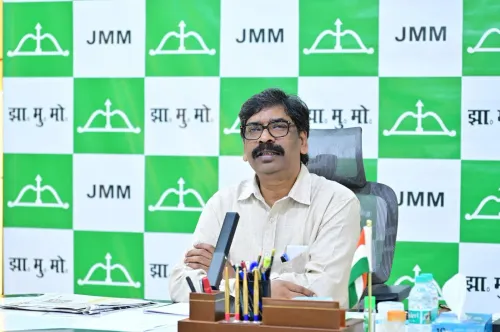
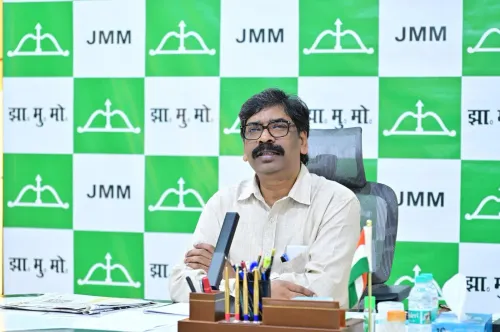
Jharkhand Chief Minister Hemant Soren has written to Lok Sabha Leader of Opposition Rahul Gandhi, calling for a united opposition stand against the MMDR Amendment Bill 2026, which he says curtails states' constitutional and financial rights over mineral resources.
Key Takeaways
Hemant Soren wrote to Rahul Gandhi on 13 August 2026 seeking joint opposition to the MMDR Amendment Bill, 2026.
Soren alleges the bill limits the constitutional and financial rights of states over mineral resources.
The MMDR Act 1957 was last significantly amended in 2015 , centralising mining lease approvals and triggering sustained Centre-state friction.
Mineral-rich states — Jharkhand, Odisha, Chhattisgarh — depend heavily on mining revenue for non-tax receipts, making MMDR changes politically and fiscally consequential.
The letter signals a push to build a broader opposition coalition in Parliament against the bill's passage.
A letter from Jharkhand Chief Minister Hemant Soren to Leader of Opposition Rahul Gandhi on 13 August 2026 signals that the fight over who controls India's mineral wealth is moving from state capitals to the corridors of Parliament — and opposition ranks are being mobilised.
Soren wrote to Gandhi urging him to raise a united voice against the Mines and Minerals (Development and Regulation) Amendment Bill, 2026, which the Jharkhand Chief Minister says is being used by the central government to curtail the constitutional and financial rights of states. The letter, shared publicly on X, makes the political intent clear: this is not a bilateral grievance — it is a call to build a broader opposition front.
Why Mineral Rights Are a Constitutional Flashpoint
The MMDR Act of 1957 has long been the legal spine of India's mining governance. When the Centre substantially amended it in 2015 — mandating e-auctions for mining leases and centralising key approvals — mineral-rich states pushed back hard, arguing that the Seventh Schedule of the Constitution places mines and minerals squarely within a concurrent domain where state authority must be respected.
For states like Jharkhand, Odisha, and Chhattisgarh, this is not abstract constitutional theory. Revenue from major minerals forms a significant chunk of non-tax receipts — the money that funds schools, roads, and welfare schemes. Every legislative tweak from New Delhi that narrows state discretion over concessions or royalties lands directly on the state budget.
Soren's Strategic Outreach to Gandhi
By writing to Rahul Gandhi — the most visible face of parliamentary opposition — Soren is doing two things simultaneously. He is framing the MMDR Amendment Bill, 2026 as a pan-opposition issue, not merely a Jharkhand Mukti Morcha concern, and he is pushing the Leader of Opposition to deploy his floor strength in the Lok Sabha against the bill's passage.
The move is consistent with a pattern that has intensified since the 2015 reforms: opposition-governed mineral states coordinating to resist central encroachment, using both legislative debate and public political pressure. Soren, as executive president of the JMM, has consistently positioned himself as a champion of tribal and state rights over natural resources — a posture that resonates deeply in a state where mining communities and their livelihoods are central to the political identity.
The specific provisions of the 2026 Amendment Bill and the full contents of Soren's letter remain to be placed on the public record, but the direction of the conflict is unmistakable. Watch for joint statements from opposition-ruled states and a sharpening debate once the bill reaches the floor of Parliament.
Point of View
Non-BJP states using Centre-state constitutional arguments to resist MMDR reforms, but the direct outreach to the Leader of Opposition raises the political stakes considerably. If Gandhi takes up the cause on the Lok Sabha floor, the bill could face a coordinated opposition that spans regional and national parties. The episode underscores how control over subsoil resources remains one of Indian federalism's most contested fault lines.
NationPress
14 Aug 2026
Frequently Asked Questions
What is the MMDR Amendment Bill 2026?
The Mines and Minerals (Development and Regulation) Amendment Bill, 2026 is a proposed central legislation amending India's mining governance framework. States like Jharkhand allege it would restrict their constitutional authority and financial rights over mineral concessions and revenue.
Why did Hemant Soren write to Rahul Gandhi about the MMDR Bill?
Soren wrote to Gandhi as Leader of Opposition in the Lok Sabha, urging him to raise a united parliamentary voice against provisions in the MMDR Amendment Bill 2026 that the Jharkhand Chief Minister says curtail states' rights over mineral resources.
How does the MMDR Act affect Jharkhand's revenue?
Revenue from major minerals forms a significant portion of Jharkhand's non-tax receipts. Central amendments that reduce state discretion over mining leases or royalties directly impact the state's finances and its ability to fund public services.
What was the 2015 MMDR amendment about?
The 2015 amendment to the MMDR Act 1957 mandated e-auctions for mining leases and centralised certain approvals, reducing state governments' discretion in allocating mineral concessions — a change that mineral-rich states have contested ever since.
Which states oppose central MMDR amendments?
Jharkhand, Odisha, and Chhattisgarh have been the most vocal opponents of central MMDR reforms, arguing that such changes erode their constitutional authority under the Seventh Schedule and reduce their share of mineral revenues.