CM Samrat Choudhary hails Cabinet's Rabi MSP hike for 2027-28
Synopsis
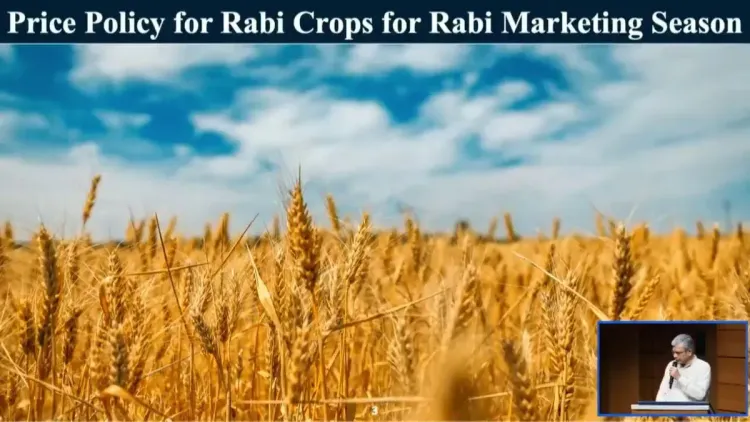
Bihar Chief Minister Samrat Choudhary welcomed the Union Cabinet's approval of higher Minimum Support Prices for all mandated rabi crops for the 2027-28 marketing season, crediting PM Modi's leadership and calling it a meaningful step for farmer welfare.
Key Takeaways
The Union Cabinet approved an MSP increase for all mandated rabi crops for the 2027-28 marketing season .
Bihar CM Samrat Choudhary publicly welcomed the decision on 30 September 2026 , attributing it to PM Modi's leadership.
The MSP mechanism covers 23 mandated crops and is set at a minimum of 1.5 times the weighted average cost of production since 2018-19.
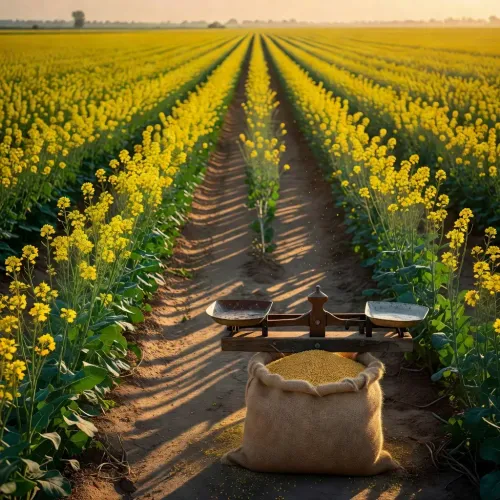
Bihar's large rural farming population — dependent heavily on rabi crops such as wheat and mustard — stands to benefit directly from a higher price floor.
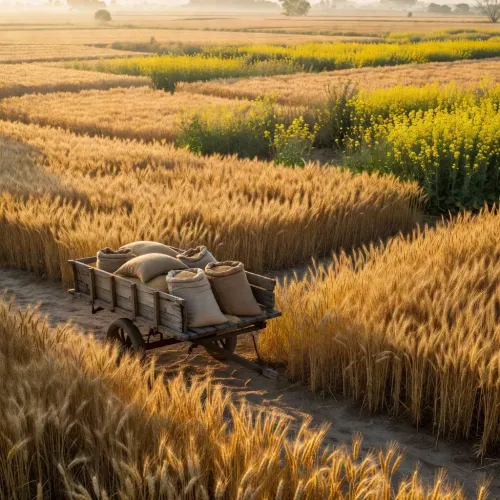
Procurement by FCI and state agencies during the 2027-28 season will determine how effectively the revised MSP reaches farmers at the mandi level.
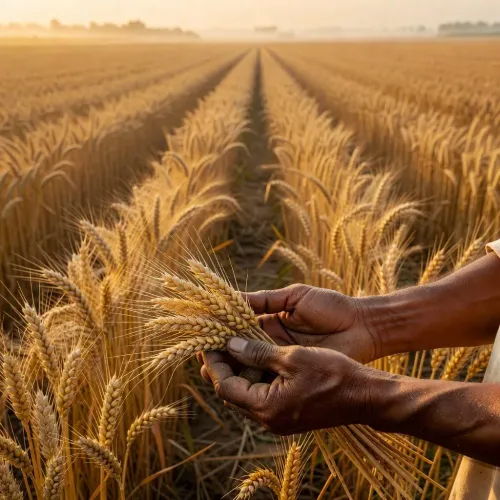
When the Union Cabinet clears a price revision for every mandated rabi crop in a single sitting, it sends a signal straight to the fields — and Bihar Chief Minister Samrat Choudhary made sure farmers in his state heard it. On Wednesday, 30 September 2026, Choudhary took to X to welcome the cabinet's approval of higher Minimum Support Prices for all mandated rabi crops for the 2027-28 marketing season, calling it a decision 'dedicated to the interests of the annadata (provider of food)'.
In his post, Choudhary credited Prime Minister Narendra Modi with steering the decision, framing the MSP increase as a 'meaningful effort' to ensure farmers receive a fair return for their labour and to 'further strengthen the agriculture sector.' The Hindi phrase annadata — literally 'giver of grain' — is widely used in Indian political discourse to invoke the moral weight of farming as a vocation, not merely an occupation.
What the MSP mechanism actually does for rabi growers
The Minimum Support Price is the government's price-floor guarantee across 23 mandated crops, covering both kharif and rabi seasons. For rabi — the winter-sown season whose key crops include wheat, mustard, gram, and lentils — the cabinet sets the MSP ahead of sowing so farmers can plan with a degree of certainty. Since 2018-19, official policy has pegged MSP at a minimum of 1.5 times the weighted average cost of production, a benchmark the current administration has cited in successive annual revisions.
The Union Cabinet, chaired by the Prime Minister, is the apex body that formally clears each season's rates. State governments, procurement agencies such as the Food Corporation of India, and state-level bodies then operationalise the purchases once the sowing-and-harvest cycle completes.
Bihar's stake in a stronger rabi floor price
For Bihar — a state where agriculture employs the majority of the rural workforce and where wheat and mustard are significant rabi crops — an upward MSP revision carries direct economic weight. Chief Minister Choudhary's public endorsement also signals that the state government intends to align its own procurement and support architecture with the revised federal floor. Analysts tracking the state watch whether Bihar will announce supplementary schemes to complement the central price guarantee, a pattern seen in other agriculture-heavy states after major MSP revisions.
The broader pattern is well established: successive central governments have used periodic MSP revisions as the primary price-support instrument, while layering complementary income-transfer schemes — most notably PM-KISAN — on top. The cabinet's latest approval continues that arc, reinforcing a policy lineage that stretches back through multiple rabi seasons.
The real test, as always, will come at procurement time — whether FCI and state agencies buy at or above MSP in sufficient volumes to make the price floor meaningful for the farmer standing at the mandi gate.
Point of View
And framing them through the emotive lens of the 'annadata' reinforces the ruling coalition's rural outreach narrative. For Bihar specifically, where agrarian distress has been a perennial electoral fault line, such endorsements also signal that state-level supplementary support could follow. The durability of the political dividend, however, depends entirely on whether procurement machinery actually delivers the revised floor price to farmers — a gap that has dogged MSP policy for decades.
NationPress
30 Sept 2026
Frequently Asked Questions
What is MSP and which rabi crops does it cover?
Minimum Support Price is a government-guaranteed price floor for 23 mandated crops. Key rabi crops covered include wheat, mustard, gram, barley, and lentils, with rates set before the sowing season so farmers can plan accordingly.
Why did Bihar CM Samrat Choudhary comment on a central cabinet decision?
As a senior BJP leader and Chief Minister of a major agricultural state, Choudhary routinely endorses central government decisions that affect Bihar's large farming population, reinforcing political alignment between the state and federal governments.
What is the 1.5x cost-of-production formula for MSP?
Since 2018-19, government policy mandates that MSP be set at a minimum of 1.5 times the weighted average cost of production for each crop, intended to guarantee farmers a built-in profit margin above their input costs.
Who actually buys crops at MSP from farmers?
The Food Corporation of India and state-level procurement agencies are the primary buyers at MSP. Their actual purchase volumes determine whether the price floor is meaningful in practice, since private market prices sometimes differ.
How does the rabi MSP hike connect to PM-KISAN and other farm schemes?
MSP revisions and PM-KISAN income transfers are complementary instruments of central agricultural support — MSP targets market prices while PM-KISAN provides a direct cash transfer of Rs 6,000 per year to eligible farmer families, together forming the core of federal farm welfare policy.