CM Samrat Choudhary Backs National Urea Investment Policy-2026
Synopsis
Bihar Chief Minister Samrat Choudhary on 15 July 2026 backed the Cabinet-approved National Urea Investment Policy-2026, which aims to promote new gas-based urea plants in India, increase domestic production, and reduce costly fertilizer imports — a move he linked to PM Modi's Atmanirbhar Bharat vision.
Key Takeaways
Bihar Chief Minister Samrat Choudhary publicly endorsed the Union Cabinet's approval of the National Urea Investment Policy-2026 on 15 July 2026 .
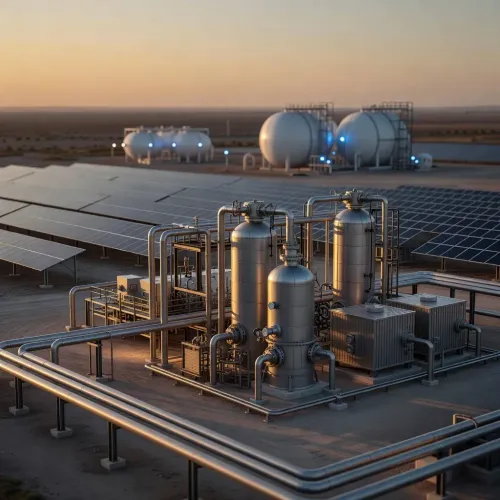
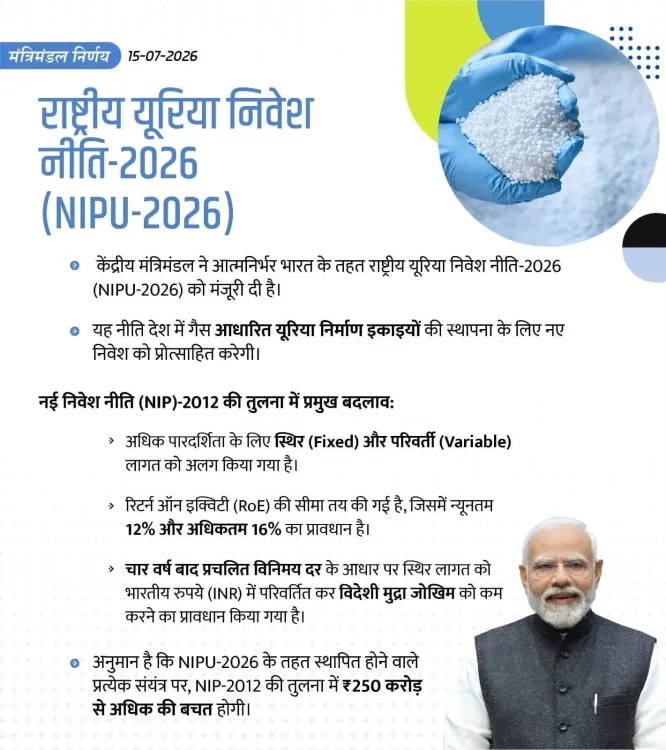
The policy is designed to incentivise new gas-based urea plants in India to expand domestic production capacity.
A core objective is reducing India's dependence on urea imports , which have historically strained the government's fertilizer subsidy budget.
The decision builds on earlier measures including the New Urea Policy 2015 and the 2016-17 revival plan for closed public-sector fertilizer units.
The policy is framed within the Atmanirbhar Bharat framework, targeting self-reliance in agriculture and chemicals since 2020.
Farmers and fertilizer manufacturers are identified as the primary stakeholders expected to benefit from stable supply and new investment incentives.
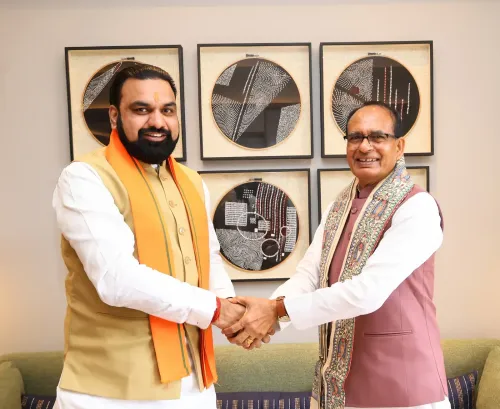
Bihar Chief Minister Samrat Choudhary on Wednesday, 15 July 2026, welcomed the Union Cabinet's approval of the National Urea Investment Policy-2026, calling it a significant step toward making India's agriculture sector self-reliant. The senior BJP leader said the policy would promote the establishment of new gas-based urea plants, boost domestic production, and reduce the country's dependence on imports.
Context
Posting on X, CM Choudhary described the cabinet decision as 'kृषि क्षेत्र को आत्मनिर्भर बनाने की दिशा में एक महत्वपूर्ण पहल' ('an important initiative toward making the agriculture sector self-reliant'). He credited Prime Minister Narendra Modi with steering the vision of an 'Atmanirbhar Krishi' (self-reliant agriculture) and a 'Viksit Bharat' (developed India), asserting that this resolve is being realised continuously under Modi's leadership. The post carried the hashtag #CabinetDecisions, indicating it was part of a broader BJP communication push around the cabinet's announcements.
Policy Backdrop
India has historically relied on urea imports to bridge the gap between domestic demand and production capacity. The New Urea Policy of 2015 had introduced variable pricing and investment incentives to revive domestic capacity, and announcements in 2016-17 targeted the revival of five closed public-sector fertilizer plants using gas as feedstock. The National Urea Investment Policy-2026 is the latest iteration in this lineage, specifically aimed at incentivising new gas-based urea manufacturing units to further expand domestic output. The policy sits squarely within the Atmanirbhar Bharat framework launched in 2020, which has consistently targeted reduced import dependence across fertilizers, energy, and chemicals through domestic capacity addition.
Gas-based urea plants are preferred over naphtha-based ones for their lower energy consumption and reduced subsidy burden on the government. Stabilising urea supply through domestic production is seen as critical to moderating the fertilizer subsidy outgo in successive Union Budgets, which has run into tens of thousands of crore rupees annually.
Stakeholders and Impact
Farmers are the primary beneficiaries cited in the policy rationale. A more robust domestic supply chain is expected to reduce price volatility and ensure timely availability of urea, which is the most widely used nitrogenous fertilizer in India's food-grain cultivation. Fertilizer manufacturers stand to benefit from the investment incentives that the policy is designed to offer, potentially unlocking fresh capital for greenfield and brownfield plant expansions. Bihar, as a predominantly agrarian state, has a particular stake in stable urea supply, lending political salience to CM Choudhary's public endorsement of the decision.
What's Next
Attention will now turn to the Cabinet-notified guidelines detailing the exact investment incentives, eligibility criteria, and commissioning timelines under the National Urea Investment Policy-2026. Bidding processes for new plant licences and annual import-substitution targets are expected to be outlined in subsequent policy documents and Union Budget allocations. The government's ability to attract private investment into urea manufacturing will be a key metric in assessing whether the policy translates into on-ground capacity addition over the coming years.
Point of View
Signalling that state-level BJP leaders are being mobilised to amplify a cabinet decision with direct rural resonance. The policy continues a decade-long arc of efforts to revive domestic urea capacity — from the 2015 pricing reforms to the 2016-17 plant revival announcements — each time with the stated goal of cutting import dependence and rationalising subsidy outgo. For an agrarian state like Bihar, where urea availability directly affects kharif and rabi crop yields, the political optics of backing such a move are straightforward. The real test will be whether the 2026 policy generates bankable investment proposals and actual plant commissioning, a milestone its predecessors only partially achieved.
NationPress
14 Oct 2026
Frequently Asked Questions
What is the National Urea Investment Policy-2026?
The National Urea Investment Policy-2026 is a Union Cabinet-approved policy aimed at incentivising the establishment of new gas-based urea manufacturing plants in India to increase domestic production and reduce reliance on urea imports.
Why did Bihar CM Samrat Choudhary comment on the urea policy?
As Bihar Chief Minister and a senior BJP leader, Samrat Choudhary welcomed the policy because Bihar is a major agrarian state where farmers depend heavily on urea, and the decision aligns with the party's Atmanirbhar Bharat messaging.
How will the National Urea Investment Policy-2026 help farmers?
By boosting domestic urea production through new gas-based plants, the policy aims to ensure more stable supply and reduce price volatility, which directly benefits farmers who rely on urea as the primary nitrogenous fertilizer for food-grain cultivation.
What is Atmanirbhar Krishi and how does this policy relate to it?
Atmanirbhar Krishi means 'self-reliant agriculture' and is part of the broader Atmanirbhar Bharat framework launched in 2020. The National Urea Investment Policy-2026 advances this goal by targeting reduced fertilizer import dependence through domestic capacity addition.
What were India's earlier urea policy initiatives?
India introduced the New Urea Policy in 2015 with variable pricing and investment incentives, and in 2016-17 announced the revival of five closed public-sector fertilizer plants using gas feedstock. The 2026 policy is the latest step in this ongoing effort.