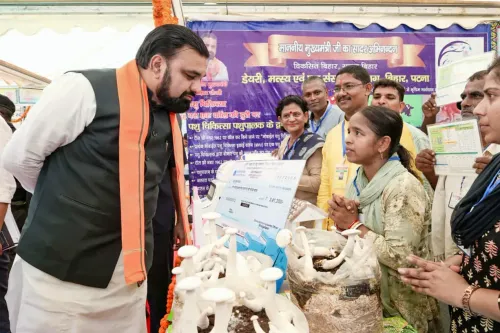
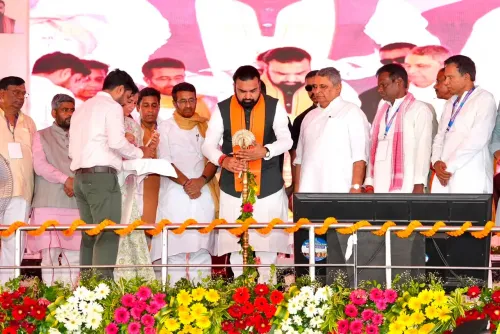
CM Samrat Choudhary addresses BEU convocation, unveils college works
Synopsis
Bihar CM Samrat Choudhary addressed the third BEU convocation at Gyan Bhavan, Patna, felicitated B.Tech and M.Tech toppers, inaugurated works at three district engineering colleges, highlighted ₹10 and ₹5 tuition fees at state institutions, and confirmed 220 acres transferred to the Centre for Vikramshila University revival.
Key Takeaways
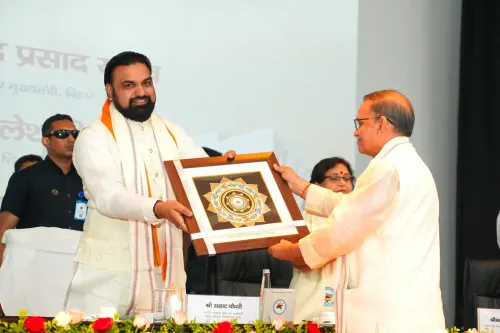
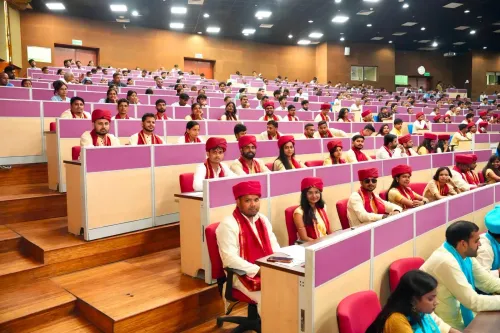
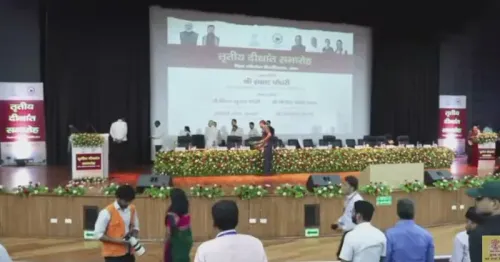
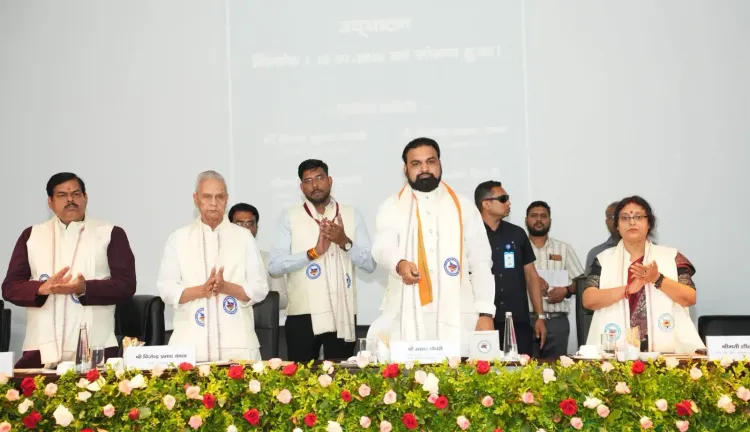
Bihar Engineering University held its third convocation at Gyan Bhavan, Patna on 18 July 2026 , presided over by CM Samrat Choudhary .
Meritorious B.Tech and M.Tech students of academic session 2024-25 were felicitated at the ceremony.
Development works at Government Engineering Colleges in Jamui, Kishanganj, and Supaul were inaugurated.
Bihar government offers engineering education at just ₹10 per year in government engineering colleges and ₹5 per year in government polytechnic institutions.
220 acres of land have been transferred to the Government of India for the re-establishment of the ancient Vikramshila University .
Bihar Chief Minister Samrat Choudhary addressed students, teachers, and academics at the third convocation of Bihar Engineering University (BEU) held at Gyan Bhavan, Patna, on Saturday, 18 July 2026. Meritorious students of B.Tech and M.Tech for the academic session 2024-25 were felicitated at the ceremony.
Context
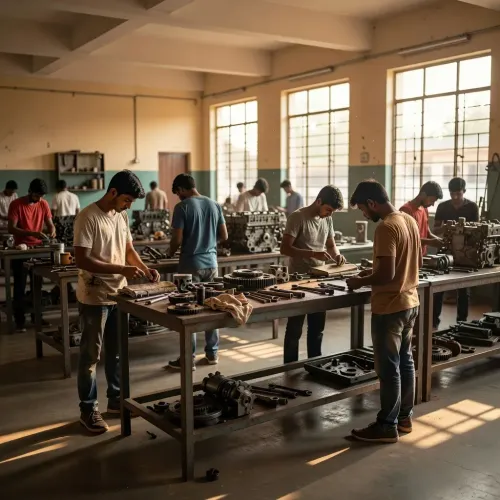
Addressing the gathering, Chief Minister Choudhary also inaugurated development works at three state-run engineering colleges — Government Engineering College, Jamui; Government Engineering College, Kishanganj; and Government Engineering College, Supaul. The simultaneous launch of infrastructure projects at three district-level institutions underscored the state government's push to decentralise technical education beyond Patna.
In his address, the Chief Minister highlighted the Bihar government's commitment to making engineering education financially accessible. He stated that the state is providing education at a nominal fee of just ₹10 per year at government engineering colleges and ₹5 per year at government polytechnic institutions.
Policy Backdrop
Bihar has steadily expanded its network of district-level government engineering colleges over recent years, pairing physical expansion with a near-zero tuition model to reduce financial barriers for students from economically weaker sections. The ₹10 and ₹5 fee structures are among the lowest in the country for formal technical degree programmes, positioning Bihar as an outlier in affordable public technical education.
The broader pattern mirrors efforts seen in other Indian states to upgrade polytechnics and engineering seats, though Bihar's nominal-fee approach is notably more aggressive. The policy directly targets aspirants who might otherwise be priced out of private engineering institutions, where annual fees can run into several lakhs of rupees.
Vikramshila Revival
A significant announcement at the event concerned the revival of the ancient Vikramshila University, a renowned Buddhist centre of learning from medieval India. Chief Minister Choudhary stated that 220 acres of land have already been transferred to the Government of India for the re-establishment of Vikramshila University. The site is located in Bhagalpur district of Bihar.
The Vikramshila initiative parallels the ongoing revival of Nalanda University, reflecting Bihar's dual emphasis on building new technical capacity while restoring its historical identity as a seat of learning. The land transfer to the central government signals that the project has moved from planning to an active implementation phase, with the Centre expected to drive the master plan forward.
Stakeholders and Impact
The primary beneficiaries of the fee-reduction policy are engineering and polytechnic students from Bihar's rural and semi-urban districts, particularly those from low-income families. With colleges now operational in districts such as Jamui, Kishanganj, and Supaul — areas historically underserved by higher education infrastructure — students no longer need to migrate to larger cities for technical degrees.
Educators and academics present at the convocation represent a secondary stakeholder group, as the expansion of colleges creates demand for faculty positions and research infrastructure across the state. The Vikramshila revival, once operationalised, is expected to attract scholars of Buddhist history, archaeology, and classical studies from across India and abroad.
What's Next
Attention will now turn to the central government's master plan for Vikramshila University following the land transfer, including timelines for construction and academic programming. For Bihar's technical education network, the next milestones will likely involve faculty recruitment and accreditation for the newly upgraded district engineering colleges. Any further expansion of the fee-support model — potentially to polytechnic diploma programmes or ITIs — could feature in upcoming Bihar state budgets, cementing the government's positioning on accessible skill-linked higher education.
Point of View
Directly countering the narrative that quality engineering seats are accessible only to the affluent. The Vikramshila land transfer adds a heritage-restoration dimension that mirrors the Nalanda University revival, allowing the government to project both modernisation and cultural pride simultaneously. Cumulatively, these moves reinforce Bihar's positioning as a state transforming its education landscape through both new infrastructure and symbolic restoration of its ancient intellectual legacy.
NationPress
17 Oct 2026
Frequently Asked Questions
What happened at Bihar Engineering University convocation 2026?
The third convocation of Bihar Engineering University was held at Gyan Bhavan, Patna on 18 July 2026. Bihar CM Samrat Choudhary addressed students and faculty and felicitated meritorious B.Tech and M.Tech students of the 2024-25 academic session.
What is the engineering college fee in Bihar government colleges?
The Bihar government charges just ₹10 per year as tuition fee at government engineering colleges and ₹5 per year at government polytechnic institutions, making them among the most affordable technical institutions in India.
What is the Vikramshila University revival project?
Vikramshila University was a celebrated ancient Buddhist centre of learning in Bihar. The Bihar government has transferred 220 acres of land to the Government of India for its re-establishment, with the Centre expected to develop a master plan for the site.
Which new engineering colleges were inaugurated in Bihar?
CM Samrat Choudhary inaugurated development works at Government Engineering Colleges in Jamui, Kishanganj, and Supaul during the BEU convocation event on 18 July 2026.
Where is Vikramshila University located in Bihar?
The ancient Vikramshila University site is located in Bhagalpur district of Bihar. The state government has transferred 220 acres at the site to the central government for its revival.