CM Samrat Choudhary backs FTAs as pillars of Viksit Bharat
Synopsis
Bihar Chief Minister Samrat Choudhary on 30 July 2026 endorsed Free Trade Agreements as the cornerstone of investment, exports, employment, and growth — linking them directly to the Viksit Bharat 2047 goal of transforming India into a developed economy.
Key Takeaways
Bihar Chief Minister Samrat Choudhary on 30 July 2026 publicly backed Free Trade Agreements as the foundation of India's development agenda.
He identified four pillars FTAs support: investment, exports, employment, and growth .
The post explicitly links the FTA agenda to Viksit Bharat , the government's vision for a developed India by 2047 .
India has already signed landmark FTAs with the UAE (February 2022) and Australia (April 2022) , complementing Make in India and PLI schemes.
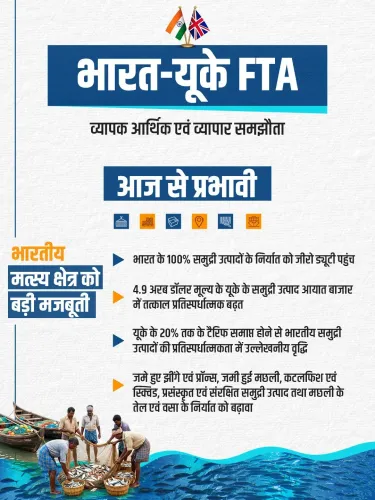
Ongoing negotiations with the UK and EU remain the most consequential next steps in India's trade liberalisation push.
Free Trade Agreements are not just diplomatic paperwork — they are, in Bihar Chief Minister Samrat Choudhary's framing, the very foundation on which a developed India must be built. On Thursday, 30 July 2026, the senior BJP leader took to X to make the case succinctly and sharply.
Posting in Hindi, CM Choudhary wrote: 'FTAs - निवेश, निर्यात, रोजगार और विकास, विकसित भारत का सशक्त आधार' — 'FTAs: investment, exports, employment and growth — the strong foundation of a developed India.' Four words, four pillars, one vision.
FTAs and the architecture of India's trade push
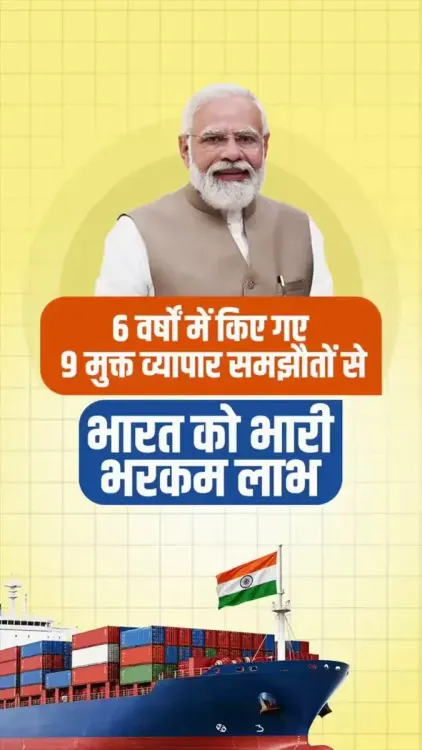
India's FTA drive gained serious momentum after 2020, when New Delhi pivoted toward bilateral and multilateral trade pacts as a lever for integrating into global supply chains. The India-UAE Comprehensive Economic Partnership Agreement, signed in February 2022, and the India-Australia Economic Cooperation and Trade Agreement, signed in April 2022, were landmark early milestones — opening market access for goods and services across two high-value corridors.
These agreements do not operate in isolation. They run alongside domestic engines like Make in India and the Production Linked Incentive (PLI) schemes, which together aim to attract foreign direct investment and scale up manufacturing employment. The combined logic: lower trade barriers outside, build capacity inside.
Viksit Bharat 2047 — the destination FTAs are meant to reach
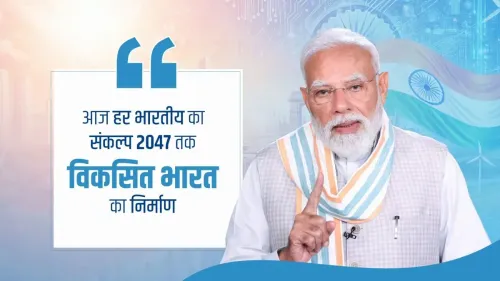
The Viksit Bharat vision — India as a fully developed economy by 2047, the centenary of independence — sits at the heart of CM Choudhary's post. Reaching that destination requires sustained high growth, a dramatic expansion of exports, and millions of new jobs. FTAs, proponents argue, accelerate all three by giving Indian exporters preferential access to foreign markets while signalling to global investors that India is open for business.
Ongoing negotiations with the United Kingdom and the European Union remain the most closely watched chapters in this story — sector-specific tariff outcomes and implementation timelines will determine how much of the promise actually lands for manufacturers, exporters, and job-seekers on the ground.
A Bihar CM amplifying the FTA agenda is a reminder that the stakes of India's trade policy are not abstract — they run all the way down to state economies hungry for investment and employment. The agreements are signed in capitals; the dividends are counted in districts.
Point of View
He ties state-level political identity to a national centenary mission, signalling that the FTA agenda has traction well beyond the Union cabinet. The timing also matters: with UK and EU negotiations at sensitive junctures, visible political support from state leaders reinforces the Centre's negotiating mandate. It is a compact but calculated intervention in the ongoing debate over India's trade posture.
NationPress
30 Jul 2026
Frequently Asked Questions
What did Bihar CM Samrat Choudhary say about FTAs?
CM Samrat Choudhary posted on X on 30 July 2026 describing Free Trade Agreements as the strong foundation of investment, exports, employment, and growth for a developed India — directly linking them to the Viksit Bharat 2047 vision.
What is Viksit Bharat and how do FTAs relate to it?
Viksit Bharat is the Indian government's vision to transform India into a fully developed economy by 2047. FTAs support this goal by expanding export markets, attracting foreign investment, and generating employment through greater trade integration.
Which major FTAs has India signed recently?
India signed the Comprehensive Economic Partnership Agreement with the UAE in February 2022 and the Economic Cooperation and Trade Agreement with Australia in April 2022, both aimed at reducing tariffs and expanding market access.
What FTA negotiations is India currently pursuing?
India is engaged in ongoing trade negotiations with the United Kingdom and the European Union, with sector-specific tariff outcomes and implementation timelines being closely watched by exporters and industry.
How do FTAs connect to Make in India and PLI schemes?
FTAs work alongside domestic programmes like Make in India and Production Linked Incentive schemes — FTAs open foreign markets for Indian goods while PLI and Make in India build the manufacturing capacity and attract FDI needed to fill that demand.