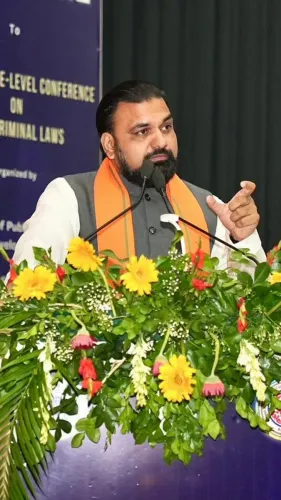
CM Samrat Choudhary backs Labour Codes 2025 for workers and MSMEs
Synopsis
Bihar CM Samrat Choudhary praised the Labour Codes 2025, saying PM Modi's consolidation of scattered labour laws strengthens worker rights, boosts social security, and eases compliance for MSMEs — positioning the reform as central to India's self-reliance drive.
Key Takeaways
Bihar CM Samrat Choudhary publicly endorsed Labour Codes 2025 on 6 October 2026 via a post under #SevaSankalpAbhiyan .
The codes consolidate decades of fragmented central and state labour statutes into a unified framework.
CM Choudhary highlighted easier compliance for MSMEs as a key economic benefit of the reform.
He stressed that simplification runs parallel to stronger worker rights and social security , not against them.
Bihar , as a major labour-exporting state, has particular stakes in reforms that improve portability of benefits for migrant workers.
The endorsement signals alignment between Bihar's state government and the Centre's ease-of-doing-business agenda.
When a government rewrites the rules of work, the stakes are enormous — for the daily-wage earner, the factory floor supervisor, and the small-business owner all at once. Bihar Chief Minister Samrat Choudhary on Tuesday, 6 October 2026, threw his weight behind the Labour Codes 2025, calling them a decisive step toward making India self-reliant and employment-rich.
Posting under the hashtag #SevaSankalpAbhiyan, CM Choudhary framed the reform in strikingly direct terms: 'When labour gets respect, workers get rights, and industry gets simplicity, the pace of development multiplies many times over.' The message was explicit praise for Prime Minister Narendra Modi's consolidation of decades of fragmented labour law into a streamlined national framework.
Decades of scattered laws, now consolidated
India's labour law landscape had long been a labyrinth — dozens of central and state statutes governing wages, industrial relations, social security, and occupational safety, each with its own compliance calendar, inspector regime, and penalty structure. The Labour Codes 2025 collapse this sprawl into a unified architecture, replacing the layered legacy with four broad codes that cover the same ground in a fraction of the legislative bulk.
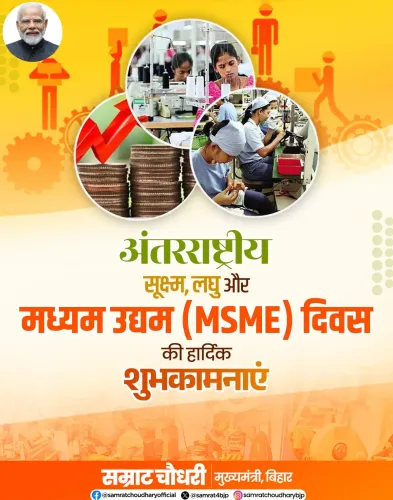
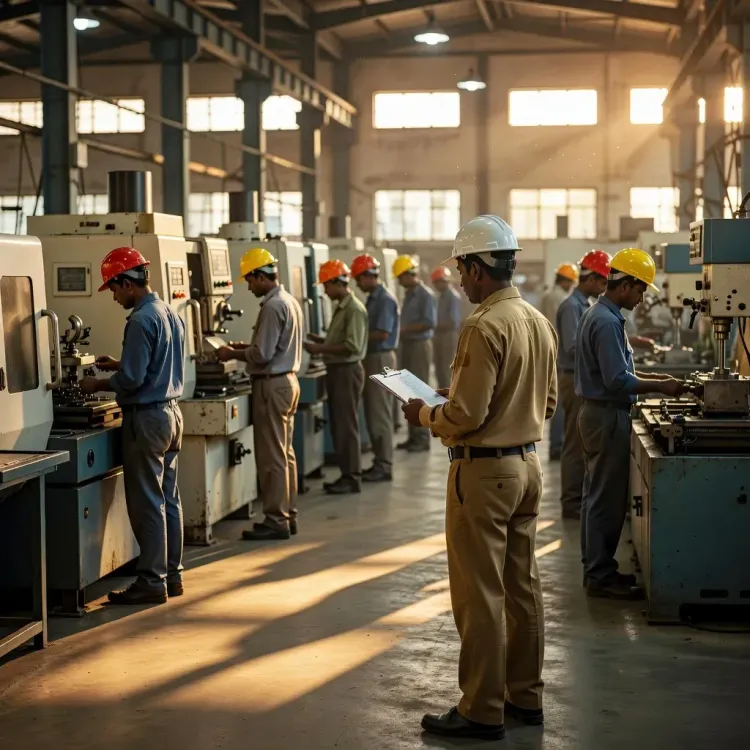
CM Choudhary specifically highlighted the benefit for MSMEs — micro, small, and medium enterprises — the segment that employs the largest share of India's non-farm workforce. Simplified compliance means fewer returns to file, fewer registers to maintain, and fewer inspections to navigate, freeing small employers to channel energy into production and hiring.
Workers' rights and social security at the centre
The Bihar CM was equally emphatic that simplification does not come at workers' expense. His post underscored that the codes simultaneously strengthen workers' rights and social security — a political line that matters in a state like Bihar, where migration to industrial centres is a defining economic reality for millions of families.
The framing — 'simple rules, secure workers, empowered industry' — is the BJP's articulation of a new work culture: one where deregulation and worker protection are presented not as opposing forces but as complementary pillars of the same reform.
Bihar's stake in the national labour reset
Bihar has historically been one of India's largest labour-exporting states, with its workforce spread across construction sites, textile units, and service industries from Punjab to Maharashtra. Any reform that tightens portability of social-security benefits or clarifies minimum-wage entitlements has outsized relevance for Bihar's migrant labour population.
By championing the codes publicly, CM Choudhary is also signalling alignment with the Centre's economic agenda — important context ahead of any state-level industrial investment pitches where ease of doing business is the primary selling point.
Simplified rules, protected workers, and a state government eager to translate federal reform into ground-level reality: Bihar is positioning itself as a test case for whether Labour Codes 2025 can actually deliver on their promise.
Point of View
Useful signalling ahead of investor summits and assembly cycles. The 'simplification plus protection' framing the BJP is deploying around the Labour Codes attempts to neutralise the traditional left critique that deregulation hurts workers, a tension that will be tested when implementation begins at the state level. For Bihar specifically, the codes' social-security portability provisions could be transformative for millions of migrant workers, making this more than ceremonial solidarity. Whether the state machinery translates the new framework into verifiable on-ground compliance will be the real measure of the reform's success.
NationPress
6 Oct 2026
Frequently Asked Questions
What are the Labour Codes 2025 in India?
The Labour Codes 2025 consolidate India's many scattered central labour laws into a streamlined set of four broad codes covering wages, industrial relations, social security, and occupational safety, aiming to simplify compliance for employers and strengthen protections for workers.
Why did Bihar CM Samrat Choudhary support the Labour Codes 2025?
CM Choudhary said the codes make compliance simpler for MSMEs while simultaneously strengthening workers' rights and social security, calling them a decisive step toward making India self-reliant and employment-rich.
How do the Labour Codes 2025 benefit MSMEs?
By replacing dozens of overlapping statutes with a unified framework, the codes reduce the number of returns, registers, and inspections small businesses must manage, freeing resources for production and job creation.
What is the SevaSankalpAbhiyan hashtag used by Samrat Choudhary?
SevaSankalpAbhiyan is a BJP outreach campaign under which leaders highlight government welfare and reform initiatives; CM Choudhary used it to frame the Labour Codes 2025 as part of that broader service-and-commitment drive.
Why does labour reform matter especially for Bihar?
Bihar is one of India's largest labour-exporting states, with millions of workers employed in industries across other states. Reforms that improve social-security portability and clarify wage entitlements have direct, outsized impact on this migrant workforce.