CM Samrat Choudhary backs skin donation push in Parliament
Synopsis
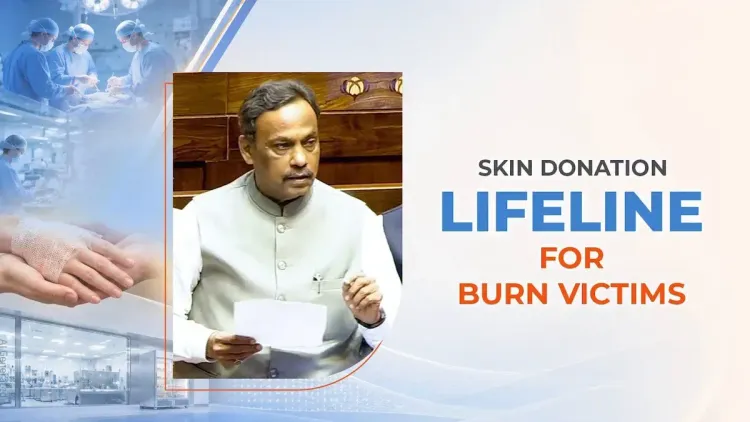
Bihar Chief Minister Samrat Choudhary praised Rajya Sabha MP Vinod Tawde for raising skin donation in Parliament, calling for nationwide awareness and a stronger national system to provide hope to severely burned patients across India.
Key Takeaways
Bihar CM Samrat Choudhary publicly endorsed skin donation awareness on August 7, 2026 .
Rajya Sabha MP Vinod Tawde , a senior BJP leader from Maharashtra, raised the issue in Parliament.
Choudhary called for both broad public awareness and a robust national system for skin donation.
The Transplantation of Human Organs and Tissues Act, 1994 (amended 2011) already permits skin retrieval and banking.
NOTTO is the nodal body for organ and tissue coordination, but donation rates remain low due to cultural and infrastructural barriers.
Cadaveric skin donation is often the only treatment option for severely burned patients facing skin shortages.
A life-saving cause found a powerful new voice on Friday, August 7, 2026, when Bihar Chief Minister Samrat Choudhary threw his weight behind a push for skin donation awareness, praising Rajya Sabha MP Vinod Tawde for raising the issue on the floor of Parliament and calling it a moral responsibility for every citizen.
Tawde's Parliament moment and what it means for burn survivors
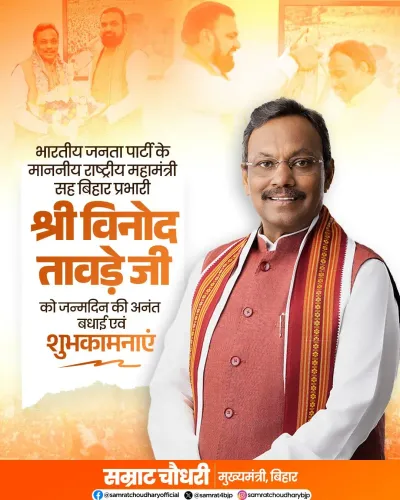
Choudhary's post, written in Hindi, lauded Vinod Tawde — senior BJP leader and Rajya Sabha member from Maharashtra — for bringing skin donation to parliamentary attention, calling it 'ek mahatvapurna aur jeevanrakshak vishay' (an important and life-saving subject). The Chief Minister was pointed about the stakes: cadaveric skin grafts are often the only treatment option available to severely burned patients, and India faces a chronic shortage of donated skin to meet that need.
Choudhary argued that two things must happen in tandem — broad public awareness and a robust national system for skin retrieval and distribution. Without both, even well-intentioned donors cannot translate intent into action. The call echoes a pattern seen across Indian health policy: political endorsement is often the spark that converts a niche medical issue into a mainstream conversation.
India's skin-donation gap — a chronic policy problem
The legal scaffolding already exists. The Transplantation of Human Organs and Tissues Act, 1994, amended in 2011, permits the retrieval and banking of skin alongside other tissues. The National Organ and Tissue Transplant Organisation (NOTTO), under the Union Ministry of Health, is mandated to coordinate procurement and distribution nationwide. Yet donation numbers remain stubbornly low, held back by cultural hesitation, inadequate infrastructure at district hospitals, and uneven awareness — particularly in rural areas where burn injuries from cooking fires and industrial accidents are most common.
Successive state and central governments have run awareness campaigns, but the gap between supply and demand in skin banks persists. A Chief Minister's public endorsement — especially one that frames donation as a collective human responsibility rather than a medical technicality — can meaningfully shift public sentiment in a state as populous as Bihar.
The ask: from awareness to architecture
What sets Choudhary's statement apart from routine political goodwill is its dual demand. He did not stop at urging citizens to donate; he explicitly called for a strengthened national framework to support the process. That framing — awareness plus infrastructure — aligns with what health administrators have long argued is missing from India's tissue-donation ecosystem. The question now is whether the Rajya Sabha discussion catalyses a health ministry response, a parliamentary question, or a state-level skin-bank initiative in Bihar itself.
For the thousands of burn patients waiting in hospitals across the country, political momentum of this kind is not abstract — it is the difference between a graft that arrives and one that does not.
Point of View
The intervention creates a small but real pressure point on the Union Health Ministry to respond with policy specifics. For the BJP, aligning its leaders on a non-partisan humanitarian cause also carries low political risk and measurable public-health upside.
NationPress
7 Aug 2026
Frequently Asked Questions
What is skin donation and why is it important in India?
Skin donation involves retrieving skin from a deceased donor within hours of death for use as a temporary graft on severely burned patients. India faces a critical shortage of donated skin, making it a life-or-death resource for burn survivors who have no other treatment option.
What did Vinod Tawde say about skin donation in Parliament?
Rajya Sabha MP Vinod Tawde raised skin donation as a life-saving public health issue in Parliament. The exact content of his intervention is not yet fully detailed, but Bihar CM Samrat Choudhary praised it as an important and commendable step.
What is NOTTO and what role does it play in skin donation?
NOTTO, the National Organ and Tissue Transplant Organisation, is a body under India's Ministry of Health that coordinates the procurement, banking and distribution of organs and tissues including skin across the country.
Is skin donation legal in India?
Yes. The Transplantation of Human Organs and Tissues Act, 1994, amended in 2011, provides the legal framework for retrieving, storing and transplanting skin and other tissues from deceased donors in India.
What barriers prevent skin donation in India?
Low skin donation rates in India are driven by cultural hesitation around post-mortem procedures, inadequate infrastructure at many hospitals for skin retrieval and banking, and insufficient public awareness — particularly in rural and semi-urban areas.