CM Samrat Choudhary hails Kumbh shloka recital before PM Modi in Manila
Synopsis
Bihar CM Samrat Choudhary celebrated the recitation of the 'Purna Kumbh Shloka' by children before PM Modi in Manila, calling it a vivid display of Indian civilisational heritage and the borderless reach of Sanatan culture during the Prime Minister's Philippines visit.
Key Takeaways
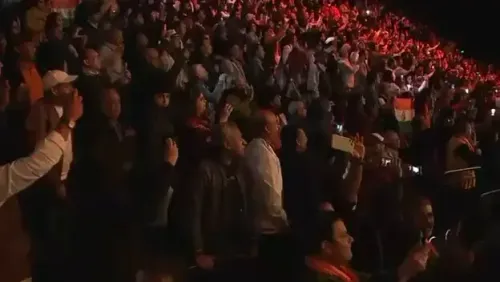
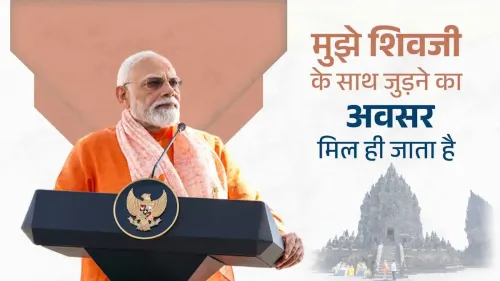
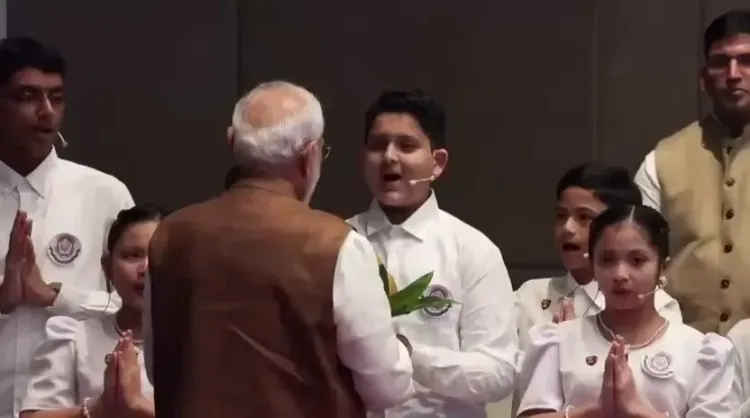
Children performed a recitation of the Purna Kumbh Shloka before PM Narendra Modi in Manila, Philippines .
Bihar CM Samrat Choudhary hailed the performance as a demonstration of Indian knowledge, spiritual consciousness, and cultural values on a global stage.
The event aligns with India's Act East Policy (upgraded 2014 ), which elevates cultural and people-to-people ties with ASEAN nations.
Cultural performances during PM Modi's overseas visits are a consistent feature of India's soft-power diplomacy strategy.
Choudhary emphasised that culture 'connects hearts beyond geographical boundaries,' framing Sanatan tradition as a universal bridge.
Thousands of miles from India, on the soil of Manila, children recited the 'Purna Kumbh Shloka' before Prime Minister Narendra Modi — and the moment reverberated far beyond the Philippines. Bihar Chief Minister Samrat Choudhary responded to the cultural performance on Monday, 16 November 2026, calling it a living testament to the depth and reach of India's civilisational heritage.
In a post on X, CM Choudhary wrote: 'मनीला की धरती पर गूंजे भारतीय संस्कृति और सनातन परंपरा के शाश्वत स्वर!' — 'The eternal notes of Indian culture and Sanatan tradition resonated on the soil of Manila!' He described the recitation as 'a glorious introduction to India's tradition of knowledge, spiritual consciousness, and cultural values', adding that 'it is the power of culture and values that connects hearts beyond geographical boundaries.'A shloka, a capital, and India's soft-power moment
The 'Purna Kumbh Shloka' — rooted in one of Hinduism's most ancient and sacred invocations — being recited in the Philippine capital is precisely the kind of image Indian diplomacy has been carefully cultivating. Culture, in this framework, is not incidental to state visits; it is strategy. Under India's Act East Policy, upgraded significantly in 2014, people-to-people and cultural ties with ASEAN nations including the Philippines have been elevated as pillars alongside trade and security.
Performances of Vedic texts, classical arts, and traditional practices in foreign settings have become a recurring feature of PM Modi's overseas engagements. The pattern is deliberate: where formal diplomacy speaks in communiqués, cultural diplomacy speaks to something older and harder to quantify — shared humanity, wonder, the instinct to listen.
Bihar's CM and the broader civilisational claim
Samrat Choudhary, as a senior BJP leader from Bihar — a state whose own identity is inseparable from ancient centres of learning like Nalanda and Bodh Gaya — brings particular weight to this commentary. His framing of the Manila recitation as evidence that 'Indian culture's roots are deep and its reach is wide' echoes a consistent political and cultural narrative the ruling party has advanced at home and abroad.
The Indian diaspora and cultural communities in Southeast Asia have long served as informal ambassadors of this tradition. A child reciting a Kumbh shloka before a head of government in Manila is, for many, proof of that living continuity.
India's soft power, it turns out, travels light — and lands hard.
Point of View
Spotlighting Sanatan cultural expressions abroad simultaneously reinforces a domestic civilisational narrative and projects India's identity as a global cultural force, not merely an economic one. CM Choudhary's amplification of the moment is consistent with the party's broader effort to link grassroots cultural pride to India's rising international stature. The Act East Policy provides the institutional scaffolding, but it is moments like this — a child's voice, a foreign capital — that give the strategy its emotional charge.
NationPress
16 Nov 2026
Frequently Asked Questions
What is the Purna Kumbh Shloka recited before PM Modi in Manila?
The Purna Kumbh Shloka is an ancient Sanskrit invocation rooted in Hindu tradition, associated with the Kumbh Mela. Children recited it before PM Narendra Modi during his visit to Manila, Philippines, in a cultural performance celebrating India's spiritual heritage.
Why did Bihar CM Samrat Choudhary comment on PM Modi's Philippines visit?
CM Samrat Choudhary, a senior BJP leader, posted on X to celebrate the cultural performance, calling it proof of Indian civilisation's deep roots and global reach, aligning with the BJP's consistent messaging on Sanatan heritage and India's soft power.
What is India's Act East Policy and how does it relate to the Philippines visit?
India's Act East Policy, significantly upgraded in 2014, prioritises diplomatic, economic, and cultural engagement with Southeast Asian nations including the Philippines. Cultural performances during high-level visits are a key feature of this people-to-people outreach.
What is India's cultural diplomacy strategy in Southeast Asia?
India uses performances of traditional texts, classical arts, and spiritual practices during state visits to ASEAN nations as a form of soft power, building emotional and civilisational connections beyond formal trade and security agreements.
What did Samrat Choudhary say about the Manila cultural event?
CM Choudhary described the recitation as 'a glorious introduction to India's tradition of knowledge, spiritual consciousness, and cultural values,' and said the power of culture connects hearts beyond geographical boundaries.