CM Samrat Choudhary Hails NVS-03 NavIC Satellite Launch
Synopsis
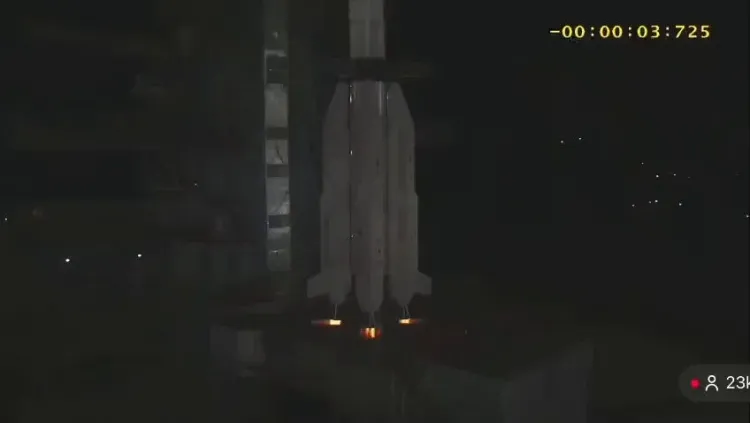
Bihar Chief Minister Samrat Choudhary praised ISRO on 31 October 2026 for successfully launching the NVS-03 navigation satellite via GSLV-F18, calling it a milestone for India's scientific self-reliance and crediting PM Modi's leadership for the country's space advances.
Key Takeaways
NVS-03 is the third second-generation NavIC navigation satellite launched by ISRO, boosting India's indigenous positioning network.
The satellite was carried to orbit by the GSLV-F18 rocket, ISRO's primary vehicle for geostationary-transfer payloads.
The NavIC programme traces its roots to July 2013 when IRNSS-1A became the first satellite in the constellation.
The second-generation series began with NVS-01 in May 2023 , introducing improved L1-band signals for wider device compatibility.
Bihar CM Samrat Choudhary cited the launch as evidence of India's growing scientific capability and technological self-reliance under PM Modi.
Full integration of the upgraded NavIC constellation into defence, aviation and civilian navigation remains the key milestone to watch.
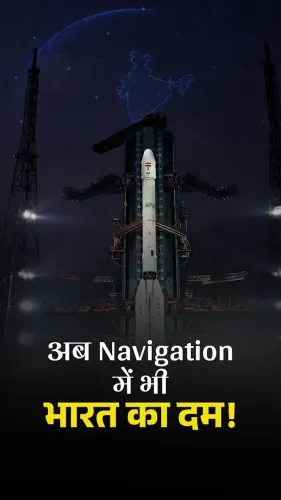
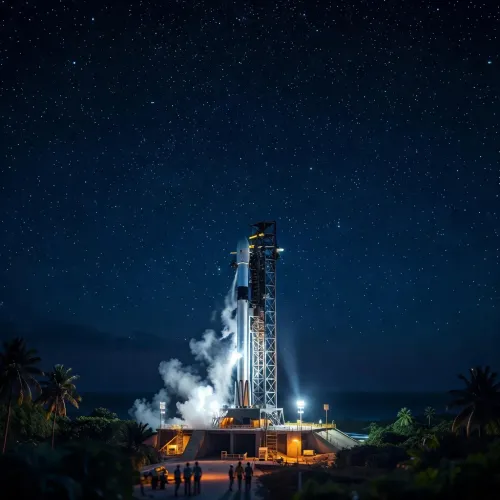
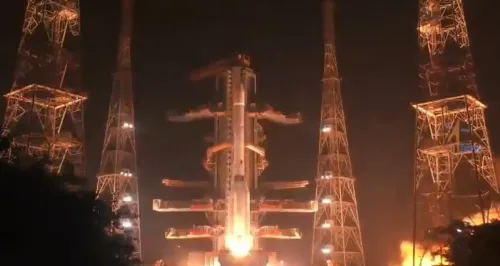
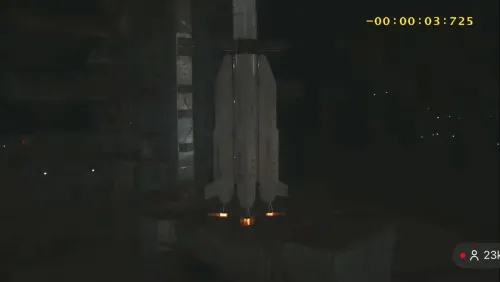
India's navigation constellation just grew more powerful — and politicians across the spectrum are taking note. Bihar Chief Minister Samrat Choudhary on Saturday, 31 October 2026 congratulated ISRO scientists and the entire team on the successful launch of the NVS-03 navigation satellite aboard the GSLV-F18 rocket, calling it a landmark step in India's journey toward technological self-reliance.
Posting in Hindi on X, CM Choudhary described the achievement as 'bharat ki vaigyanik kshamata, takniki samarthya aur atmanirbharta ki disha mein ek aur mahatvapurna uplabdhi' — 'yet another significant achievement in the direction of India's scientific capability, technological strength and self-reliance.' He extended warm congratulations to all ISRO scientists and credited Prime Minister Narendra Modi's visionary leadership for enabling India to 'continuously set new records in space science.'
What NVS-03 adds to India's NavIC network
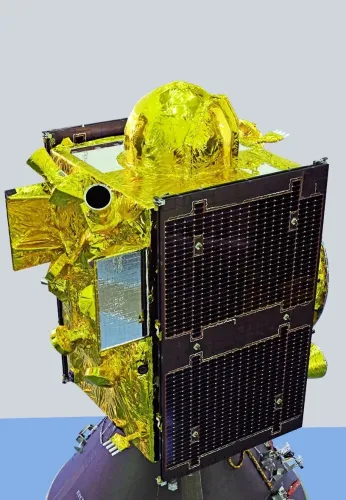
NVS-03 is the third satellite in ISRO's second-generation Navigation with Indian Constellation (NavIC) series — the upgraded successor to the original IRNSS constellation whose first satellite, IRNSS-1A, flew in July 2013. The second-generation leap began with NVS-01, launched in May 2023 aboard GSLV-F12, bringing improved accuracy and L1 band signals that broaden compatibility with civilian devices.
Each new NavIC satellite chips away at India's dependence on the US-operated GPS for defence, aviation, fisheries, and disaster management across the Indian subcontinent and surrounding seas. That strategic logic — positioning India as a nation that can navigate its own territory on its own terms — is precisely what makes every addition to the constellation front-page material.
ISRO's GSLV workhorse and the Atmanirbhar push
The Geosynchronous Satellite Launch Vehicle (GSLV) has been ISRO's go-to rocket for deploying heavier payloads into geostationary transfer orbit. Its growing reliability underpins not just navigation but also communication missions — and its continued success is central to the government's Atmanirbhar Bharat framing of space as a strategic domain. Successive administrations have backed ISRO's launch-vehicle programme; the current one has gone further by opening the sector to private players, seeding a domestic space industry.
CM Choudhary's congratulatory message reflects a now-standard political acknowledgement of ISRO milestones: space achievements have become a rare bipartisan source of national pride, and leaders from every state rush to claim a stake in the moment — even when the mission is run entirely from ISRO's facilities in Bengaluru and the Satish Dhawan Space Centre, Sriharikota.
Why the next two years matter for NavIC
With NVS-03 in orbit, attention turns to completing the second-generation constellation and integrating the upgraded signals into defence navigation, commercial aviation routing, and mass-market consumer devices. Full operational deployment — and the day an Indian smartphone routes entirely through NavIC — remains the benchmark against which this decade of launches will ultimately be judged.
India's sky is getting busier. The scientists who put NVS-03 there just made the country a little harder to cut off from itself.
Point of View
Converting ISRO's institutional milestones into political capital. What will matter more in the long run is whether the NVS second-generation constellation achieves the mass-device integration that transforms NavIC from a strategic asset into an everyday Indian infrastructure.
NationPress
31 Oct 2026
Frequently Asked Questions
What is the NVS-03 satellite and what does it do?
NVS-03 is the third satellite in ISRO's second-generation Navigation with Indian Constellation (NavIC) series. It is designed to provide improved regional positioning, navigation and timing services over India and surrounding areas, reducing dependence on foreign GPS systems.
What rocket launched NVS-03?
NVS-03 was launched aboard the GSLV-F18, a variant of ISRO's Geosynchronous Satellite Launch Vehicle used for deploying heavier satellites into geostationary transfer orbit.
What is NavIC and how is it different from GPS?
NavIC (Navigation with Indian Constellation) is India's indigenous regional satellite navigation system, developed by ISRO to provide positioning accuracy independent of the US-operated GPS over the Indian subcontinent and the surrounding 1,500-km region. It serves defence, aviation, fisheries and disaster-management users.
Why did Bihar CM Samrat Choudhary comment on the ISRO launch?
As a senior BJP leader and Bihar Chief Minister, Samrat Choudhary posted on X to congratulate ISRO scientists and credit Prime Minister Narendra Modi's leadership for India's growing space achievements, reflecting a broader BJP practice of acknowledging ISRO milestones as part of the Atmanirbhar Bharat narrative.
When did India's NavIC navigation programme begin?
India's NavIC programme, originally called IRNSS, began with the launch of IRNSS-1A in July 2013. The second-generation NVS series started with NVS-01 in May 2023 aboard GSLV-F12.