CM Samrat Choudhary Inspects Model School in Begusarai

Synopsis
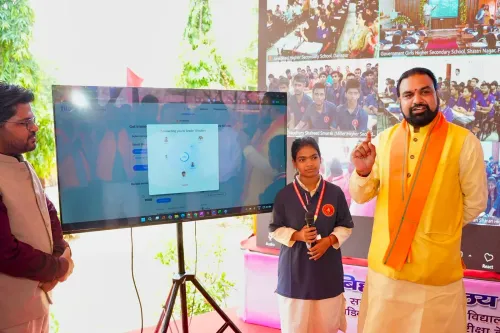
Bihar Chief Minister Samrat Choudhary conducted a live on-site inspection of B.P. Inter School, a model school in Begusarai district, on 19 July 2026, broadcasting the administrative review publicly on social media.
Key Takeaways
Bihar Chief Minister Samrat Choudhary personally inspected B.P.
Inter School in Begusarai district on 19 July 2026 .
The inspection was broadcast live on social media, making the administrative review publicly accessible in real time.
Inter School is a model school, part of a category established under the Rashtriya Madhyamik Shiksha Abhiyan launched in 2009 .
Primary stakeholders affected include students and teachers at the school, as well as the broader Begusarai district community.
The visit may be followed by district-level education directives or state budget commitments for school infrastructure upgrades.
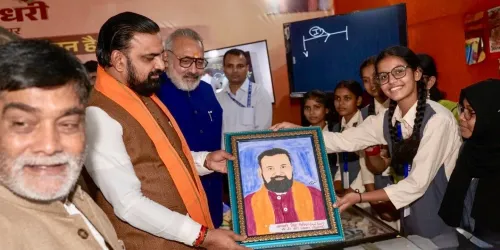
Bihar Chief Minister Samrat Choudhary conducted a live on-site inspection and review of B.P. Inter School, a model school under Begusarai district, on Sunday, 19 July 2026, with the visit broadcast live on social media.
Context
The Chief Minister shared the visit on X with the caption 'बेगूसराय जिलांतर्गत बी०पी० इंटर स्कूल, मॉडल विद्यालय का निरीक्षण तथा अवलोकन' — translating to 'Inspection and observation of B.P. Inter School, Model School, under Begusarai district.' The post was accompanied by a live broadcast link, signalling an intent to make the administrative review publicly visible in real time.
Begusarai is a district in central Bihar with a historically significant industrial and educational profile. The school falls under the category of model schools established to raise secondary education standards in the region.
Policy Backdrop
Model schools in India trace their lineage to the Rashtriya Madhyamik Shiksha Abhiyan (RMSA), launched in 2009, which aimed to set up quality secondary schools in educationally backward blocks across the country. The programme was designed to bridge infrastructure and teaching-quality gaps at the secondary level.
Bihar, as one of the states with historically lower secondary-school enrolment rates, received allocations under this centrally sponsored scheme. On-site inspections by senior leadership are part of the administrative oversight mechanism to assess whether these schools are meeting intended standards.
Stakeholders and Impact
The primary stakeholders of this inspection are the students and teachers of B.P. Inter School, Begusarai, whose daily learning environment comes under direct administrative scrutiny. A chief ministerial visit typically accelerates pending infrastructure approvals and flags systemic issues that district-level officials may not escalate independently.
For the broader Begusarai district, the visit signals state-level attention to secondary education quality — an area that directly affects board examination outcomes and student progression to higher education. Parents and local communities often view such visits as a precursor to tangible improvements in school facilities and staffing.
What's Next
Inspection visits of this nature are frequently followed by district-level education reviews, directives to school management committees, or announcements in state budget allocations for school upgrades. Observers will watch whether the Bihar government follows this inspection with specific remedial orders or resource commitments for model schools across the state's districts.
The live-broadcast format also suggests an effort to build public accountability into routine governance — a pattern that, if sustained, could set a precedent for how senior Bihar officials conduct and communicate administrative oversight going forward.
Point of View
A pattern increasingly common among state executives seeking to demonstrate hands-on leadership. The choice of a secondary school under the RMSA framework is notable: Bihar's secondary education outcomes have long been a pressure point, and direct CM-level attention signals that the state is treating school quality as a political priority, not just a bureaucratic one. Conducting the review live narrows the gap between official action and public accountability, potentially raising expectations for follow-through. Whether this visit translates into measurable improvements for Begusarai's model schools will be the true test of the exercise.
NationPress
20 Jul 2026
Frequently Asked Questions
Why did Bihar CM Samrat Choudhary visit BP Inter School in Begusarai?
Bihar Chief Minister Samrat Choudhary visited B.P. Inter School in Begusarai on 19 July 2026 to conduct an official inspection and observation of the model school, assessing its infrastructure and functioning as part of administrative oversight of secondary education.
What is a model school in Bihar?
Model schools in Bihar are quality secondary schools established under the Rashtriya Madhyamik Shiksha Abhiyan, a centrally sponsored programme launched in 2009 to improve secondary education access and standards in educationally backward blocks.
What is Rashtriya Madhyamik Shiksha Abhiyan?
Rashtriya Madhyamik Shiksha Abhiyan (RMSA) is a central government programme launched in 2009 aimed at setting up quality secondary schools in educationally backward blocks across India, addressing infrastructure and teaching-quality gaps.
Where is Begusarai district located?
Begusarai is a district in central Bihar, India, known for its industrial and educational significance in the state.
What happens after a chief ministerial school inspection in Bihar?
Such inspections are typically followed by district-level education reviews, directives to school management committees, or state budget announcements for school upgrades and infrastructure improvements.