CM Samrat Choudhary launches ₹10,590 cr OPRMC Phase-3 road upkeep drive
Synopsis
Bihar Chief Minister Samrat Choudhary launched OPRMC Phase-3 on 26 September 2026, a ₹10,590.53 crore, seven-year programme to maintain 13,033 kilometres of state highways and district roads across 66 packages using modern monitoring technology.
Key Takeaways
₹10,590.53 crore sanctioned for OPRMC Phase-3, one of Bihar's largest single road-maintenance programmes.
Programme covers 13,033 km of state highways and major district roads under 66 packages .
Contracts run for seven years , tying contractor payments to measurable road-condition outcomes.
Modern technology will enable regular digital surveillance of road conditions across all packages.
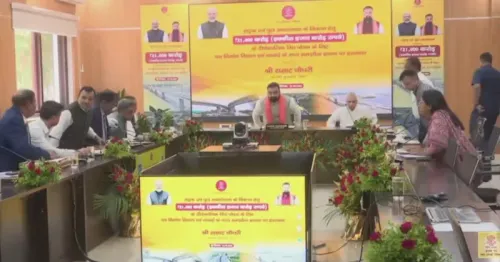
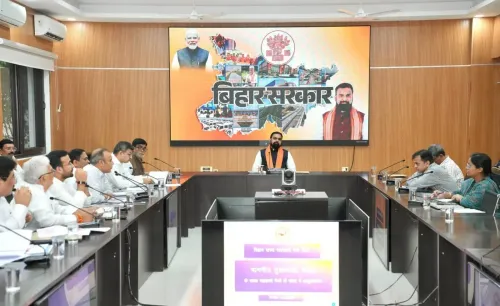
Launch held at the Samvad Sabhagar , Chief Minister Secretariat, Patna , on 26 September 2026 .
Initiative is framed under Bihar's #समृद्ध_बिहार and the national Viksit Bharat 2047 development agenda.
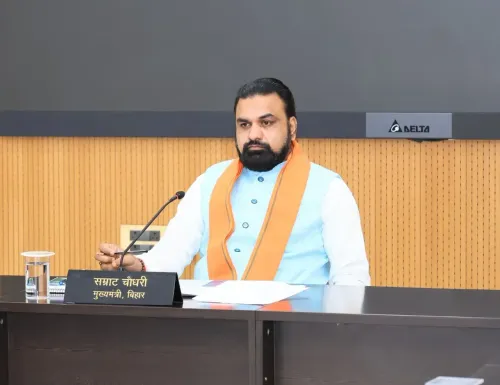
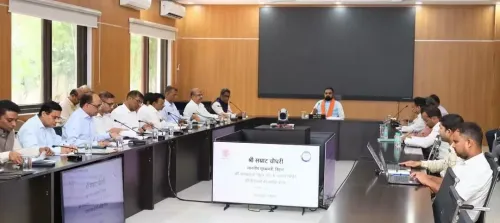
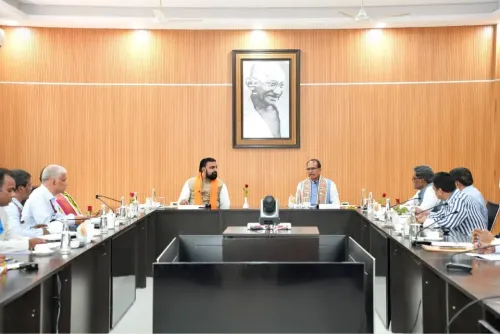
A single signature on Saturday, 26 September 2026, at Patna's Chief Minister Secretariat, set in motion a seven-year commitment to keep 13,033 kilometres of Bihar's highways and major district roads in working shape — a maintenance push the state has rarely attempted at this scale. Bihar Chief Minister Samrat Choudhary formally launched the Output and Performance-based Road Maintenance Contract (OPRMC) Phase-3 programme, covering 66 packages at a total outlay of ₹10,590.53 crore.
What OPRMC Phase-3 actually commits to
The programme, inaugurated at the Samvad Sabhagar (Dialogue Hall) inside the Chief Minister's Secretariat, is not a construction contract — it is a long-term upkeep contract. Under the OPRMC model, contractors are paid against measurable outcomes: road surface quality, pothole-free stretches, functional drainage — rather than simply for work done. The seven-year horizon forces contractors to think beyond the ribbon-cutting and into the monsoon seasons that follow.
Modern technology will anchor the monitoring layer. Regular digital surveillance of road conditions across all 66 packages is built into the contract design, allowing the state to catch deterioration early rather than wait for complaints to pile up. That is a meaningful shift from the traditional inspect-and-repair cycle that has historically left Bihar's rural arterials in poor shape between budget cycles.
Bihar's road network and the maintenance gap
Bihar has steadily expanded its state highway and major district road network over the past decade, riding central and state capital investment. The expansion created a new problem: maintaining what was built. Post-construction sustainability has been the weak link in Indian road infrastructure broadly, and Bihar is no exception. OPRMC as a contracting model was specifically designed to plug that gap — tying contractor payments to the condition of the road over years, not just the completion of a project.
Phase-3 scales up what earlier phases tested. 13,033 km across 66 packages means the programme spans nearly every district in the state, touching the arterials that link mandis to markets, villages to block headquarters, and district towns to the national highway grid.
Where this fits in Bihar's development push
Chief Minister Choudhary has framed the launch under twin hashtags — #समृद्ध_बिहार (Prosperous Bihar) and #विकसित_भारत (Developed India) — anchoring it explicitly to the national Viksit Bharat agenda that the BJP-led Centre has set as a long-range goal for 2047. Road connectivity is central to that frame: better-maintained roads reduce logistics costs, cut travel times for farm produce, and make economic corridors actually function.
The ₹10,590.53 crore commitment is one of the larger single-programme road-maintenance outlays in Bihar's recent budgetary history. Whether the seven-year contracts deliver on their performance benchmarks will be the real test — and the progress of those 66 packages will be closely watched by contractors, road users, and the state's infrastructure bureaucracy alike.
Seven years is a long time in Bihar politics. The contracts, however, will outlast any single election cycle — and that, perhaps, is the point.
Point of View
Less glamorous discipline of post-build maintenance — a gap that has undermined road investment returns across India for decades. For CM Samrat Choudhary, the seven-year horizon serves a dual political purpose: it demonstrates long-term governance seriousness while aligning Bihar's development narrative tightly with the Centre's Viksit Bharat framework ahead of future electoral cycles. The performance-based payment model is the real test — if monitoring is robust, it could become a template for other states; if enforcement is weak, the scale of ₹10,590 crore makes the failure equally visible. Bihar's ability to sustain contractor accountability across 66 packages over seven years will determine whether this launch is milestone or mere ceremony.
NationPress
26 Sept 2026
Frequently Asked Questions
What is OPRMC Phase-3 in Bihar?
OPRMC Phase-3 is Bihar's Output and Performance-based Road Maintenance Contract programme, Phase-3, under which ₹10,590.53 crore will be spent over seven years to maintain 13,033 km of state highways and major district roads across 66 packages using modern monitoring technology.
How much money is Bihar spending on OPRMC Phase-3?
Bihar has committed ₹10,590.53 crore for OPRMC Phase-3, covering a seven-year maintenance period for 13,033 kilometres of road.
How many kilometres of road does OPRMC Phase-3 cover in Bihar?
OPRMC Phase-3 covers 13,033 kilometres of state highways and major district roads in Bihar, distributed across 66 contract packages.
What is the difference between OPRMC and a regular road construction contract?
Unlike a standard construction contract where payment is made for work completed, OPRMC ties contractor payments to measurable road-condition outcomes over a long period — seven years in Phase-3 — making contractors responsible for the road's performance, not just its construction.
Who launched OPRMC Phase-3 and where?
Bihar Chief Minister Samrat Choudhary launched OPRMC Phase-3 on 26 September 2026 at the Samvad Sabhagar (Dialogue Hall) inside the Chief Minister Secretariat in Patna.