CM Samrat Choudhary Launches Bihar MSME Policy 2026, Transfers Funds to 7,000 Entrepreneurs
Synopsis
Bihar CM Samrat Choudhary transferred instalment funds to over 7,000 beneficiaries of the Mukhyamantri Udyami Yojana and launched the Bihar MSME Policy-2026 at Bapu Sabhagar, Patna, pledging to make 1 crore Bihar families entrepreneurial.
Key Takeaways
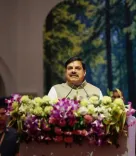
Bihar CM Samrat Choudhary addressed the Mukhyamantri Udyami Yojana orientation programme at Bapu Sabhagar, Patna on October 8, 2026 .
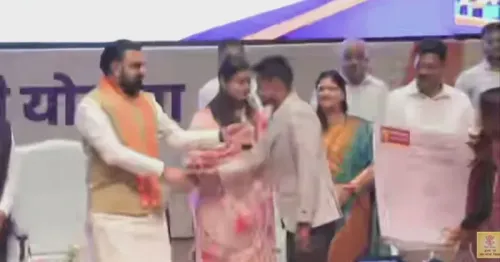
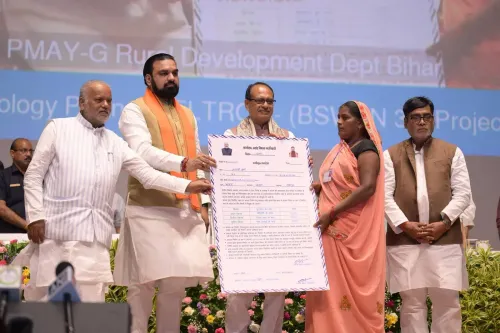
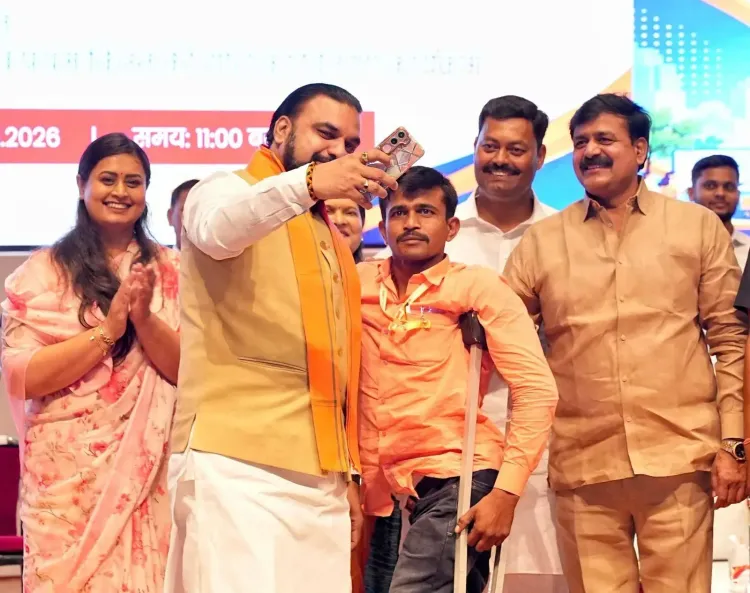
Instalment funds were directly transferred into accounts of more than 7,000 beneficiaries at the event.
The Bihar MSME Policy-2026 was formally launched, setting a new policy framework for small and medium enterprises in the state.
The Chief Minister set an overarching target of converting 1 crore Bihar families into entrepreneurial households.
The event was organised by the Bihar Industries Department , underlining the state government's institutional commitment to grassroots enterprise development.
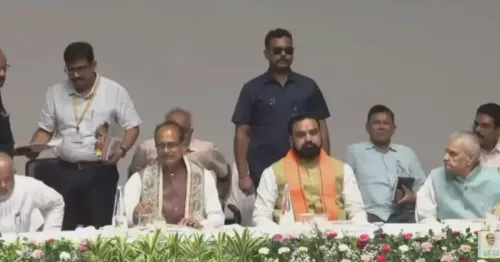
Seven thousand families in Bihar moved one step closer to financial independence on Thursday, October 8, 2026 — the day Bihar Chief Minister Samrat Choudhary transferred instalment funds directly into their accounts and unveiled a new industrial policy designed to reshape the state's economic identity. The venue was Bapu Sabhagar, Patna, and the occasion was the orientation programme of the Mukhyamantri Udyami Yojana (Chief Minister Entrepreneurship Scheme), organised by the Bihar Industries Department.
What happened at Bapu Sabhagar
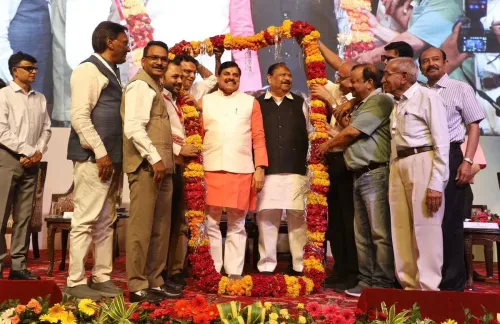
Chief Minister Choudhary addressed a gathering of beneficiaries and officials, marking the event with two concrete deliverables: the direct transfer of instalment amounts into the accounts of more than 7,000 beneficiaries under the Mukhyamantri Udyami Yojana, and the formal launch of the Bihar MSME Policy-2026. The Chief Minister declared the government's overarching ambition plainly — 'Hamaara sankalp hai ki Bihar ke 1 crore parivaron ko udyami parivar banaya jaye' ('Our resolve is to turn 1 crore families of Bihar into entrepreneurial families').
Mukhyamantri Udyami Yojana — who it targets
The Mukhyamantri Udyami Yojana is Bihar's flagship scheme providing financial assistance — typically a mix of grant and soft loan — to encourage self-employment and small enterprise formation among Scheduled Castes, Scheduled Tribes, extremely backward classes, women, and youth. Beneficiaries receive funds in instalments tied to verified business progress, making Thursday's transfer a milestone for thousands of ongoing micro-enterprises across the state. The scheme sits at the intersection of social equity and industrial ambition: it targets communities that have historically been excluded from formal credit ecosystems.
Bihar MSME Policy-2026 and what it signals
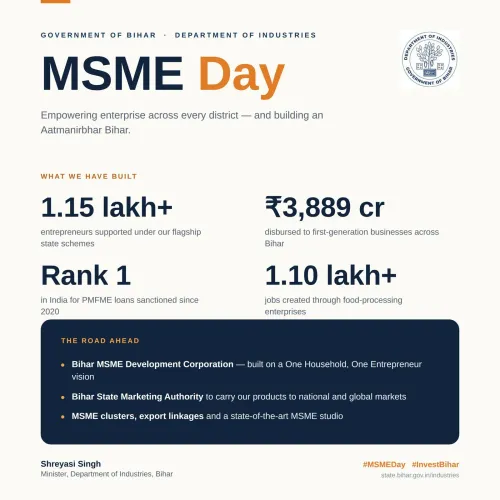
The launch of the Bihar MSME Policy-2026 is the more consequential announcement of the two. A fresh MSME policy typically lays out an updated incentive architecture — covering subsidies, credit guarantees, infrastructure support, market linkages, and ease-of-doing-business reforms — calibrated to the state's current industrial baseline. By unveiling it at an entrepreneurship orientation programme rather than a standard industry summit, the government is explicitly positioning MSMEs as a grassroots, household-level project rather than a corporate-sector exercise. The target of converting 1 crore families into entrepreneurial households is an audacious benchmark that will define the policy's success metrics for years ahead.
Bihar's industrial push in focus
Bihar has historically lagged behind more industrialised Indian states in per-capita income and formal employment generation. Successive governments have attempted to close that gap through investment summits and sector-specific incentives, but ground-level entrepreneurship at scale — particularly in rural and semi-urban belts — has remained elusive. Chief Minister Choudhary's twin move today signals an intent to institutionalise that push: fresh policy on one hand, real money in real accounts on the other. Whether the 1-crore-family goal becomes a measurable reality will depend on how effectively the Bihar MSME Policy-2026 translates on the ground — but the direction, stated publicly from Patna's most prominent civic hall, could not be clearer.
The question Bihar's entrepreneurs will now ask is not whether the ambition is real — today answered that — but how fast the system can keep pace with it.
Point of View
Visible act of delivery. The 1-crore-family entrepreneurship target is a scale of ambition that goes well beyond routine scheme implementation and places Bihar's industrial transformation at the centre of the BJP's governance narrative in the state. If the Bihar MSME Policy-2026 succeeds in creating a credible incentive ecosystem, it could become a replicable model for other BIMARU-belt states seeking to leapfrog from welfare-dependency to productive enterprise at the household level. The political dividend, however, will accrue only if ground-level disbursement and mentorship infrastructure keep pace with the headline numbers.
NationPress
8 Oct 2026
Frequently Asked Questions
What is the Mukhyamantri Udyami Yojana in Bihar?
The Mukhyamantri Udyami Yojana is Bihar's flagship entrepreneurship scheme that provides financial assistance — a mix of grant and soft loan — to Scheduled Castes, Scheduled Tribes, extremely backward classes, women, and youth to set up small businesses and become self-employed.
What is the Bihar MSME Policy-2026?
The Bihar MSME Policy-2026 is a new state industrial policy launched by Chief Minister Samrat Choudhary on October 8, 2026, aimed at strengthening the micro, small, and medium enterprise ecosystem in Bihar through updated incentives, credit support, and ease-of-doing-business reforms.
How many beneficiaries received funds at the Patna event?
More than 7,000 beneficiaries of the Mukhyamantri Udyami Yojana had instalment amounts transferred directly into their bank accounts at the event held at Bapu Sabhagar, Patna.
What is Bihar CM Samrat Choudhary's target for entrepreneurship?
Chief Minister Samrat Choudhary has pledged to convert 1 crore — that is, 10 million — families in Bihar into entrepreneurial families, making this the stated benchmark of the government's MSME and self-employment programmes.
Where was the Mukhyamantri Udyami Yojana orientation programme held?
The orientation programme was held at Bapu Sabhagar in Patna and was organised by the Bihar Industries Department.