CM Samrat Choudhary Orders Smooth Traffic on Nehru Path During Patna Metro Build
Synopsis
Bihar Chief Minister Samrat Choudhary chaired a Path Nirman Department review on 1 August 2026, directing site inspections of 11 stretches on Nehru Path (Bailey Road), pre-emptive alternative routes, designated vending zones, and four-agency coordination to keep traffic flowing during Patna Metro construction.
Key Takeaways
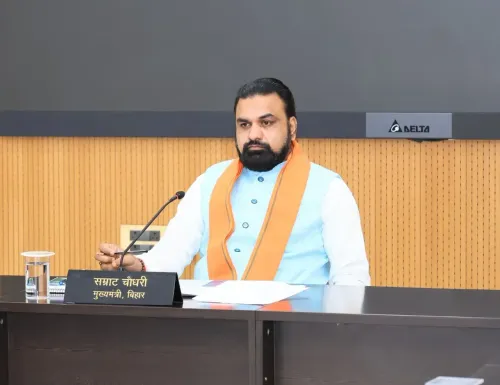
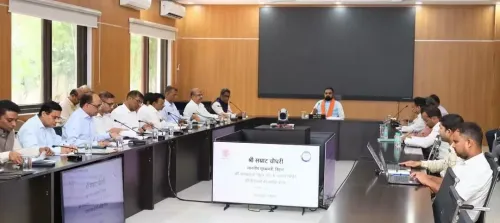
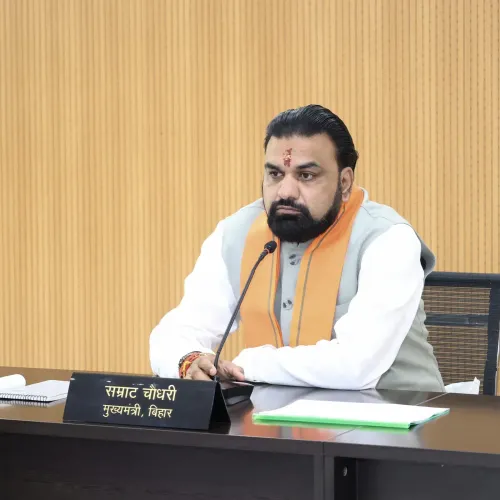
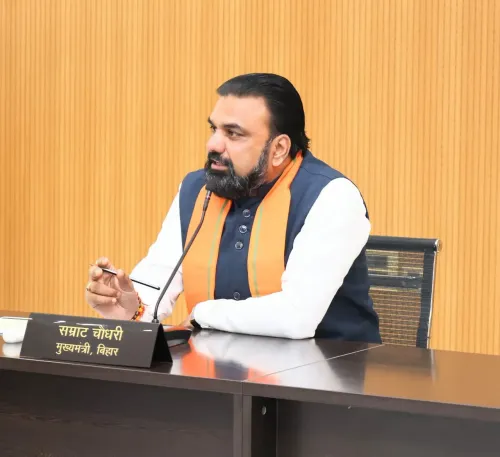
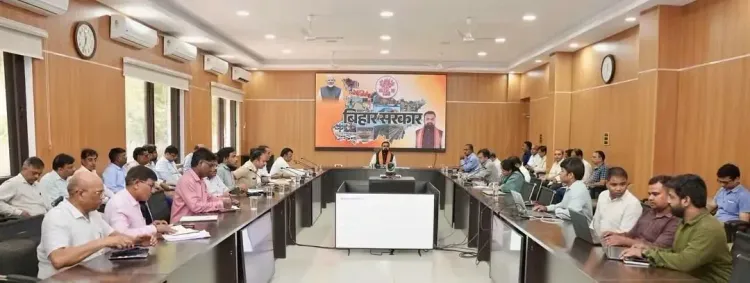
Bihar CM Samrat Choudhary chaired a Path Nirman Department review at Sankalpа Sabhagar, Lokasevak Avas on 1 August 2026 .
11 stretches on Nehru Path (Bailey Road) will undergo on-site inspections for road widening, junction improvements, and bottleneck removal.
Alternative routes will be identified in advance at sites likely to be disrupted by Patna Metro construction work.
Designated vending zones will be created along Nehru Path to reduce hawker-related congestion.
A four-agency coordination framework covering the Path Nirman Department , metro construction agencies, district administration, and traffic police has been mandated.
The Patna Metro project was approved by the Union Cabinet in 2019 as part of India's tier-2 city metro expansion drive.
Even as Patna's metro dream takes shape beneath the city's busiest corridor, Bihar Chief Minister Samrat Choudhary has made one thing non-negotiable: commuters on Nehru Path (Bailey Road) must not pay the price for progress. Chairing a presentation and review meeting of the Path Nirman Department at Sankalpа Sabhagar, Lokasevak Avas on Saturday, 1 August 2026, the Chief Minister issued a sharp set of directives to keep the arterial road safe, smooth, and unobstructed through the entire construction phase.
Eleven Stretches, One Mandate: No Bottlenecks on Nehru Path
The meeting zeroed in on 11 identified stretches along Nehru Path where traffic stress is expected to peak during metro construction. Officials have been directed to conduct on-site inspections of each stretch and, based on ground reality, carry out road widening, junction improvements, and bottleneck removal. The approach is deliberately granular — no blanket fixes, but targeted remediation matched to what each location actually needs.
Equally important is the pre-emptive identification of alternative routes at potentially affected sites, so that diversions are ready before disruption hits, not after. The CM's directive was unambiguous: construction momentum must not come at the cost of daily mobility for ordinary citizens.
Vending Zones and a Four-Agency Coordination Framework
One of the sharper administrative moves announced at the review is the creation of designated vending zones along Nehru Path — a step that addresses a chronic source of road congestion in dense Indian cities where hawker encroachment near construction sites compounds traffic chaos. The CM directed that suitable locations be identified promptly.
Beyond physical infrastructure, Choudhary called for structured coordination among four bodies: the Path Nirman Department, metro construction agencies, district administration, and traffic police. The multi-agency framework mirrors mechanisms deployed in metro projects across other Indian cities, where siloed working between road authorities and rail builders has historically been a bottleneck in itself.
Patna Metro's Construction Phase and What Riders Stand to Gain
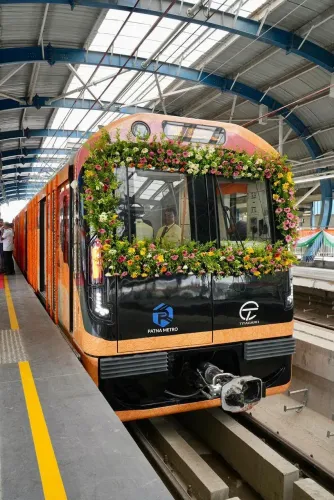
The Patna Metro project received Union Cabinet approval in 2019 as part of a national push to extend metro rail to tier-2 cities. Construction across its corridors has been active for several years, and Nehru Path — one of Patna's principal arteries — sits squarely in the project's footprint. The scale of disruption that metro construction can inflict on surface traffic is well-documented from cities like Bengaluru, Pune, and Lucknow, making proactive traffic management not just desirable but essential.
The Chief Minister framed the dual goal plainly: 'Metro nirman ki gati bhi bani rahe aur aam nagarikon ko nirbadh, surakshit evam sugam yatayat ki suvidha bhi milti rahe' — metro construction must keep pace, and citizens must keep moving, safely and freely. That balance is the entire brief.
The next test will be whether the site inspections of all 11 stretches translate into concrete timelines for road widening and alternative-route activation — details that Patna's daily commuters will be watching for.
Point of View
Which has staked significant political capital on the Patna Metro as a symbol of urban modernity, visible disruption on a flagship road like Bailey Road would be a reputational liability the ruling dispensation cannot afford ahead of the next electoral cycle. The four-agency coordination model is the right structural response; the real measure of intent will be whether it is backed by enforceable timelines and public accountability for the 11 stretch inspections.
NationPress
1 Aug 2026
Frequently Asked Questions
What did Bihar CM Samrat Choudhary announce about Patna Metro traffic?
CM Choudhary directed that traffic on Nehru Path (Bailey Road) must remain smooth and safe during Patna Metro construction, ordering site inspections of 11 identified stretches, advance identification of alternative routes, and a four-agency coordination mechanism.
Which road is affected by Patna Metro construction work?
Nehru Path, also known as Bailey Road, is a key arterial road in Patna that falls within the Patna Metro construction footprint and is the focus of the traffic management directives.
What are the 11 stretches on Nehru Path being inspected?
The exact identities of the 11 stretches have not been made public; officials have been directed to conduct on-site inspections and carry out road widening, junction improvements, and bottleneck removal based on ground-level assessment.
When did the Patna Metro project get approved?
The Patna Metro project received Union Cabinet approval in 2019 as part of India's push to extend metro rail networks to tier-2 cities.
Which agencies will coordinate on Nehru Path traffic management?
The Path Nirman Department, Patna Metro construction agencies, district administration, and traffic police have been directed to establish effective coordination to manage traffic on Nehru Path during construction.