Vaishnaw: ₹1 Lakh Crore Railway Projects Underway in Andhra Pradesh
Synopsis
Prime Minister Modi, at Bhogapuram in Andhra Pradesh on 1 August 2026, announced nearly ₹1 lakh crore in active railway projects across the state — one of the largest state-level rail investment figures in the country, amplified by Railway Minister Ashwini Vaishnaw.
Key Takeaways
Railway projects worth nearly ₹1 lakh crore are currently underway in Andhra Pradesh , as stated by PM Narendra Modi .
The announcement was made at Bhogapuram, Vizianagaram district on 1 August 2026 .
Bhogapuram is the site of a planned greenfield airport, making rail-connectivity investment here strategically significant.
Post-2014 bifurcation commitments to residual Andhra Pradesh included a special railway package that forms part of this broader investment.
Indian Railways has been allocating over ₹1 lakh crore annually in national capital expenditure since 2019, enabling state-level scale-up.
Land acquisition and state-central coordination remain key variables for on-ground project delivery.
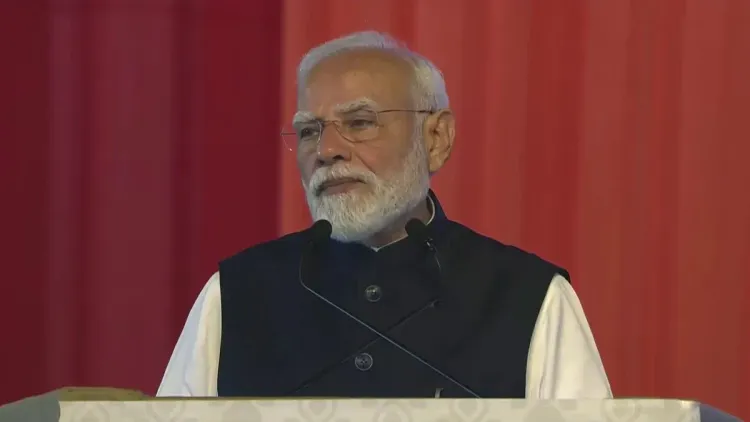
A single number — nearly ₹1 lakh crore — is now the headline figure for railway infrastructure in Andhra Pradesh. Speaking at Bhogapuram in Vizianagaram district on Saturday, 1 August 2026, Prime Minister Narendra Modi declared that railway projects of that scale are currently underway across the state, with Union Minister Ashwini Vaishnaw amplifying the announcement on X.
Bhogapuram as a Symbol of AP's Infrastructure Moment
Bhogapuram is not an incidental backdrop. The town in Vizianagaram district is the site of a planned greenfield airport, and rail connectivity to that corridor has been a key ask from the state for years. Holding the event here signals that the Centre is tying together aviation and rail expansion into a single infrastructure narrative for coastal Andhra Pradesh.
The figure of nearly ₹1 lakh crore in active railway projects represents one of the largest state-level rail investment commitments in the country at any given moment — a number that dwarfs what Andhra Pradesh received in annual railway allocations a decade ago.
Post-Bifurcation Promises and the Long Road to Delivery
When Andhra Pradesh was bifurcated in 2014, the residual state was promised a special central package — railway projects formed a core part of that commitment. Progress on those projects became a recurring political flashpoint between Amaravati and New Delhi through successive state governments.
Indian Railways has since seen its national capital expenditure cross ₹1 lakh crore annually from 2019 onward, enabling faster execution of doubling, electrification, and new-line projects across states. Andhra Pradesh's share of that pipeline — covering coastal corridors, hinterland connectivity, and port-linked freight routes — has grown steadily as part of the National Infrastructure Pipeline.
What the ₹1 Lakh Crore Figure Means on the Ground
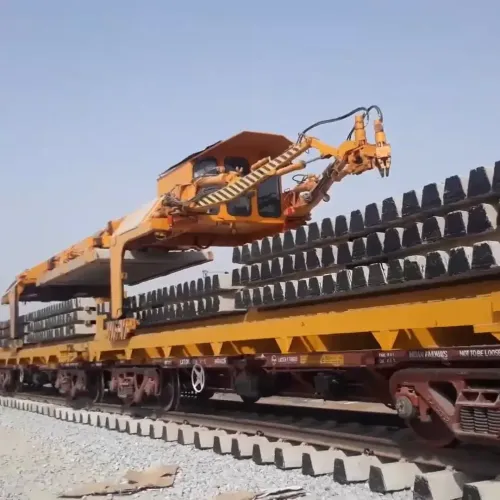
Projects of this scale typically span multiple categories: new rail lines linking underserved districts, doubling of existing single-track corridors to increase freight and passenger capacity, full electrification to cut diesel dependency, and station redevelopment. For Andhra Pradesh — a state with a long coastline, active ports, and an economy anchored in agriculture and manufacturing — rail connectivity directly shapes export competitiveness and commuter mobility.
The state's residents and businesses along coastal AP stand to gain most immediately, with faster freight movement and improved passenger services as projects reach completion.
The real test now is execution speed — land acquisition timelines and state-central coordination on clearances will determine whether ₹1 lakh crore in sanctioned projects translates into trains running on new tracks before the next election cycle.
Point of View
A town tied to greenfield airport plans, signals an attempt to present multimodal connectivity as a unified vision rather than isolated projects. Whether execution matches the headline number will be the defining question in the months ahead.
NationPress
1 Aug 2026
Frequently Asked Questions
How much is being invested in railway projects in Andhra Pradesh?
Railway projects worth nearly ₹1 lakh crore are currently underway in Andhra Pradesh, as announced by Prime Minister Narendra Modi at Bhogapuram on 1 August 2026.
Where did PM Modi make the Andhra Pradesh railway announcement?
PM Modi made the announcement at Bhogapuram in Vizianagaram district, Andhra Pradesh — a town also associated with a planned greenfield airport project.
What railway projects are planned for Andhra Pradesh?
Projects in Andhra Pradesh under Indian Railways include new rail lines, doubling of existing tracks, electrification, and station redevelopment, forming part of the National Infrastructure Pipeline.
Why is Andhra Pradesh getting special railway investment from the Centre?
Post the 2014 bifurcation of the state, the central government committed a special package to residual Andhra Pradesh that included significant railway investment, which has been scaled up through successive Union Budgets.
What is Ashwini Vaishnaw's role in Andhra Pradesh railway projects?
As Union Minister of Railways since 2021, Ashwini Vaishnaw oversees project execution and funding allocation, and shared PM Modi's Bhogapuram announcement on X to highlight the scale of investment in the state.