CM Samrat Choudhary pays tribute to JP Narayan on death anniversary
Synopsis
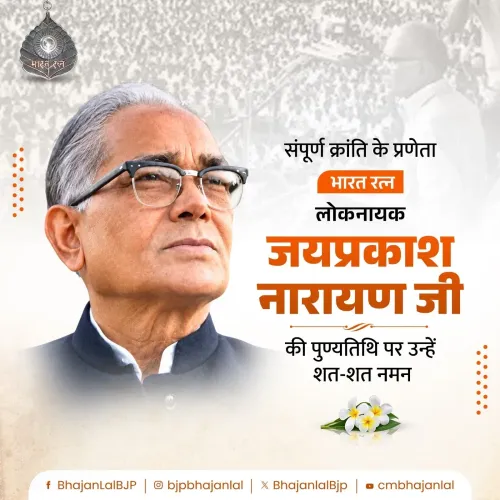
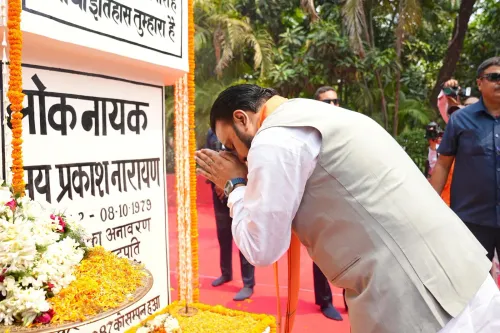
Bihar Chief Minister Samrat Choudhary marked the death anniversary of Loknayak Jayaprakash Narayan on October 8, 2026, paying homage to the freedom fighter and Total Revolution pioneer whose democratic legacy continues to inspire generations across India.
Key Takeaways
Bihar Chief Minister Samrat Choudhary paid tribute to Loknayak Jayaprakash Narayan on his death anniversary, October 8, 2026 .
JP Narayan was born on October 11, 1902 in Sitab Diara, Bihar, and died on October 8, 1979 in Patna.
He was the leader of the Sampoorna Kranti (Total Revolution) movement of 1974–75 , which challenged the Emergency-era government.
CM Choudhary described JP's struggle for democracy, public welfare, and social change as a 'permanent inspiration' for the nation.
Patna's international airport is named after Jayaprakash Narayan, reflecting Bihar's enduring reverence for him.
JP's legacy is claimed across party lines in Indian politics, making tributes to him a rare moment of cross-ideological convergence.
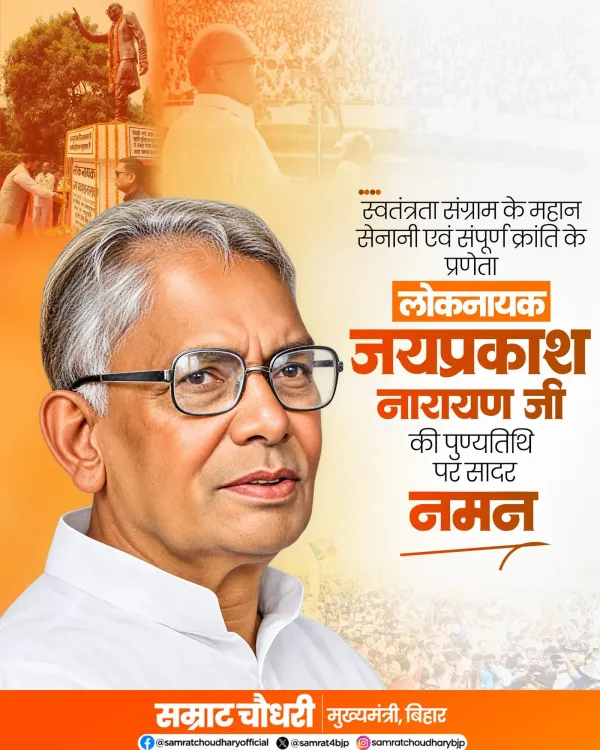
On the death anniversary of one of India's most consequential democratic voices, Bihar Chief Minister Samrat Choudhary paid solemn tribute to Loknayak Jayaprakash Narayan on Thursday, October 8, 2026 — honouring the freedom fighter and architect of the Sampoorna Kranti (Total Revolution) movement whose legacy remains deeply woven into Bihar's political identity.
Posting on X in Hindi, CM Choudhary wrote: 'Swatantrata sangram ke mahan senani evam Sampoorna Kranti ke praneta Loknayak Jayaprakash Narayan ji ki punyatithi par sadar naman' — 'Respectful homage on the death anniversary of the great freedom fighter and pioneer of the Total Revolution, Loknayak Jayaprakash Narayan.' He added that JP's struggle and dedication for democracy, public welfare, and social change would continue to inspire the people of this nation, and that his contribution to the country would always be remembered.
The man Bihar remembers as Loknayak
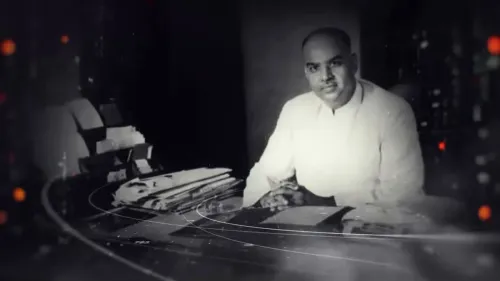
Jayaprakash Narayan, born on October 11, 1902, in Sitab Diara, Bihar, was a towering figure in Indian public life — first as a socialist leader in the independence movement, and later as the moral force behind the mass uprising against Indira Gandhi's Emergency in 1975. His call for Sampoorna Kranti — a total revolution encompassing social, economic, and political transformation — galvanised lakhs of students and citizens across India. He passed away on October 8, 1979, in Patna. His death anniversary is observed each year as a moment of national reflection.
Bihar holds JP's memory with particular reverence. Patna's international airport bears his name, and his political lineage has shaped the state's democratic culture across generations and party lines. That a BJP chief minister pays tribute to a socialist icon underscores how JP's legacy transcends ideological boundaries — claimed by nearly every strand of Indian politics as its own moral inheritance.
A legacy that outlasted its moment
JP Narayan's significance is not merely historical. The 1974–75 movement he led produced a generation of politicians who went on to define post-Emergency Indian democracy — figures who emerged from his shadow to build careers across multiple parties. His insistence that democracy must be participatory, not merely procedural, remains a touchstone in Indian political discourse. Every October 8, that argument is renewed.
Point of View
Claimed as a democratic rather than ideological inheritance. For Bihar's ruling establishment, invoking JP is also a statement of regional pride: the state produced him, and his memory anchors Bihar's self-image as a crucible of India's democratic struggles. The tribute signals continuity with a political tradition that cuts across left-right divisions, a deliberate posture in a state where JP's movement birthed leaders across the entire spectrum. As Bihar's political landscape remains fiercely competitive, such tributes serve as soft cultural capital — reminding voters of a shared heritage no single party owns.
NationPress
8 Oct 2026
Frequently Asked Questions
Why is October 8 significant for Jayaprakash Narayan?
October 8 is the death anniversary of Loknayak Jayaprakash Narayan, who passed away on October 8, 1979, in Patna. It is observed each year as a day of national remembrance for the freedom fighter and Total Revolution leader.
Who is Loknayak Jayaprakash Narayan?
Jayaprakash Narayan, known as Loknayak (People's Leader), was a Bihar-born freedom fighter, socialist thinker, and the architect of the Sampoorna Kranti (Total Revolution) movement of 1974–75 that challenged the Emergency-era government of Indira Gandhi.
What is the Sampoorna Kranti movement?
The Sampoorna Kranti, or Total Revolution, was a mass movement led by Jayaprakash Narayan in 1974–75, calling for comprehensive social, economic, and political transformation in India. It galvanised students and citizens against authoritarian governance and preceded the Emergency.
What did Bihar CM Samrat Choudhary say about JP Narayan?
CM Samrat Choudhary said JP Narayan's struggle and dedication for democracy, public welfare, and social change would always inspire the people of India, and that his contribution to the nation would remain forever memorable.
Is there a landmark in Bihar named after Jayaprakash Narayan?
Yes. Patna's international airport is named after Jayaprakash Narayan — Jay Prakash Narayan International Airport — reflecting Bihar's deep reverence for his legacy.