CM Samrat Choudhary Reviews Bihar's Tap Water Scheme
Synopsis
Bihar CM Samrat Choudhary chaired a Public Health Engineering Department review on 19 November 2026, directing full household tap water coverage under Har Ghar Nal Ka Jal, regular quality testing, and AI-powered grievance redressal.
Key Takeaways
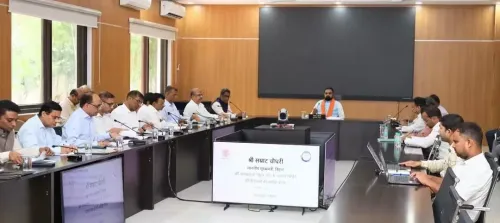
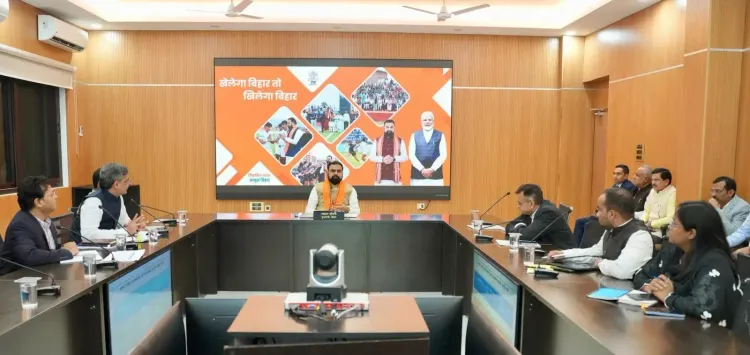
Bihar CM Samrat Choudhary held a departmental review at Sankalp Sabhagar, Lok Sevak Awas on 19 November 2026 .
Directed 100 per cent piped water supply under the Har Ghar Nal Ka Jal scheme.
Ordered regular water quality testing across all supply points.
Instructed the Public Health Engineering Department to adopt AI technology for strengthening complaint redressal.
Bihar's tap water scheme has run since approximately 2016 , parallel to the national Jal Jeevan Mission.
The review signals a shift from infrastructure rollout to performance-based monitoring.
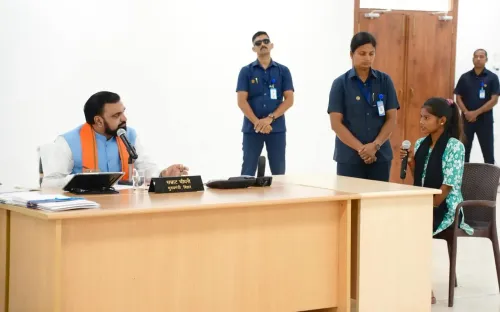
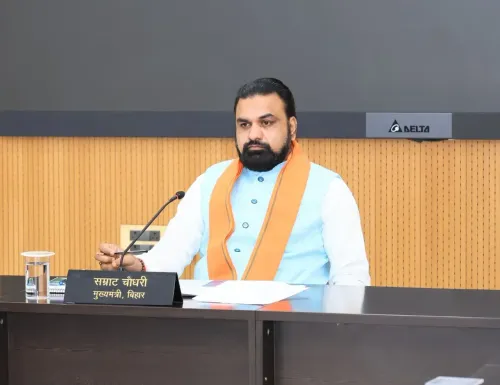
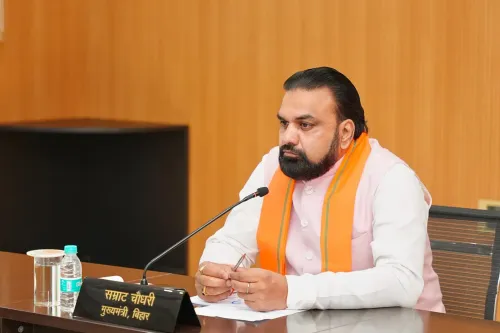
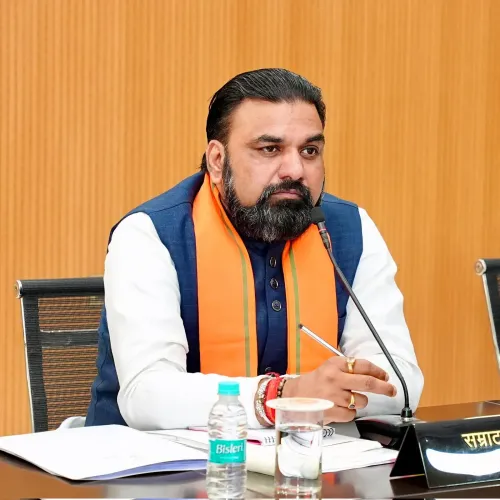
Tap water for every household in Bihar is not just a promise — Bihar Chief Minister Samrat Choudhary made clear on Thursday, 19 November 2026 that it is a deliverable with a deadline. At a high-level departmental review held at the 'Sankalp Sabhagar' inside Lok Sevak Awas, the Chief Minister pressed officials of the Public Health Engineering Department for 100 per cent piped water supply, sharper quality checks, and a technology-driven overhaul of how citizen complaints get resolved.
Posting about the review on X, CM Choudhary said he had directed the department to ensure complete water supply under the 'Har Ghar Nal Ka Jal' ('Tap water to every home') scheme, conduct regular quality testing, strengthen effective monitoring of ongoing works, and build a more robust grievance redressal mechanism — specifically through AI technology.'Har Ghar Nal Ka Jal' — Bihar's decade-long push for universal coverage
Bihar's Har Ghar Nal Ka Jal scheme has been in motion since around 2016, targeting universal piped water connections across the state's rural and urban households. The scheme runs alongside the national Jal Jeevan Mission, with the state government maintaining its own parallel delivery architecture through the Public Health Engineering Department. Bihar households — particularly in rural belts — have historically depended on handpumps and open sources, making the transition to functional tap connections a significant public-health and quality-of-life shift.
Recent state-level reviews have consistently emphasised three pressure points: closing the last-mile coverage gap to reach the genuinely unserved, ensuring that water delivered through those taps actually meets quality standards, and fixing the lag between a household's complaint and the department's response.
AI in the pipeline — the grievance-redressal push
The most forward-looking directive from Thursday's review was the CM's explicit instruction to integrate AI-based tools into the department's complaint redressal system. The intent is to reduce turnaround time, flag repeat failures automatically, and move the department from reactive firefighting to predictive maintenance. No specific district pilots or timelines were announced in the post, and the operational details of that rollout are yet to be made public.
The broader pattern is clear: Bihar's water governance is shifting from a construction-first mindset — where laying pipes counted as success — toward a performance-first model where water flowing reliably, safely, and 24/7 at the tap is the only metric that matters.
When a Chief Minister personally chairs an engineering department review and walks out with four specific, technology-linked directives, the pipeline isn't just about water anymore — it is about accountability.
Point of View
The gap between reported failures and actual repairs. For the BJP government in Bihar, demonstrable progress on the Har Ghar Nal Ka Jal scheme carries both a welfare dividend and a messaging advantage, positioning the state as a model for centre-state coordination under the Jal Jeevan Mission architecture.
NationPress
19 Nov 2026
Frequently Asked Questions
What is the Har Ghar Nal Ka Jal scheme in Bihar?
Har Ghar Nal Ka Jal is Bihar's flagship scheme, launched around 2016, to provide functional piped tap water connections to every household in the state, running in parallel with the national Jal Jeevan Mission.
What did Bihar CM Samrat Choudhary announce about water supply?
On 19 November 2026, CM Samrat Choudhary directed the Public Health Engineering Department to ensure 100 per cent household tap water coverage, conduct regular quality testing, and adopt AI-based tools for faster grievance redressal.
What is the Public Health Engineering Department in Bihar?
It is the Bihar government department responsible for planning and implementing rural and urban water supply and sanitation schemes, including Har Ghar Nal Ka Jal.
How will AI be used in Bihar's water supply scheme?
CM Choudhary directed the department to use AI technology to strengthen complaint redressal, aiming to reduce response time and improve monitoring of water supply failures, though specific district pilots have not yet been announced.
What is the difference between Har Ghar Nal Ka Jal and Jal Jeevan Mission?
Jal Jeevan Mission is the central government's national programme for household tap connections, while Har Ghar Nal Ka Jal is Bihar's own state-level scheme with the same universal coverage goal, allowing the state to maintain a parallel delivery and monitoring structure.