CM Samrat Choudhary Reviews Food Security and Energy Plans with Union Minister Pralhad Joshi
Synopsis
Bihar Chief Minister Samrat Choudhary held a comprehensive review meeting with Union Minister Pralhad Joshi on 9 July 2026, discussing strengthening Bihar's food security system, renewable energy expansion, and accelerating development projects through central-state coordination.
Key Takeaways
Bihar CM Samrat Choudhary met Union Minister Pralhad Joshi at Lok Sevak Avas on 9 July 2026 .
The meeting covered Bihar's Food and Consumer Protection Department and Energy Department .
Discussions focused on strengthening Bihar's public distribution and food security apparatus.
Expanding clean and renewable energy in Bihar and aligning with India's 500 GW non-fossil target by 2030 was a key agenda item.
Both sides emphasised central-state coordination to accelerate welfare scheme implementation and infrastructure development.
The CM reaffirmed the government's commitment to building a prosperous Bihar through effective scheme delivery.
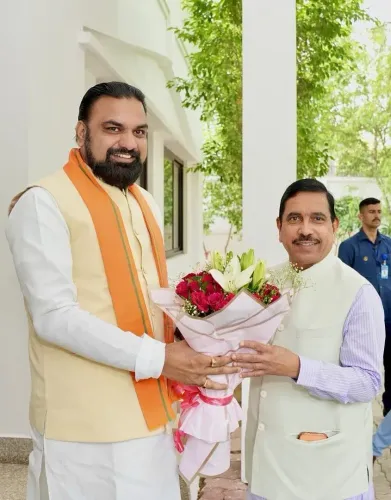
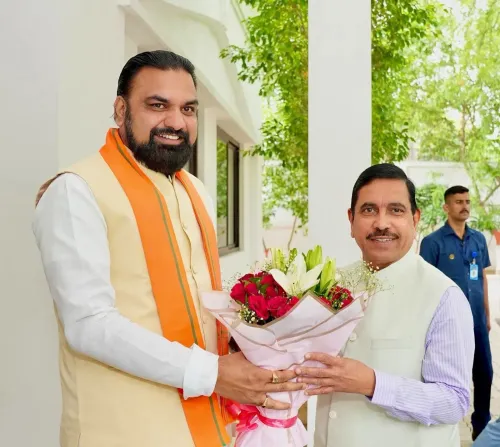
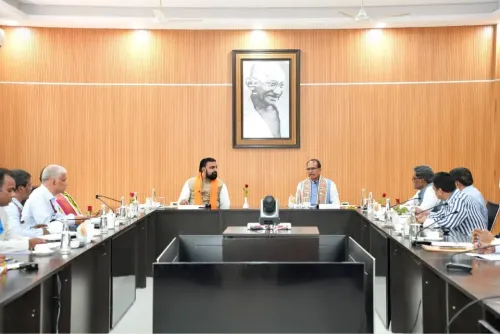
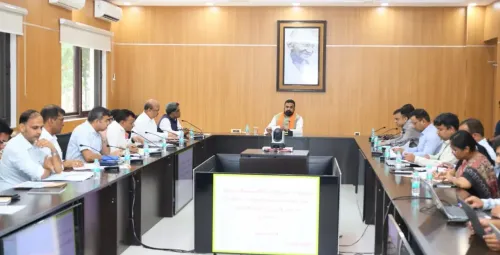
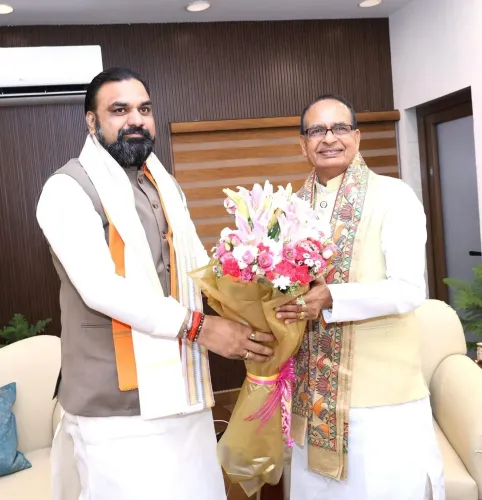
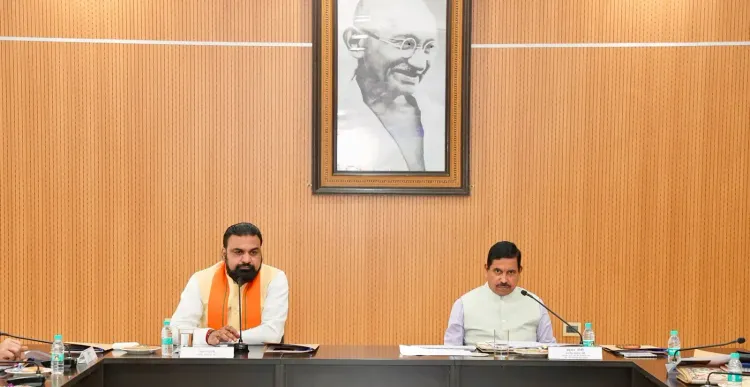
Bihar Chief Minister Samrat Choudhary on Thursday, 9 July 2026, held a detailed review meeting with Union Minister Pralhad Joshi — who holds the portfolios of Consumer Affairs, Food and Public Distribution, and New and Renewable Energy — at Lok Sevak Avas in Patna, covering Bihar's food security apparatus and energy expansion agenda.
Context
The meeting, shared by CM Choudhary on his official X account, focused on strengthening Bihar's food security system (खाद्य सुरक्षा व्यवस्था को और अधिक सुदृढ़ बनाने — 'making the food security system even more robust'), expanding the energy sector, and promoting clean and renewable energy in the state. The Chief Minister also underlined the importance of accelerating development projects through coordinated action between the central and state governments.
The discussions spanned two departments: the Food and Consumer Protection Department and the Energy Department of Bihar — signalling a broad agenda that links welfare delivery with infrastructure growth.
Policy Backdrop
Bihar is among the largest beneficiaries of the National Food Security Act (NFSA), 2013, which mandates subsidised food grain supply to priority households across the country. Periodic central-state reviews are a standard mechanism to assess coverage, leakages, and last-mile delivery under the public distribution system.
On the energy front, India committed at COP26 in 2021 to achieving 500 GW of non-fossil fuel energy capacity by 2030. Bihar's renewable energy expansion — including solar and other clean energy sources — feeds directly into this national target, making state-level coordination with the Union Ministry of New and Renewable Energy critical.
Stakeholders and Impact
The primary beneficiaries of a strengthened food security system are Bihar's millions of priority-household beneficiaries who depend on the public distribution network for subsidised grains. Any improvements in distribution efficiency or coverage directly affect food access for the state's most vulnerable populations.
On the energy side, households, industries, and agricultural consumers across Bihar stand to gain from expanded renewable capacity, which can improve supply reliability and reduce dependence on conventional power. The renewable energy sector itself — including project developers and equipment suppliers — is a key stakeholder in any state-level expansion push.
CM Choudhary stated that the government remains 'continuously committed' (निरंतर प्रतिबद्ध) to the effective implementation of welfare schemes and strengthening infrastructure for a 'prosperous Bihar' (समृद्ध बिहार).
What's Next
The meeting is expected to feed into follow-up actions on joint implementation of food security and renewable energy projects, potentially reflected in upcoming state budget allocations or central scheme reviews. The alignment between Bihar's state priorities and the Union government's welfare and clean energy mandates suggests that coordinated project pipelines could be formalised in the near term.
Progress on these fronts will be tracked through Bihar's departmental reviews and any announcements from the Union Ministry of Consumer Affairs, Food and Public Distribution and the Ministry of New and Renewable Energy regarding state-specific allocations or scheme expansions.
Point of View
The Chief Minister is signalling a dual-track ambition: shoring up welfare optics while positioning Bihar as a participant in India's clean energy transition. The emphasis on 'effective implementation' rather than new announcements is notable — it suggests the current priority is execution of existing schemes rather than fresh policy launches. Watch for whether this meeting translates into measurable allocation changes in Bihar's energy and food budgets or remains a coordination signal.
NationPress
9 Jul 2026
Frequently Asked Questions
Why did Bihar CM Samrat Choudhary meet Pralhad Joshi?
Bihar Chief Minister Samrat Choudhary met Union Minister Pralhad Joshi on 9 July 2026 to conduct a detailed review of food security arrangements and energy sector expansion plans for Bihar, focusing on strengthening the public distribution system and promoting renewable energy.
What was discussed in the Bihar food security and energy meeting?
The meeting covered strengthening Bihar's food security system under the public distribution network, expanding the state's energy sector, promoting clean and renewable energy, and accelerating development projects through central-state coordination.
What is Pralhad Joshi's role in the Union government?
Pralhad Joshi is the Union Minister for Consumer Affairs, Food and Public Distribution, and New and Renewable Energy in the Government of India.
How does Bihar benefit from the National Food Security Act?
Bihar is one of the largest beneficiary states under the National Food Security Act, 2013, which provides subsidised food grains to priority households. Central-state review meetings help assess coverage and improve last-mile delivery through the public distribution system.
What is Bihar's role in India's renewable energy goals?
Bihar's renewable energy expansion contributes to India's national target of achieving 500 GW of non-fossil fuel energy capacity by 2030, a commitment made at COP26 in 2021. State-level coordination with the Union Ministry of New and Renewable Energy is key to meeting this goal.