CM Samrat Choudhary Slams Jharkhand Govt Over Student Lathi-Charge
Synopsis
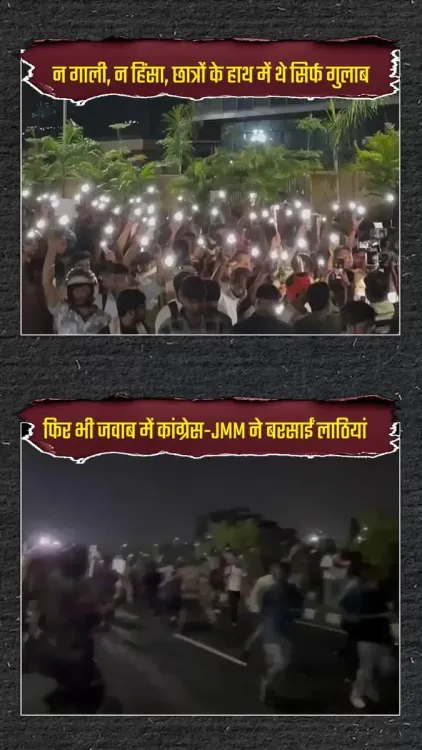
Bihar Chief Minister Samrat Choudhary condemned the Jharkhand JMM-Congress government on August 12, 2026, alleging police used lathi charges against students protesting the JPSC-JSSC exam scam, and accused the ruling coalition of choosing repression over dialogue.
Key Takeaways
Bihar CM Samrat Choudhary posted on X on August 12, 2026 , condemning an alleged police lathi-charge on students in Jharkhand .
He accused the JMM-Congress ruling coalition of suppressing youth protests instead of engaging in dialogue.
The protests are linked to long-running allegations of paper leaks and irregularities in JPSC and JSSC recruitment examinations.
Choudhary also criticised the national opposition for remaining silent on the student crackdown.
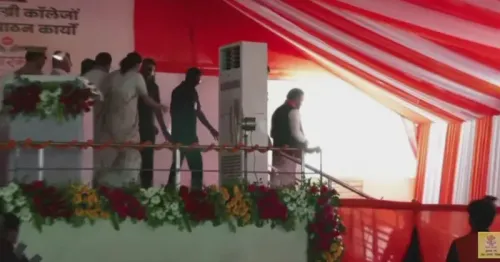
The post included a video, amplifying the political charge of the statement beyond a text-only claim.
Cross-state political criticism between Bihar and Jharkhand over youth and law-and-order issues is a recurring pattern.
A lathi-charge on students demanding fair recruitment exams — and Bihar Chief Minister Samrat Choudhary is not staying quiet about it. On Wednesday, August 12, 2026, the senior BJP leader took to X to condemn what he called the 'cruel face' of the JMM-Congress government in Jharkhand, accusing it of choosing suppression over dialogue.
Choudhary's post, written in Hindi, pulled no punches: 'Jharkhand ke nirdosh chhatra-chhtraon par police lathiyon ki barsat kar rahi hai' — 'Police are raining lathi blows on innocent students of Jharkhand.' He framed the crackdown as emblematic of a government that had already, in his words, 'ruined the futures of youth through the JPSC-JSSC mega-scam and paper leaks.'
JPSC and JSSC: A Decade of Grievances
The Jharkhand Public Service Commission (JPSC) and Jharkhand Staff Selection Commission (JSSC) have been flashpoints for aspirant anger for well over a decade. Allegations of paper leaks and procedural irregularities in recruitment examinations have triggered repeated waves of protest across the state since the early 2010s, with thousands of job-seekers arguing that corruption in the exam machinery has blocked their path to government employment.
The JMM-Congress coalition, which has governed Jharkhand since 2019, has faced sustained pressure over these allegations. Critics argue that successive exam cycles marred by controversy signal a systemic failure rather than isolated incidents — a charge the ruling alliance has consistently disputed.
Opposition Silence Under the Spotlight
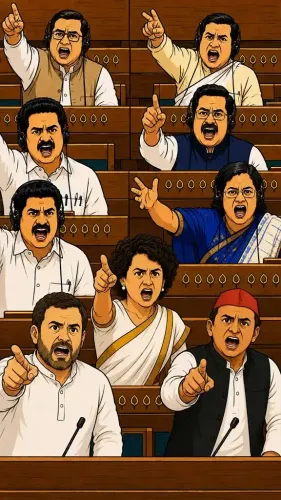
Choudhary reserved a sharp line for the national opposition as well. He noted that those who claim to speak for India's youth have chosen to look away as students cry out — 'chhatra-chhtraon ki chekhon par aankhein moondkar baithe hain'. It is a pointed jab at a moment when the political competition over who truly represents young India has rarely been fiercer.
His closing line — 'Janta sab dekh rahi hai', 'The public is watching everything' — is less a warning than a political bet: that visible state force against students will cost the ruling coalition dearly in the court of public opinion.
Cross-state political criticism of this kind is a familiar pattern between Bihar and Jharkhand, two neighbouring states that share demographic ties and a long history of competitive politics. What makes this moment sharper is the visual currency of a video — the post carries one — which, if it shows the reported scenes, will travel far beyond Choudhary's own followers. The Jharkhand government's response, and any move by student organisations to escalate or seek judicial relief, will determine whether this stays a social-media exchange or becomes a sustained political crisis.
Point of View
Not just partisan noise. The inclusion of a video sharpens the political risk for the JMM-Congress coalition: images of police action against students are notoriously difficult to contain in the social-media era. The swipe at the national opposition signals that the BJP intends to widen this into a referendum on which political camp truly champions youth employment — a fault line that will matter well beyond Jharkhand's borders.
NationPress
12 Aug 2026
Frequently Asked Questions
Why are students protesting in Jharkhand in 2026?
Students have been protesting over alleged paper leaks and irregularities in JPSC (Jharkhand Public Service Commission) and JSSC (Jharkhand Staff Selection Commission) recruitment examinations, which they say have destroyed their chances of securing government jobs.
What did Bihar CM Samrat Choudhary say about Jharkhand?
Choudhary accused the Jharkhand government of ordering a police lathi-charge on innocent students and choosing repression over dialogue, calling it the 'cruel face' of the JMM-Congress administration.
What is the JPSC-JSSC scam?
The JPSC-JSSC scam refers to recurring allegations of paper leaks and procedural irregularities in Jharkhand's state civil services and staff selection examinations, which have triggered protests by job aspirants for over a decade.
Which party rules Jharkhand currently?
Jharkhand is governed by the Jharkhand Mukti Morcha (JMM) in alliance with the Indian National Congress , a coalition that has been in power since 2019 .
Why is Bihar's Chief Minister commenting on Jharkhand affairs?
Bihar and Jharkhand are neighbouring states with shared demographic ties, and leaders from one state — particularly from rival political alliances — frequently criticise the governance and law-and-order record of the other, especially on issues affecting youth.