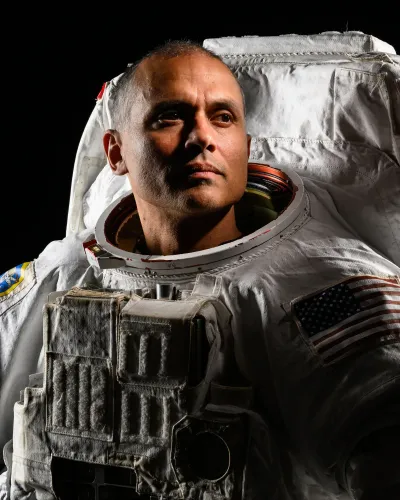
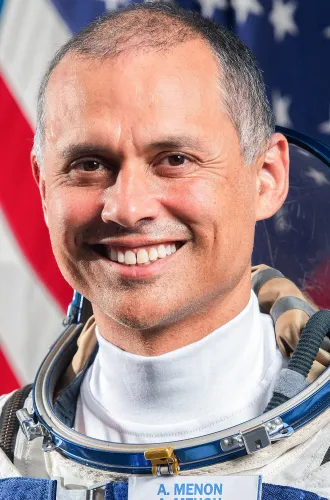
CM Samrat Choudhary Hails Indian-Origin NASA Astronaut Anil Menon's ISS Mission
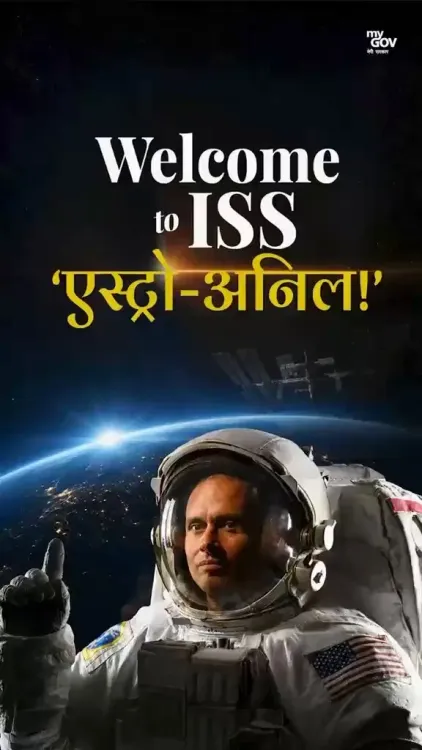
Synopsis
Bihar Chief Minister Samrat Choudhary celebrated Indian-origin NASA astronaut Anil Menon's arrival at the International Space Station on 15 July 2026. Menon, selected under NASA's Artemis programme in 2021, will spend eight months on the ISS conducting AI-based ultrasound research and other advanced scientific experiments.
Key Takeaways
Bihar CM Samrat Choudhary posted on X on 15 July 2026 celebrating Indian-origin NASA astronaut Anil Menon 's ISS arrival.
Menon is on his first spaceflight and will spend approximately eight months aboard the International Space Station.
His research agenda includes AI-based ultrasound diagnostics , scientific research, and advanced technological testing.
Menon was selected in December 2021 as part of NASA's Artemis program astronaut class.
The mission is seen as a milestone for Indian-origin scientists in global human spaceflight programmes.
The post reflects a broader pattern of Indian political leaders highlighting diaspora achievements in science and technology.
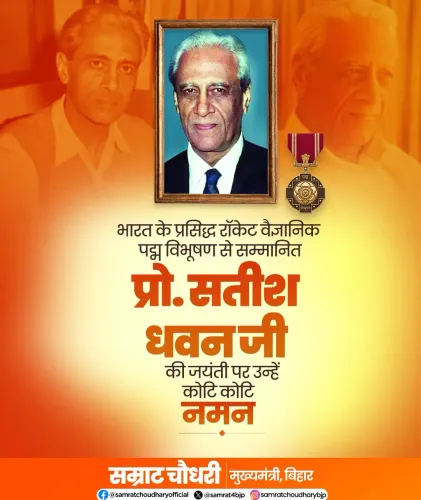
Bihar Chief Minister Samrat Choudhary on Wednesday, 15 July 2026, took to X to celebrate Indian-origin NASA astronaut Anil Menon's arrival aboard the International Space Station (ISS), calling the mission a landmark moment for Indian-origin scientists in global space exploration.
In his post, Choudhary noted that Menon has embarked on his first spaceflight and has stepped onto the ISS, where he is expected to spend the next eight months conducting scientific research, advanced technological testing, and projects involving AI-based ultrasound diagnostics. The Chief Minister described the mission as one that 'will pave the way for new research, technological innovation, and new possibilities for future space missions.'
Context
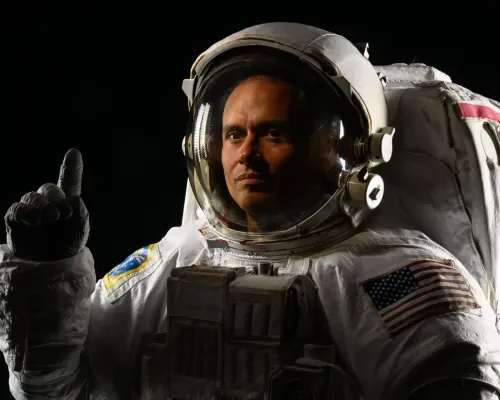
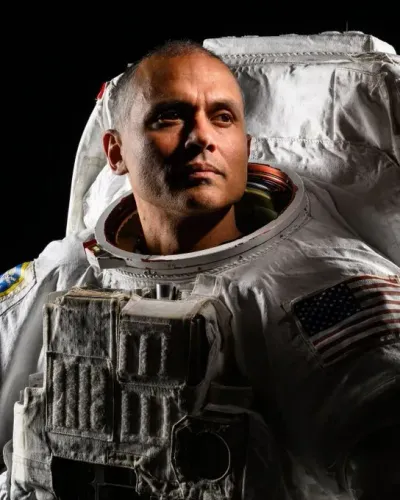
Anil Menon is an Indian-origin physician and NASA astronaut who was selected in December 2021 as part of NASA's Artemis program astronaut class — a cohort chosen to support the agency's next generation of deep-space exploration. His selection was notable as a continued recognition of Indian-origin talent within the United States' human spaceflight programme.
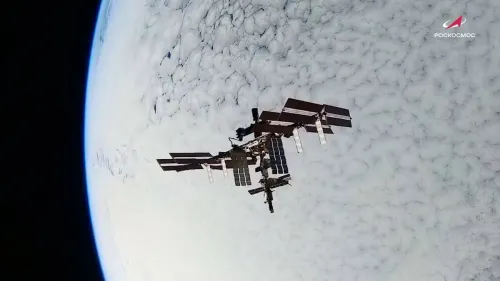
The ISS, a multinational habitable laboratory in low Earth orbit, has been continuously crewed since 2000 and is operated through a partnership involving the United States, Russia, Europe, Japan, and Canada. It serves as the world's primary platform for long-duration human spaceflight research.
Policy Backdrop
US-India space cooperation has grown steadily over the past two decades through joint working groups, satellite mission collaborations, and scientific data-sharing arrangements between NASA and ISRO (the Indian Space Research Organisation). Bilateral frameworks have expanded the scope of cooperation to include astronaut training and mission participation discussions.
Menon's inclusion in the Artemis astronaut class was seen as a signal of the deepening people-to-people and institutional ties between the two countries in the science and technology domain. Indian political leaders across the spectrum have regularly highlighted such milestones to underscore the global reach of the Indian diaspora in STEM fields.
Stakeholders and Impact
The mission carries symbolic weight for India's scientific community and diaspora, particularly for students and young professionals in STEM fields who look to figures like Menon as role models. Choudhary's post reflects a broader pattern among Indian political leaders of amplifying diaspora achievements in science and technology to foster national pride.
The AI-based ultrasound research Menon is set to conduct aboard the ISS is part of a growing focus on developing autonomous medical diagnostic tools for use in environments where access to trained physicians is limited — knowledge that has potential applications both in deep space and in remote terrestrial settings.
What's Next
Over the course of his eight-month stay, Menon's work on the ISS is expected to contribute to scientific literature on long-duration human spaceflight, AI-assisted diagnostics, and advanced materials testing. Observers will also watch for any updates to the NASA-ISRO bilateral space cooperation framework, particularly around crew training and joint mission planning, at upcoming diplomatic summits between India and the United States.
As India accelerates its own human spaceflight ambitions through the Gaganyaan programme, the experience of Indian-origin astronauts on platforms like the ISS is increasingly viewed as a shared reference point for both nations' space agencies.
Point of View
The Bihar CM aligns himself with a narrative of India's global scientific footprint at a moment when the Gaganyaan programme has made human spaceflight a domestic political talking point. The reference to AI-based ultrasound research also allows the post to tap into the broader 'India and technology' discourse that has become central to BJP's development messaging. Ultimately, the gesture costs nothing politically and earns goodwill among STEM communities and the aspirational middle class.
NationPress
14 Oct 2026
Frequently Asked Questions
Who is Anil Menon and why is he in the news?
Anil Menon is an Indian-origin physician and NASA astronaut who arrived at the International Space Station in July 2026 for his first spaceflight. He was selected as part of NASA's Artemis astronaut class in December 2021 and is set to spend eight months on the ISS conducting scientific and AI research.
What will Anil Menon do on the ISS?
Over his eight-month stay, Anil Menon is expected to work on scientific research, advanced technological testing, and AI-based ultrasound diagnostic projects aboard the International Space Station.
Why did Bihar CM Samrat Choudhary post about Anil Menon?
Bihar Chief Minister Samrat Choudhary shared a post on X to celebrate Menon's achievement as an Indian-origin astronaut, calling the mission a path-breaking step for space science and future space exploration.
What is the NASA Artemis astronaut class?
The NASA Artemis astronaut class, announced in December 2021, is a group of astronauts selected to support NASA's next generation of missions, including potential deep-space exploration. Anil Menon was among those selected in that cohort.
What is the relationship between NASA and ISRO?
NASA and ISRO, India's national space agency, have maintained bilateral cooperation agreements covering satellite missions, scientific data sharing, and joint working groups. Their partnership has expanded over the past two decades and includes discussions on crew training and future joint missions.