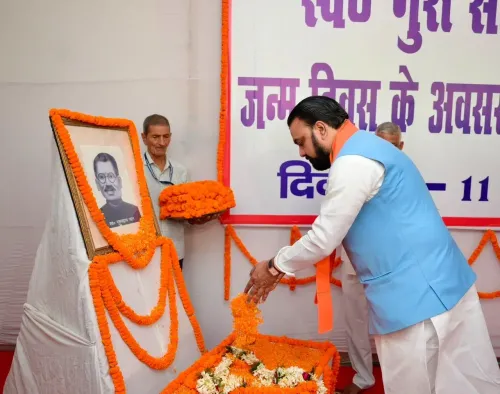
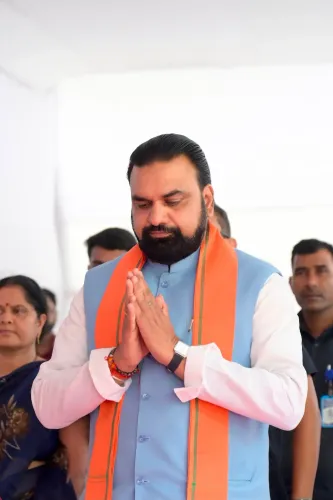
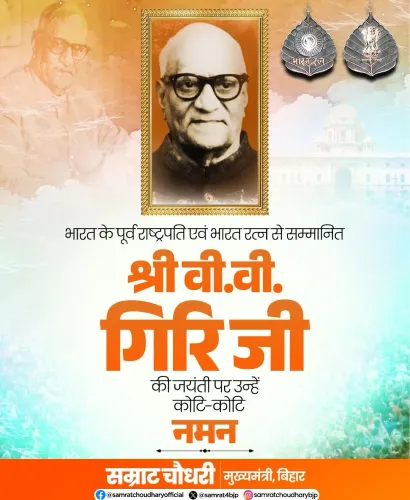
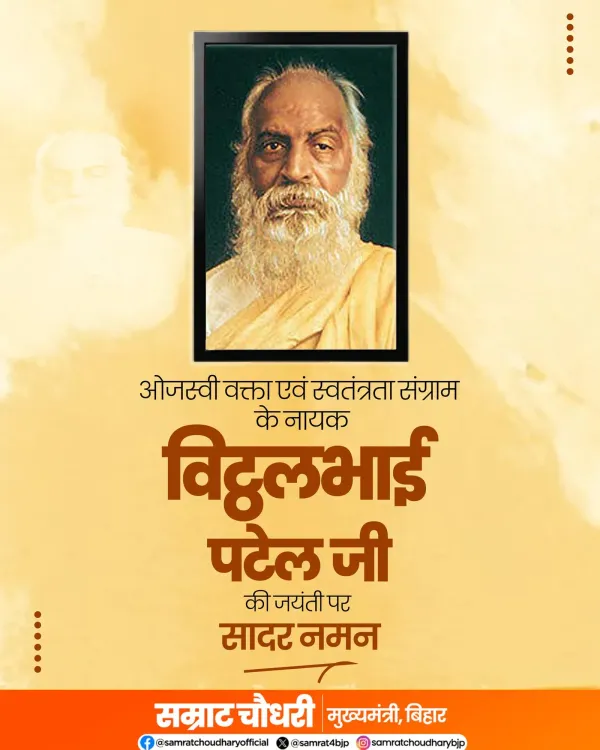
CM Samrat Choudhary pays tribute to Vithalbhai Patel on birth anniversary
Synopsis
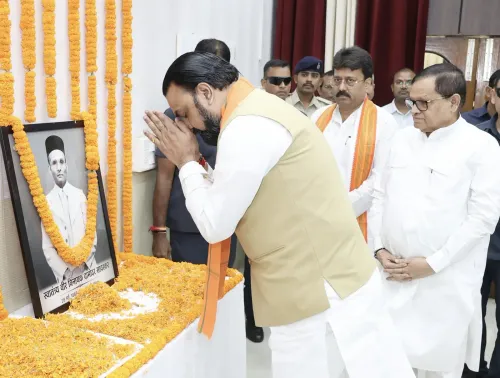
Bihar Chief Minister Samrat Choudhary paid tribute to freedom fighter Vithalbhai Patel on his birth anniversary, honouring the first Indian President of the Central Legislative Assembly and Swaraj Party co-founder as an enduring symbol of nationalist sacrifice and legislative courage.
Key Takeaways
Bihar CM Samrat Choudhary posted a tribute to Vithalbhai Patel on his birth anniversary on September 27, 2026 .
Vithalbhai Patel, born in 1873 , was the elder brother of Sardar Vallabhbhai Patel , India's first Deputy Prime Minister.
He served as the first Indian President of the Central Legislative Assembly during the colonial period.
He co-founded the Swaraj Party , which used legislative councils to challenge British rule from within.
CM Choudhary described him as an 'eloquent speaker, ardent nationalist, and hero of the freedom struggle.'
On the birth anniversary of Vithalbhai Patel — elder brother of the Iron Man, first Indian President of the Central Legislative Assembly, and a fierce orator who rattled the colonial establishment — Bihar Chief Minister Samrat Choudhary offered his respects on Sunday, September 27, 2026, calling the freedom fighter's legacy 'eternally worthy of remembrance and inspiration.'
In his post, CM Choudhary described Vithalbhai Patel as an 'ojasvi vakta, prakhar rashtravadi evam swatantrata sangram ke nayak' — 'an eloquent speaker, ardent nationalist, and hero of the freedom struggle' — paying homage to his role in the independence movement, his commitment to public service, and his contribution to the national cause.
Who was Vithalbhai Patel — the legislative giant history often undersells
Born in 1873, Vithalbhai Patel was the elder brother of Sardar Vallabhbhai Patel, India's first Deputy Prime Minister. While history has largely spotlighted Sardar Patel, Vithalbhai carved his own formidable place in the anti-colonial struggle. He became the first Indian President of the Central Legislative Assembly, wielding the chair with a quiet authority that challenged British supremacy from within the very institutions the empire had built.
He was also a co-founder of the Swaraj Party, the organisation that chose to enter legislative councils not to cooperate with colonial rule, but to obstruct and embarrass it from the inside — a strategy that shook the foundations of British administrative confidence in India.
A routine tribute, a consistent pattern
CM Choudhary's homage fits a well-worn but deliberate tradition in Indian politics: leaders across the spectrum use the birth and death anniversaries of independence-era figures to invoke the moral weight of the freedom struggle. For BJP leaders in particular, figures with strong constitutional and legislative legacies — especially those associated with nationalism and institutional reform during the colonial period — hold recurring significance.
No policy announcement or political event accompanies today's tribute. It is, at its core, an act of public memory — a reminder that the legislative courage of men like Vithalbhai Patel helped lay the groundwork for the democratic republic that followed.
Eighty years after independence, Bihar's Chief Minister pausing to name a largely overlooked freedom fighter keeps that architecture of memory intact. That, in its quiet way, is the point.
Point of View
Pan-Indian freedom struggle narrative. Such ceremonial posts carry no immediate policy weight, but they are far from politically neutral: they shape public memory, one anniversary at a time.
NationPress
27 Sept 2026
Frequently Asked Questions
Who was Vithalbhai Patel?
Vithalbhai Patel was an Indian independence leader born in 1873 , elder brother of Sardar Vallabhbhai Patel, the first Indian President of the Central Legislative Assembly, and co-founder of the Swaraj Party.
What is Vithalbhai Patel's birth anniversary date?
Vithalbhai Patel's birth anniversary falls on September 27 , which is when Bihar CM Samrat Choudhary posted his tribute in 2026.
What was the Swaraj Party?
The Swaraj Party was a political organisation co-founded by Vithalbhai Patel that chose to enter British-era legislative councils not to cooperate with colonial rule, but to challenge and obstruct it from within.
Why is Vithalbhai Patel significant in Indian history?
He was the first Indian to preside over the Central Legislative Assembly under colonial rule, giving Indians a commanding voice in the very institution the British had built, and he was a key figure in the constitutional wing of the independence movement.
What did Bihar CM Samrat Choudhary say about Vithalbhai Patel?
CM Choudhary called him an 'eloquent speaker, ardent nationalist, and hero of the freedom struggle,' saying his sacrifice, dedication to public service, and contribution to the national cause would always be 'worthy of remembrance and inspiration.'