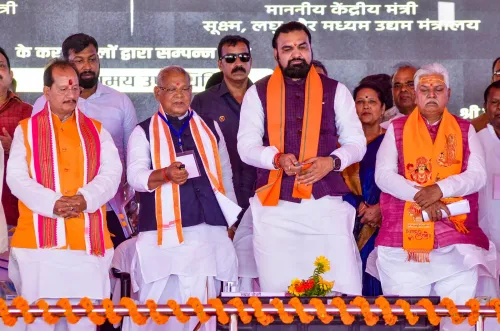
CM Samrat Choudhary launches 2,476 schemes worth ₹11,464 cr in Bihar
Synopsis
Bihar CM Samrat Choudhary marked 100 days in office by inaugurating 2,476 schemes worth ₹11,464 crore at BIT Mesra Patna campus on 25 July 2026, announcing 211 degree colleges, 551 model schools, a ₹5 lakh crore investment target, and manufacturing hubs in Vaishali and Gaya.
Key Takeaways
2,476 development schemes worth ₹11,464 crore were inaugurated or had foundation stones laid at BIT Mesra Patna Campus on 25 July 2026 .
The event marked 100 days of the Samrat Choudhary government in Bihar.
Education commitments include 211 degree colleges , 551 model schools , and model schools in every block across the state.
An electronics manufacturing park is planned at Rajapakar, Vaishali , and an integrated manufacturing cluster with a steel plant hub in Gaya .
The government announced a ₹5 lakh crore investment target and a goal to establish industry in every district.
25 new sugar mills are to be set up over the next five years.
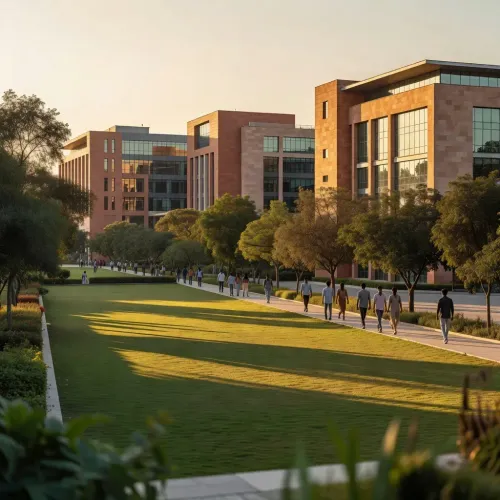
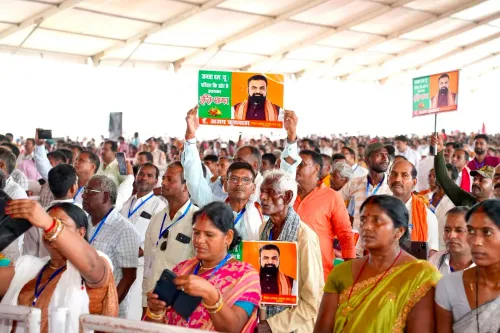
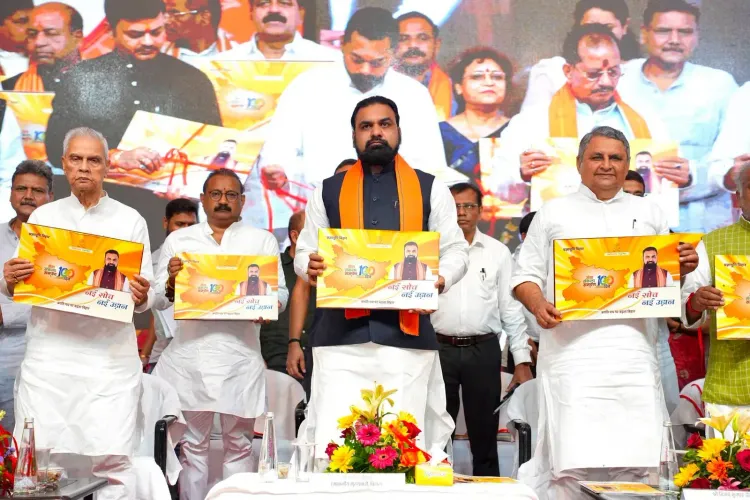
Bihar Chief Minister Samrat Choudhary on Saturday, 25 July 2026, inaugurated and laid the foundation stones for 2,476 development schemes worth ₹11,464 crore at a ceremony held at the BIT Mesra Patna Campus, marking what his government described as 100 days of service, resolve, and dedication to the state's people.
Addressing the gathering, the Chief Minister declared, 'यह सरकार बिहार की जनता की है, हम आपके सेवक हैं' ('This government belongs to the people of Bihar; we are your servants'), framing the mass inauguration as a fulfilment of his administration's public-welfare mandate.
Context
The event at BIT Mesra's Patna campus served as the platform for one of the state's largest single-day scheme launches in recent memory. Choudhary positioned the occasion as a 100-day report card, signalling to voters and investors alike that his government intends to move at pace on infrastructure delivery. The scale — spanning education, industry, and governance — was designed to project a broad development agenda rather than a sectoral push.
Policy Backdrop
Among the headline announcements, the government committed to establishing model schools in every block, setting up 211 degree colleges, and building 551 model schools across the state. AI-based smart governance systems were also announced as part of a push to modernise public-service delivery. Bihar governments have periodically expanded education infrastructure through state budgets, and the current thrust continues that lineage at a larger declared scale.
On the industrial side, Choudhary outlined a target of establishing industry in every district, backed by a stated investment commitment of ₹5 lakh crore. Specific projects named include an electronics manufacturing park at Rajapakar in Vaishali, an integrated manufacturing cluster and dedicated steel plant hub in Gaya, and the establishment of 25 new sugar mills over the next five years. These announcements mirror strategies adopted by other Indian states that have used targeted manufacturing clusters and investment incentives to address regional economic gaps.
Stakeholders and Impact
The education announcements are aimed directly at students and rural households, particularly in blocks and districts that currently lack adequate secondary and higher-education facilities. Expanding degree college access is also widely seen as a tool to reduce Bihar's longstanding out-migration, as young people often leave the state for education and employment. The industrial announcements target domestic and external investors, with sector-specific clusters in electronics and steel intended to create local employment pipelines.
The Vaishali electronics manufacturing park and the Gaya steel and manufacturing hub are geographically significant choices — both districts have historically lagged in formal industrial activity. Sugar mill expansion, if implemented, would affect farming communities in cane-growing belts across the state.
What's Next
The critical test for the announced schemes will be implementation timelines. With 2,476 projects across education, industry, and governance launched in a single event, state agencies will face pressure to move from foundation-laying to ground-level delivery. Progress on investment inflows, school construction, and manufacturing cluster development is expected to feature in future state budget sessions and assembly discussions. The ₹5 lakh crore investment target will require sustained engagement with private capital, and the government's ability to convert announcements into operational facilities over the next five years will determine whether this 100-day milestone translates into lasting structural change for Bihar.
Point of View
476 schemes on a single day is a classically calibrated political signal — the 100-day milestone gives the Choudhary government a narrative anchor to demonstrate momentum ahead of future electoral cycles in Bihar. By combining education expansion with industrial cluster announcements, the Chief Minister is attempting to address two of Bihar's most persistent structural weaknesses — inadequate higher education access and low formal employment — in one optic-heavy event. The ₹5 lakh crore investment pledge and district-level industry targets echo the investment summits that have become standard practice among ambitious state governments across India, though the gap between announcement and ground-level delivery has historically been wide in Bihar. Whether this 100-day showcase translates into measurable outcomes will depend on bureaucratic execution capacity and private-sector confidence in the state's investment climate.
NationPress
24 Oct 2026
Frequently Asked Questions
What schemes did Bihar CM Samrat Choudhary launch on 25 July 2026?
Bihar CM Samrat Choudhary inaugurated and laid foundation stones for 2,476 development schemes worth ₹11,464 crore at BIT Mesra's Patna campus on 25 July 2026, covering education, industrial infrastructure, and governance.
What is the ₹5 lakh crore investment target announced for Bihar?
The Choudhary government announced a ₹5 lakh crore investment commitment as part of its industrial development agenda, with a stated goal of establishing industry in every district of Bihar.
What education projects were announced for Bihar?
The government announced 211 new degree colleges, 551 model schools, and model schools in every block, alongside AI-based smart governance systems to improve public-service delivery.
What is the electronics manufacturing park planned for Vaishali, Bihar?
An electronics manufacturing park is planned at Rajapakar in Vaishali district as part of Bihar's push to develop sector-specific industrial clusters and create local employment.
What is the significance of the Gaya manufacturing cluster announced by Bihar CM?
Gaya has been selected for an integrated manufacturing cluster and a dedicated steel plant hub, marking one of the more specific industrial commitments in Bihar's new development push aimed at districts with historically low formal industry presence.