CM Samrat Choudhary mourns 5 IAF personnel lost in Jorhat crash
Synopsis
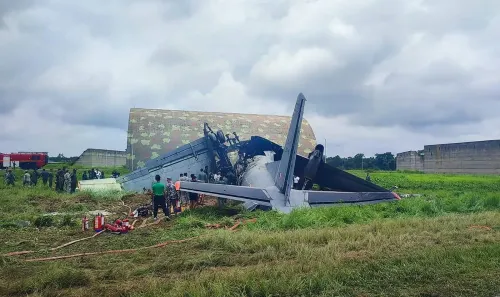
Bihar Chief Minister Samrat Choudhary mourned five Indian Air Force personnel — including two Agniveer Vayu — killed in an An-32 crash at Jorhat, Assam, on 13 June 2026, naming each airman and praying for their families.
Key Takeaways
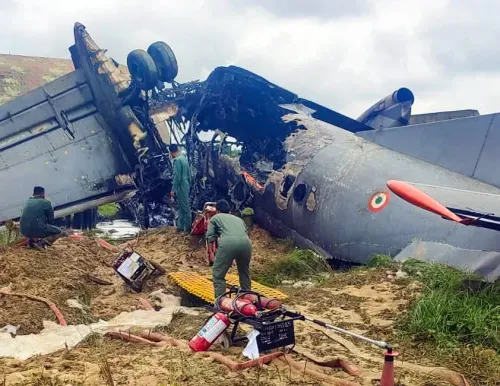
Five IAF personnel died in an An-32 aircraft crash at Jorhat, Assam on 13 June 2026 .
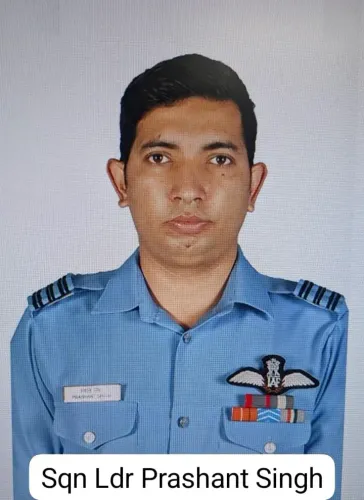
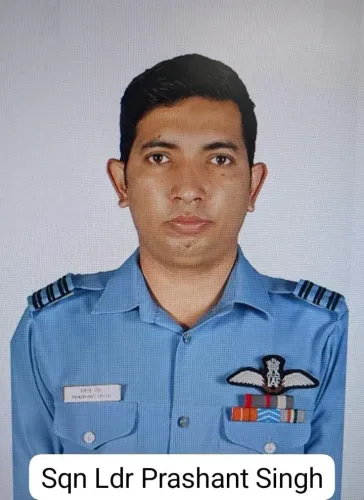
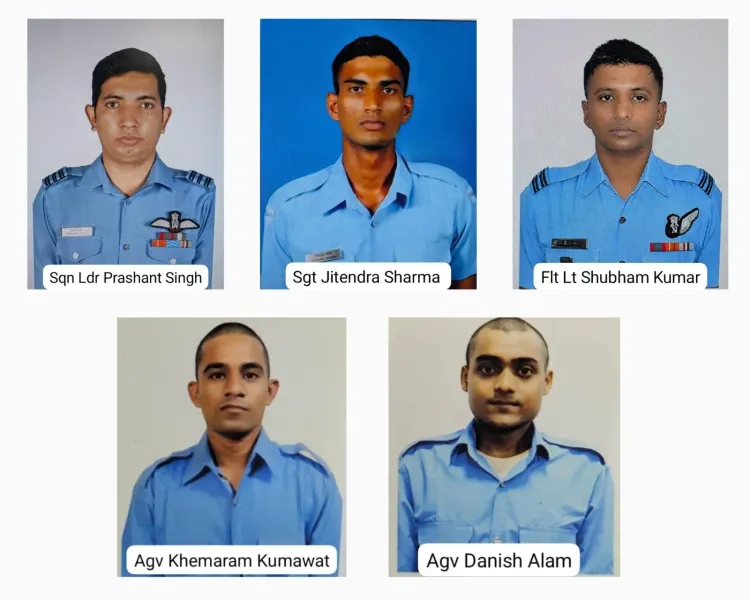
The deceased are Squadron Leader Prashant Singh , Flight Lieutenant Shubham Kumar , Sergeant Jitendra Sharma , Agniveer Vayu Khemaram Kumawat , and Agniveer Vayu Danish Alam .
Two of the five held the Agniveer Vayu rank, created under the Agnipath scheme of 2022 .
Bihar Chief Minister Samrat Choudhary issued a public condolence statement naming all five airmen individually.
The Indian Air Force is expected to initiate a Court of Inquiry into the crash cause.
The incident is likely to renew scrutiny of the An-32 fleet's safety record and Agniveer welfare provisions.
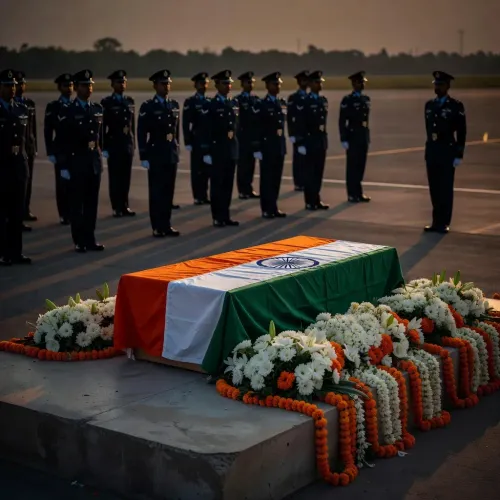
Bihar Chief Minister Samrat Choudhary on Saturday, 13 June 2026, expressed deep grief over the deaths of five Indian Air Force personnel in an An-32 aircraft crash at Jorhat, Assam, calling the news 'extremely sorrowful and heart-rending.' The Chief Minister named each of the fallen airmen and offered condolences to their families.
Context
In his post, CM Choudhary identified the five personnel as Squadron Leader Prashant Singh, Flight Lieutenant Shubham Kumar, Sergeant Jitendra Sharma, Agniveer Vayu Khemaram Kumawat, and Agniveer Vayu Danish Alam. He wrote in Hindi: 'राष्ट्रसेवा के पथ पर सर्वोच्च बलिदान दिया है' — 'they have made the supreme sacrifice on the path of national service.' The Chief Minister concluded with a prayer for peace for the departed souls and strength for the bereaved families.
The crash occurred at Jorhat, a city in Assam that hosts an Indian Air Force base used for transport and operational missions in the northeastern region. The An-32 is a twin-turboprop transport aircraft that has been a workhorse of the Indian Air Force (IAF) for several decades, deployed extensively in difficult terrain including the Northeast and high-altitude sectors.
Policy Backdrop
Two of the five deceased — Agniveer Vayu Khemaram Kumawat and Agniveer Vayu Danish Alam — held the Agniveer Vayu rank, a designation created under the Agnipath scheme launched in 2022. The scheme introduced short-tenure military service across the three armed forces, with personnel called Agniveers. Their deaths mark among the most prominent operational losses involving Agniveer-ranked personnel since the scheme's inception.
The An-32 fleet has been involved in multiple incidents over its long service history with the IAF, each prompting safety reviews and fleet maintenance assessments. The aircraft remains central to airlift operations in India's northeastern states, where road connectivity is limited and air transport is strategically critical.
Stakeholders and Impact
The families of all five airmen bear the immediate human cost of the tragedy. The loss spans multiple ranks — from a Squadron Leader commanding seniority to young Agniveer Vayu personnel at the earliest stage of their service careers — underscoring that aviation accidents carry risk across the entire crew hierarchy.
State-level political leaders issuing public condolences after military aviation losses is a well-established pattern in Indian public life, reinforcing civilian solidarity with the armed forces. CM Choudhary's statement, issued from Bihar, reflects the broader national mourning that transcends state boundaries when uniformed personnel are lost in service.
What's Next
The Indian Air Force is expected to convene a Court of Inquiry to establish the cause of the crash, standard procedure following any military aviation accident involving fatalities. Findings from such inquiries can lead to fleet-wide safety directives, maintenance protocols, or operational restrictions on the An-32 type.
Compensation and next-of-kin benefits for the families — including those of the two Agniveer Vayu personnel — will be closely watched, given ongoing public and parliamentary debate over the welfare provisions built into the Agnipath scheme. The incident is likely to renew scrutiny of the An-32's operational safety record and the IAF's fleet modernisation timeline.
Point of View
Arriving as the Agnipath scheme continues to face questions about welfare and career security for short-tenure recruits. For a state-level leader with no direct jurisdiction over defence, such a statement is a calculated act of national solidarity that also serves to keep Bihar's political narrative aligned with pro-military sentiment. The IAF's forthcoming Court of Inquiry will determine whether this tragedy becomes a flashpoint for broader fleet-safety or scheme-welfare debates.
NationPress
19 Sept 2026
Frequently Asked Questions
What happened to the IAF An-32 aircraft at Jorhat?
An Indian Air Force An-32 transport aircraft crashed at Jorhat, Assam, killing five personnel on board on 13 June 2026. The cause is under investigation by the IAF.
Who were the five IAF personnel killed in the Jorhat crash?
The five airmen were Squadron Leader Prashant Singh, Flight Lieutenant Shubham Kumar, Sergeant Jitendra Sharma, Agniveer Vayu Khemaram Kumawat, and Agniveer Vayu Danish Alam.
What is Agniveer Vayu and which scheme created this rank?
Agniveer Vayu is a rank for short-tenure recruits in the Indian Air Force, created under the Agnipath scheme launched by the central government in 2022. Two of the five crash victims held this rank.
Why did Bihar CM Samrat Choudhary comment on an Assam air crash?
State-level leaders across India routinely issue condolences after military fatalities as an expression of national solidarity. CM Choudhary named each of the five deceased airmen individually in his statement.
What happens after an IAF aircraft crash investigation?
The Indian Air Force convenes a Court of Inquiry after fatal aviation accidents. Findings can lead to fleet-wide safety directives, maintenance protocols, or operational restrictions on the aircraft type involved.