Rajnath Singh condoles death of 5 IAF crew in Jorhat An-32 crash
Synopsis
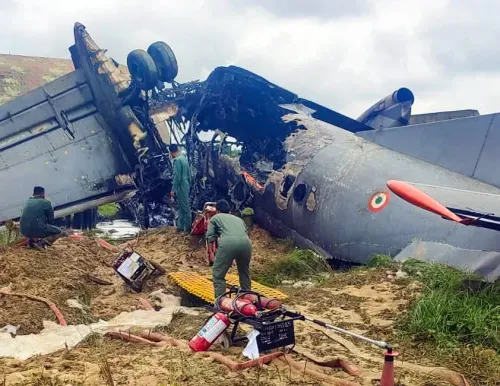
Union Defence Minister Rajnath Singh mourned the deaths of five IAF personnel — including two Agniveervayu recruits — in an An-32 aircraft accident at Jorhat, Assam on 13 June 2026, calling it the supreme sacrifice and pledging the nation's solidarity with bereaved families.
Key Takeaways
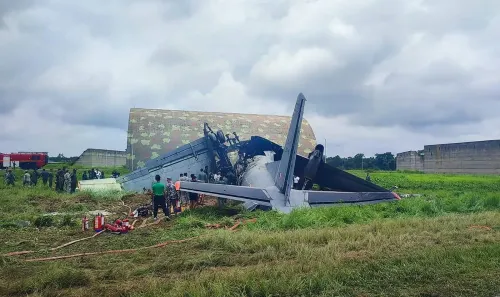
An An-32 aircraft accident at Jorhat, Assam on 13 June 2026 killed five Indian Air Force personnel.
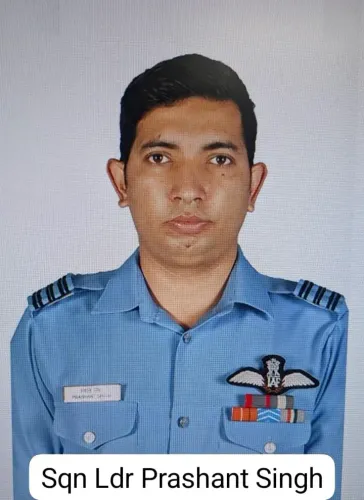
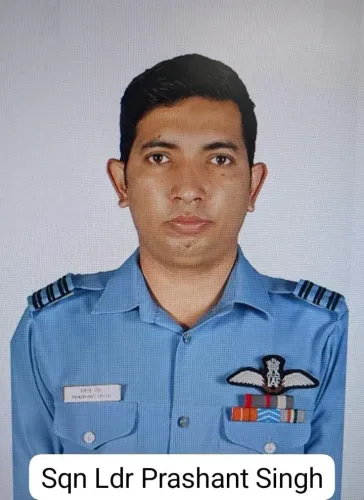
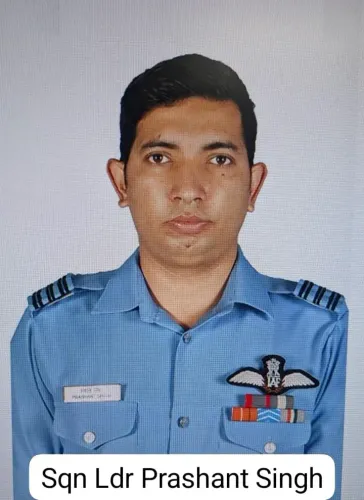
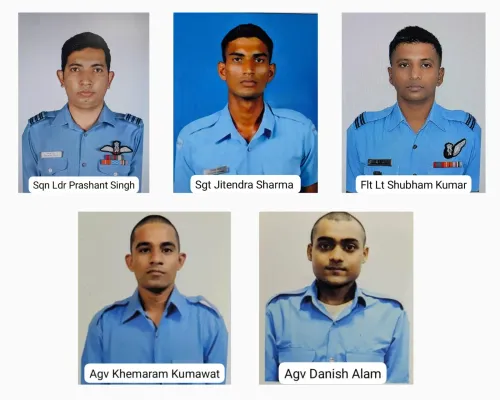
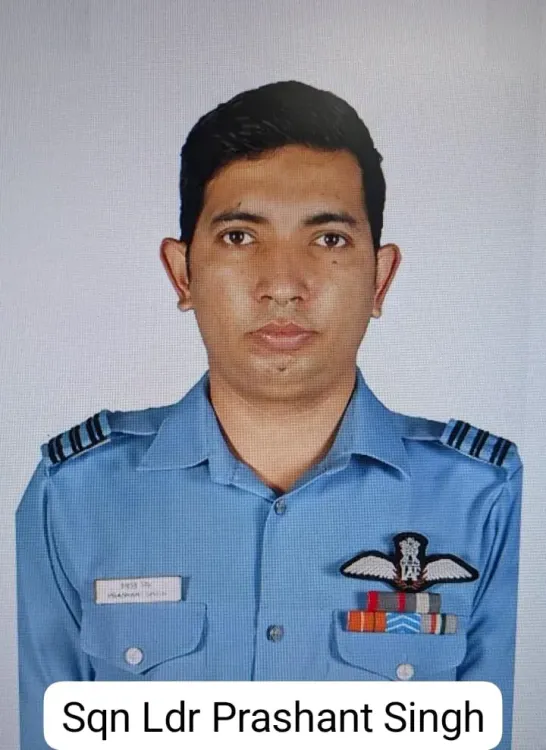
The deceased are Sqn Ldr Prashant Singh , Flt Lt Shubham Kumar , Sgt Jitendra Sharma , Agniveervayu Khemaram Kumawat , and Agniveervayu Danish Alam .
Two of the five — Khemaram Kumawat and Danish Alam — were Agniveervayu recruits under the Agnipath scheme launched in 2022.
The An-32 , inducted in the 1980s , remains the primary tactical transport aircraft for IAF operations in India's northeast.
A Court of Inquiry is expected to be convened to determine the cause of the accident and review fleet airworthiness.
Union Defence Minister Rajnath Singh offered condolences and stated the nation stands with the bereaved families.
Union Defence Minister Rajnath Singh on Saturday, 13 June 2026, expressed deep anguish over the deaths of five Indian Air Force personnel in an An-32 aircraft accident at Jorhat, Assam, naming each of the fallen airmen and offering condolences to their families.
What happened
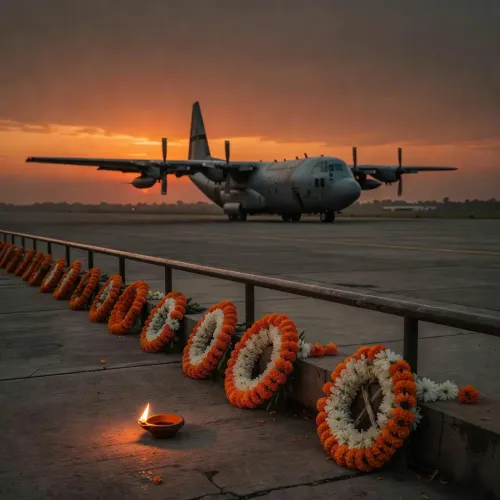
The accident claimed the lives of Squadron Leader Prashant Singh, Flight Lieutenant Shubham Kumar, Sergeant Jitendra Sharma, Agniveervayu Khemaram Kumawat, and Agniveervayu Danish Alam. The minister described their deaths as the 'supreme sacrifice in the line of duty' and said their 'courage and service to the nation will always be remembered with pride and gratitude.'
The crash occurred at or near the Jorhat Air Force base in Assam, a station that serves as a critical hub for IAF transport and logistical operations across the northeastern region.
Context
The Antonov An-32 is a twin-turboprop tactical transport aircraft that has been the workhorse of IAF logistics in remote and high-altitude areas since its induction in the 1980s. The fleet remains central to supply operations in the northeast and along the Himalayan frontier, where terrain and altitude make road transport impractical.
The aircraft type has a long operational history with the IAF, and accidents involving the platform have in the past triggered Courts of Inquiry and reviews of maintenance and airworthiness protocols. The broader question of fleet modernisation has been a recurring subject in defence policy discussions under the Atmanirbhar Bharat initiative.
Policy backdrop: Agnipath and the Agniveervayu
Two of the five personnel killed — Agniveervayu Khemaram Kumawat and Agniveervayu Danish Alam — held the Agniveervayu rank, introduced under the Agnipath scheme launched in June 2022. The scheme created a new category of short-term military recruits across all three services on four-year contracts, with a percentage eligible for permanent retention thereafter.
Their deaths in active service mark one of the most visible instances of Agniveervayu personnel making the ultimate sacrifice, bringing renewed attention to the welfare provisions and insurance cover extended to recruits under the scheme.
Stakeholders and impact
The bereaved families of all five airmen are the immediate stakeholders. Rajnath Singh stated that 'the nation stands firmly with them in this hour of grief,' signalling that the government will extend formal support. Defence ministry protocols typically include ex-gratia payments, pension entitlements for next of kin, and state honours.
The Indian Air Force will be expected to convene a Court of Inquiry to establish the cause of the accident. Findings from such proceedings can inform decisions on the continued airworthiness of the remaining An-32 fleet and accelerate timelines for induction of replacement platforms.
What's next
Attention will now turn to the Court of Inquiry proceedings, whose findings are likely to face parliamentary scrutiny given the profile of the accident and the involvement of Agniveervayu personnel. Any recommendations on the An-32 fleet's operational status or accelerated replacement could have significant budgetary and operational implications for the IAF's northeastern transport capability. The accident is also likely to prompt fresh questions about the welfare and insurance framework for Agniveer recruits serving in active operational roles.
Point of View
And will intensify scrutiny of welfare, insurance, and operational-risk provisions for short-tenure recruits. Rajnath Singh's personal, name-by-name condolence post is consistent with his established practice of visible ministerial accountability on military casualties, reinforcing the government's messaging that Agniveer service carries full national honour. The Court of Inquiry findings, when released, will determine whether this accident becomes a policy inflection point for the An-32 fleet's future.
NationPress
19 Sept 2026
Frequently Asked Questions
What happened in the IAF An-32 crash at Jorhat?
An Indian Air Force An-32 transport aircraft was involved in an accident at or near the Jorhat Air Force base in Assam on 13 June 2026, killing five air warriors on board.
Who were the five IAF personnel killed in the Jorhat crash?
The five personnel killed were Squadron Leader Prashant Singh, Flight Lieutenant Shubham Kumar, Sergeant Jitendra Sharma, Agniveervayu Khemaram Kumawat, and Agniveervayu Danish Alam.
What is the Agniveervayu rank and the Agnipath scheme?
Agniveervayu is a rank created under the Agnipath scheme, a military recruitment reform launched in June 2022 that enrolls personnel across all three services on four-year short-term contracts, with a portion eligible for permanent retention.
What is the An-32 aircraft and why is it used in northeast India?
The An-32 is a twin-turboprop tactical transport aircraft inducted by the IAF in the 1980s. It is widely used in northeast India and high-altitude areas because it can operate from short, remote airstrips where road access is limited.
What happens after an IAF aircraft accident?
The Indian Air Force typically convenes a Court of Inquiry to investigate the cause of an accident, review maintenance records, and recommend corrective measures. Findings can lead to fleet-wide safety audits or changes to operational protocols.