CM Samrat Choudhary Orders Model School Overhaul in Bihar
Synopsis
Bihar CM Samrat Choudhary chaired an education review on 20 August 2026, ordering a one-officer-one-school accountability system, quarterly parent-teacher meetings, JEE-NEET guidance, and maximum enrolment on the BSEB 24x7 digital learning platform for Saraswati Vidya Niketan model schools.
Key Takeaways
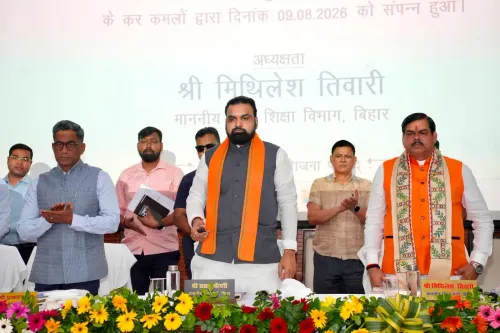
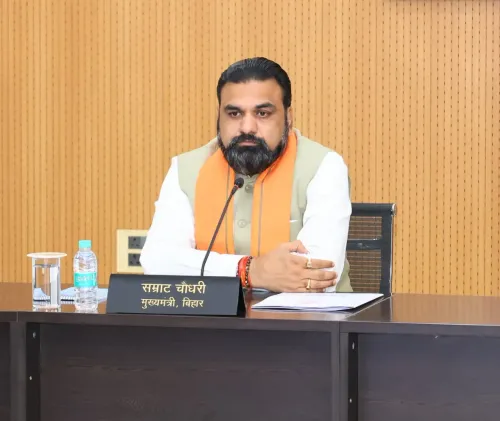
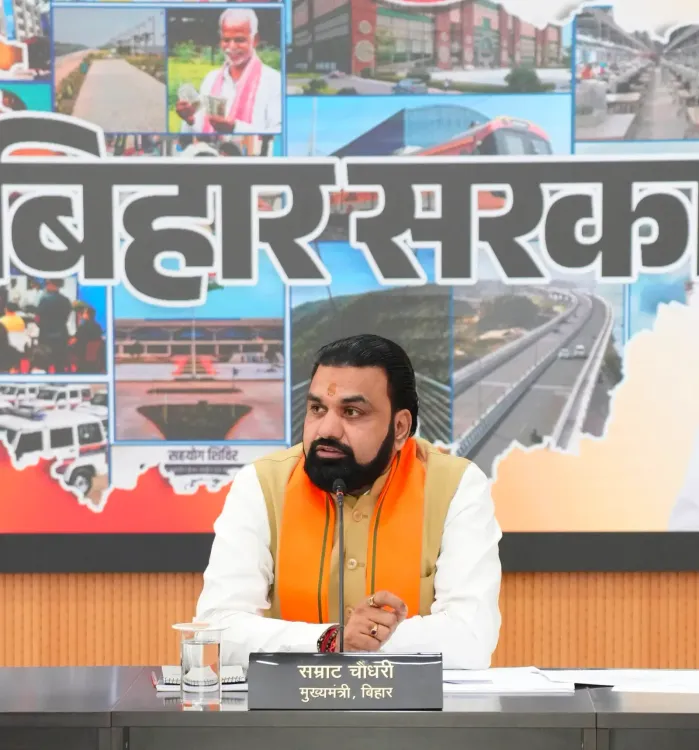
Bihar CM Samrat Choudhary held an education department review at Sankalp Sabhagar, Lok Sevak Avas on 20 August 2026 .
The 'Ek Adhikari – Ek Model School' framework assigns individual government officers direct responsibility for each Saraswati Vidya Niketan model school.
Parent-teacher meetings are to be held every three months at all model schools, with alumni engagement also mandated.
Schools were directed to provide structured preparation support for JEE and NEET competitive entrance examinations.
Maximum student enrolment on the BSEB e-learning and 24×7 interactive digital platform was ordered to scale access beyond the classroom.
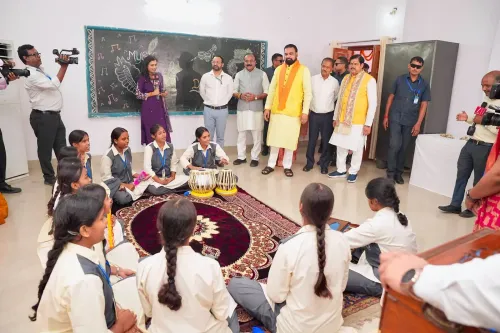
Bihar's classrooms are getting a direct line to the top. Bihar Chief Minister Samrat Choudhary chaired a high-level education department review at 'Sankalp Sabhagar' in his official residence, Lok Sevak Avas, on Thursday, 20 August 2026, issuing a sweeping set of directives aimed at transforming the state's Saraswati Vidya Niketan model schools into genuine engines of academic excellence.
One Officer, One School — Accountability Moves to the Front
The centrepiece of the meeting was the formal rollout of an 'Ek Adhikari – Ek Model School' (one officer, one school) framework, under which individual government officers will be assigned direct custodial responsibility for specific model schools. It is a governance bet: that named, personal accountability will move the needle where anonymous bureaucratic oversight has not.
Choudhary also directed that parent-teacher meetings be held every three months at each school, and that engagement with alumni be actively strengthened — building a feedback loop between the institution and the communities it serves.
JEE, NEET and the Digital Platform Push
The Chief Minister zeroed in on competitive exam preparation as a key benchmark for model school quality. His directive: ensure students receive structured guidance for JEE (engineering entrance) and NEET (medical entrance) — the two national exams that define career trajectories for millions of Indian students each year.
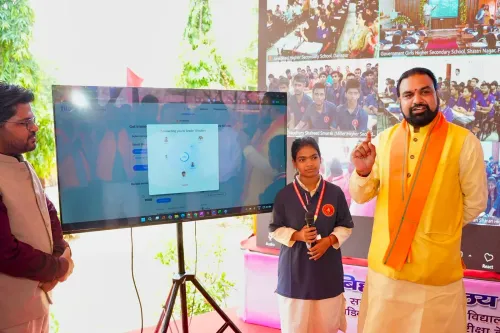
Equally significant was the instruction to maximise student enrolment on the Bihar School Examination Board's (BSEB) e-learning and 24×7 interactive digital learning platform. The platform represents the state's attempt to extend quality instruction beyond the physical classroom — a critical lever in a state where geography and teacher shortages have historically constrained access.
Bihar's Long Education Climb
The Saraswati Vidya Niketan network sits within Bihar's broader, decade-long effort to upgrade secondary education — a push that has combined infrastructure investment, teacher deployment drives, and digital integration. Successive state governments have used model and Adarsh school programmes to signal quality benchmarks for the wider school system.
The recurring use of administrative accountability mechanisms — officer assignments, mandatory parent forums, alumni outreach — reflects a governance style that treats school performance as a public administration problem as much as a pedagogical one. The real test will come in the rollout metrics: how many officers are actually assigned, and how many students plug into the BSEB digital platform before the next JEE-NEET cycle.
Bihar's students are watching. So, now, is an officer with their school's name on their file.
Point of View
One school' directive is a classic Bihar administrative manoeuvre — attaching personal accountability to a systemic problem to force measurable outcomes. By anchoring model school reform to JEE and NEET performance, Choudhary is framing education quality in terms voters and parents understand viscerally, not bureaucratic metrics. The BSEB digital platform push fits neatly into the BJP's national 'Viksit Bharat' narrative, positioning Bihar as a state actively bridging the urban-rural education gap. The real political dividend — or liability — arrives when the next competitive exam cycle produces results traceable to these schools.
NationPress
5 Oct 2026
Frequently Asked Questions
What is the 'Ek Adhikari Ek Model School' scheme in Bihar?
It is a government accountability framework announced by Bihar CM Samrat Choudhary on 20 August 2026 , under which individual officers are assigned direct custodial responsibility for specific Saraswati Vidya Niketan model schools to improve oversight and outcomes.
What are Saraswati Vidya Niketan schools in Bihar?
Saraswati Vidya Niketan schools are Bihar's state-run model schools designed to deliver upgraded academic infrastructure, better teacher availability, and modern facilities to secondary-level students across the state.
How is Bihar helping students prepare for JEE and NEET?
Bihar CM Samrat Choudhary has directed model schools to provide structured guidance and mentoring for JEE and NEET aspirants, alongside expanding access to the BSEB 24×7 digital learning platform .
What is the BSEB digital learning platform?
The Bihar School Examination Board (BSEB) operates an e-learning and interactive digital learning platform available 24 hours a day, 7 days a week , designed to extend quality instruction to students beyond regular classroom hours.
How often will parent-teacher meetings be held in Bihar model schools?
Under directives issued by CM Samrat Choudhary on 20 August 2026 , parent-teacher meetings at Saraswati Vidya Niketan model schools must be held once every three months .