CM Conrad Sangma Inaugurates PCI Capacity Building Centre
Synopsis
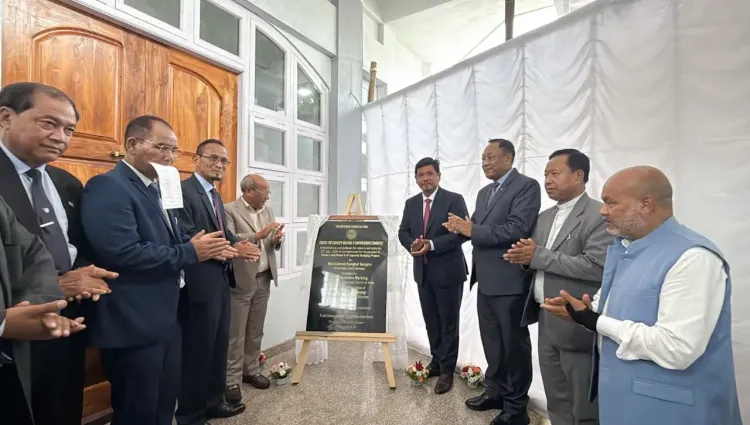
Meghalaya Chief Minister Conrad Sangma inaugurated the Presbyterian Church of India's Centre for Capacity Building and Empowerment on 2 July 2026, covering Phase I and Phase II, and pledged government support for Phase III of the landmark community development initiative.
Key Takeaways
Conrad Sangma inaugurated the PCI Centre for Capacity Building and Empowerment on 2 July 2026 , covering Phase I and Phase II .
The Chief Minister described the Centre as a place to 'empower people, nurture leadership, and strengthen communities,' not merely a physical facility.
The Presbyterian Church of India , headquartered in Shillong , has operated schools, colleges, and hospitals in Meghalaya since the 19th century.
The Meghalaya government publicly committed to supporting Phase III of the Centre's development.
The initiative reflects a long-standing pattern of state-church partnerships for human development in Christian-majority Northeastern states .
Progress on Phase III funding and construction will be a key indicator of the government's follow-through on this pledge.
Meghalaya Chief Minister Conrad Sangma on Thursday, 2 July 2026, inaugurated the Centre for Capacity Building and Empowerment of the Presbyterian Church of India (PCI), covering both Phase I and Phase II of the project, reaffirming the state government's partnership with one of the Northeast's most influential faith-based institutions.
Context
At the inauguration, Chief Minister Sangma described the Centre as 'more than infrastructure,' calling it 'a place to empower people, nurture leadership, and strengthen our communities.' He also acknowledged the Presbyterian Church of India's 'remarkable role in education, healthcare, and social development in Meghalaya,' and confirmed that the government 'remains committed to supporting Phase III of this important initiative.'
The PCI, headquartered in Shillong, is a major Protestant denomination with an extensive network of schools, colleges, and hospitals across Meghalaya and other Northeastern states. Its institutional footprint in the region dates to the 19th century, when Presbyterian missions established parallel systems of education and healthcare that continue to supplement state services today.
Policy Backdrop
Meghalaya state governments have maintained formal and informal partnerships with churches for the delivery of education and health services since statehood in 1972. The approach reflects the limited administrative reach of the state in remote tribal areas and the historically deep penetration of mission-run institutions in human development metrics.
The National People's Party (NPP)-led coalition government, which Conrad Sangma has headed since 2018, has consistently emphasised convergence with faith-based organisations for skill development and leadership programmes in tribal communities. Phased project structures — such as the three-phase model of this Centre — are characteristic of such collaborative initiatives, allowing staggered budgetary commitments aligned with state fiscal cycles.
Stakeholders and Impact
The Centre is expected to directly serve PCI community members, youth leaders, and civil society actors across Meghalaya. By providing dedicated infrastructure for capacity building and leadership training, the facility addresses a gap that neither the church nor the state could efficiently fill alone.
In Christian-majority Northeastern states, government support for established church infrastructure is a well-documented pattern that extends reach in education, health, and leadership development. Such partnerships are broadly welcomed by local communities, where the church often functions as a primary social institution alongside government bodies.
What's Next
With Phase I and Phase II now inaugurated, attention shifts to the timeline and funding arrangements for Phase III, which Chief Minister Sangma has publicly committed the government to supporting. The progress of Phase III will be closely watched both as a measure of state-church collaboration and as a potential model for similar capacity-building centres in other districts of Meghalaya or in neighbouring Northeastern states.
The inauguration also signals the NPP-led government's continued emphasis on community-anchored development as it positions itself ahead of future electoral cycles in the state.
Point of View
If politically symbiotic, arrangement in a Christian-majority state. Conrad Sangma's public commitment to Phase III before Phase I and II are even fully operational signals a deliberate effort to deepen this relationship ahead of future electoral cycles. The phased structure of the project also reflects a broader Northeast India pattern where state governments use staggered commitments to manage fiscal constraints while maintaining goodwill with influential civil society actors. Whether Phase III materialises on schedule will test whether this partnership is substantive policy or ceremonial optics.
NationPress
1 Oct 2026
Frequently Asked Questions
What is the PCI Centre for Capacity Building and Empowerment in Meghalaya?
The Centre for Capacity Building and Empowerment is a facility established by the Presbyterian Church of India (PCI) in Meghalaya to provide leadership training, skill development, and community empowerment programmes. Chief Minister Conrad Sangma inaugurated its Phase I and Phase II on 2 July 2026.
Who inaugurated the Presbyterian Church of India capacity building centre?
Meghalaya Chief Minister Conrad Sangma inaugurated the PCI Centre for Capacity Building and Empowerment on 2 July 2026, covering both Phase I and Phase II of the project.
What is the role of the Presbyterian Church of India in Meghalaya?
The Presbyterian Church of India, headquartered in Shillong, has played a significant role in education, healthcare, and social development in Meghalaya since the 19th century, operating an extensive network of schools, colleges, and hospitals across the state and the broader Northeast.
What is Phase III of the PCI Centre project?
Phase III is the next planned stage of the PCI Centre for Capacity Building and Empowerment. Chief Minister Conrad Sangma confirmed at the inauguration that the Meghalaya government remains committed to supporting Phase III, though specific timelines and funding details have not been publicly announced.
Why does the Meghalaya government support church infrastructure projects?
Meghalaya state governments have maintained partnerships with churches since statehood in 1972 because faith-based institutions like the PCI have deep historical roots in education and healthcare delivery, supplementing limited state administrative capacity — particularly in remote tribal areas.