Conrad Sangma Reviews Meghalaya PGI Progress, School Upgrades

Synopsis
Meghalaya Chief Minister Conrad Sangma chaired the state's second Performance Grading Index review meeting on June 23, 2026, focusing on bridging school infrastructure gaps, improving data quality, and tracking upgradation works at schools and colleges.
Key Takeaways
Conrad Sangma chaired Meghalaya's second PGI review meeting on June 23, 2026 .
The meeting focused on bridging school infrastructure and amenities gaps as a priority action area.
Improving data quality and ensuring timely, accurate reporting by schools were identified as critical PGI indicators.
The review also covered ongoing and completed upgradation works at schools and colleges across the state.
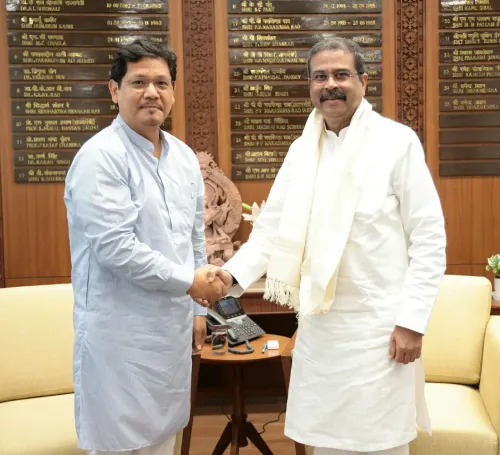
CM Sangma tagged Union Education Minister Dharmendra Pradhan , signalling active Centre-state coordination on education reform.
The initiative aligns with NEP 2020 goals and the Samagra Shiksha framework for measurable school-level improvements.
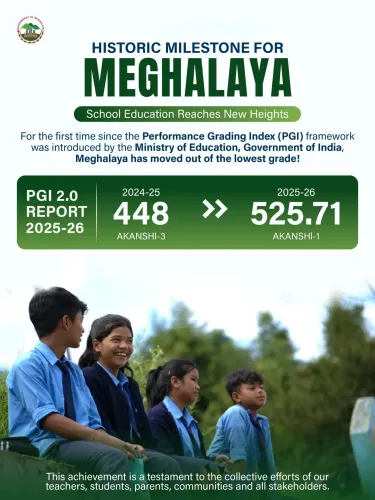
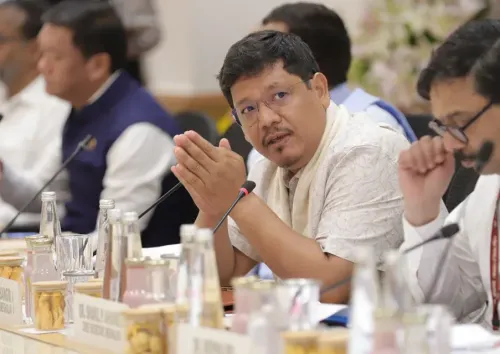
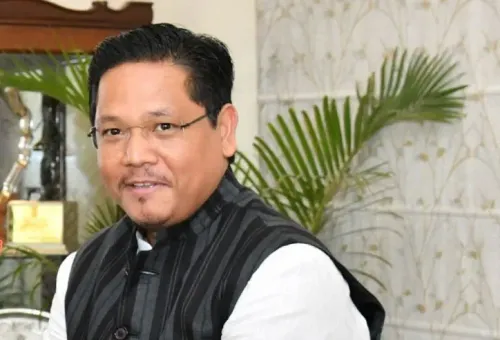
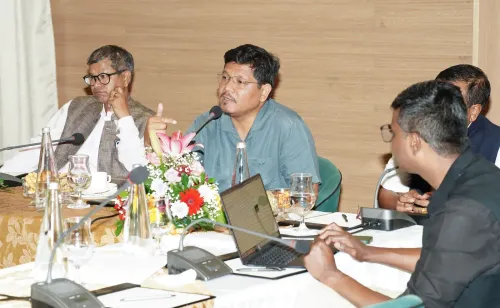
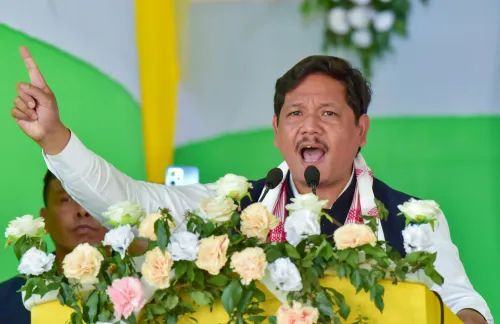
Meghalaya Chief Minister Conrad Sangma on Tuesday, June 23, 2026, chaired the state's second review meeting focused on improving its Performance Grading Index (PGI) score, signalling a sustained push to strengthen school education outcomes across the northeastern state. The meeting assessed progress on key action points and reviewed the status of ongoing and completed upgradation works at schools and colleges.
Context
The Performance Grading Index is an annual benchmarking tool released by the Union Ministry of Education to grade states and union territories on the quality of their school education systems. First launched in 2019, the index evaluates parameters spanning infrastructure, governance, learning outcomes, and data management. A revised framework, PGI 2.0, was introduced in 2021 with more granular indicators to capture school-level realities more accurately.
Chief Minister Sangma tagged Union Education Minister Dharmendra Pradhan in the post, underscoring the state government's intent to coordinate closely with the Centre on education reform. The review meeting is the second in an ongoing series, indicating that Meghalaya has institutionalised a structured monitoring mechanism around PGI performance.
Policy Backdrop
The meeting focused on three critical areas: bridging gaps in school infrastructure and amenities, enhancing data quality, and ensuring timely and accurate reporting by schools — all of which are direct indicators within the PGI framework. Accurate and real-time data reporting has been a persistent challenge for several northeastern states, and Meghalaya's focus on this dimension reflects a broader national pattern of states working to improve their data systems.
The thrust aligns with the National Education Policy (NEP) 2020, which emphasises measurable, school-level improvements and robust data infrastructure as prerequisites for systemic reform. Central funding under the Samagra Shiksha scheme is also tied to state performance on such indicators, giving states a fiscal incentive to improve their PGI rankings.
Stakeholders and Impact
The primary beneficiaries of improved PGI performance are students and teachers across Meghalaya's government school network. Better infrastructure, from functional classrooms and toilets to digital learning tools, directly affects learning conditions on the ground. School administrators and district education officers are the key implementation actors whose reporting accuracy will determine the state's standing in the next annual index.
The review of ongoing and completed upgradation works at both schools and colleges suggests the state is tracking physical infrastructure improvements alongside data compliance — a dual-track approach that addresses both the reality on the ground and how that reality is captured and reported to the Centre.
What's Next
The immediate focus will be on finalising and executing the action points identified in Tuesday's review. The release of the next annual PGI report by the Ministry of Education will serve as the definitive scorecard for Meghalaya's efforts. Any improvement in the state's grade could unlock additional support under centrally sponsored education schemes. Sustained engagement between the state government and Union Minister Pradhan's office is likely to continue as the reporting deadline for the current assessment cycle approaches.
Point of View
Institutionalising this review cycle is as much about administrative discipline as it is about rankings. The dual focus on physical upgradation and reporting accuracy reflects an understanding that PGI performance is not just a governance optic but a lever for unlocking Samagra Shiksha resources. This pattern of periodic, publicly communicated reviews is increasingly common among states seeking to demonstrate reform momentum ahead of the next annual index release.
NationPress
21 Sept 2026
Frequently Asked Questions
What is the Performance Grading Index (PGI) in India?
The Performance Grading Index is an annual report released by the Union Ministry of Education that grades all states and union territories on the quality of their school education systems across domains including infrastructure, governance, and learning outcomes. It was first launched in 2019 and revised as PGI 2.0 in 2021.
What did Conrad Sangma's PGI review meeting discuss?
The June 23, 2026 meeting — the second in an ongoing series — focused on bridging school infrastructure and amenities gaps, enhancing data quality, ensuring timely and accurate reporting by schools, and reviewing the status of ongoing and completed upgradation works at schools and colleges in Meghalaya.
Why did Conrad Sangma tag Dharmendra Pradhan in the post?
CM Sangma tagged Union Education Minister Dharmendra Pradhan to signal active coordination between the Meghalaya state government and the Centre on improving the state's PGI performance, reflecting the Centre-state partnership required under schemes like Samagra Shiksha.
How does PGI performance affect state funding for education?
States with better PGI scores and stronger data compliance are better positioned to access and retain central funding under the Samagra Shiksha scheme, which is the primary central government programme for school education support across India.
What is Meghalaya's focus area for improving its PGI score?
Meghalaya is focusing on three key areas: closing gaps in school infrastructure and amenities, improving the quality and accuracy of school-level data, and ensuring timely reporting — all of which are direct indicators assessed under the PGI framework.