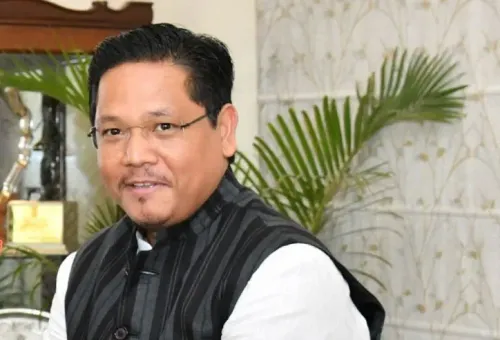
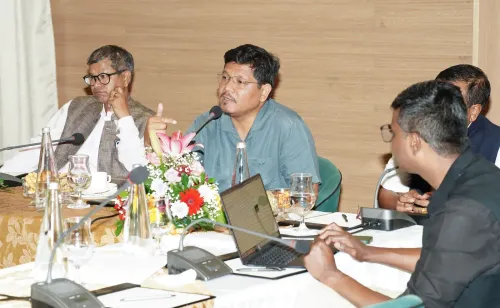
Meghalaya PGI reforms: Conrad Sangma briefs Education Minister on school consolidation plan
Synopsis
Meghalaya has nearly 14,600 schools for a population of 30 lakh — the most in the Northeast outside Assam — and has sat at the bottom of national education rankings for three straight years. Chief Minister Conrad Sangma is now betting on mass school consolidation, a unified teacher pay structure, and a new district-level fellowship to turn that around. Over 3,198 schools have already been merged.
Key Takeaways
Meghalaya CM Conrad K.
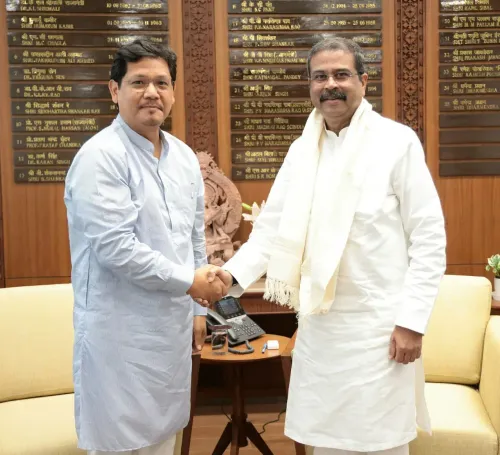
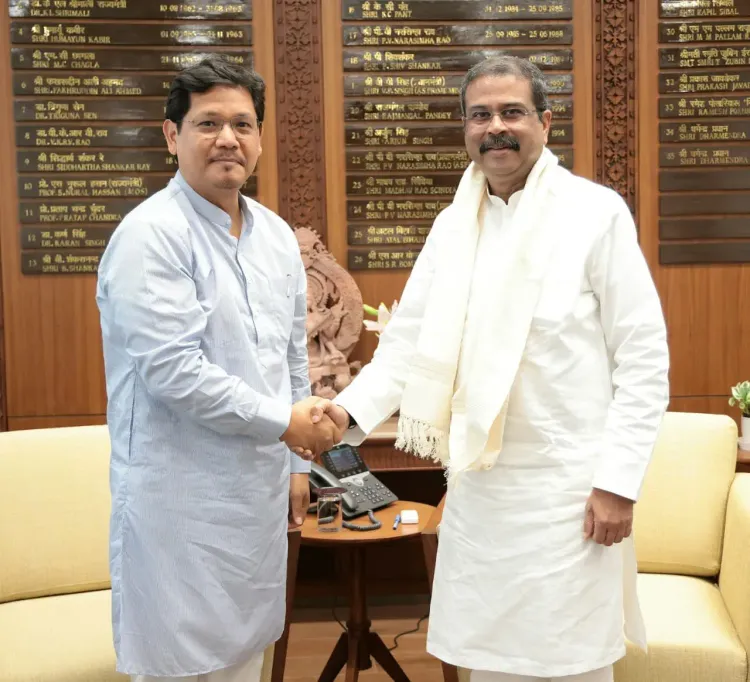
Sangma met Union Education Minister Dharmendra Pradhan in New Delhi on 25 May 2025 to present an education reform roadmap.
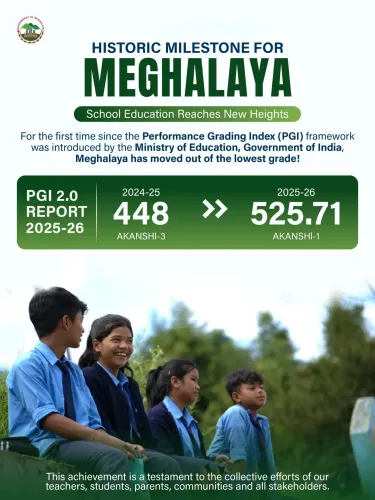
Meghalaya has ranked at the bottom of the Performance Grading Index (PGI) for the past three consecutive years .
The state has nearly 14,600 schools for a population of 30 lakh — the highest in the Northeast excluding Assam.
3,198 schools out of 14,582 have already been merged or deleted as part of a rationalisation drive.
A new CM LEAD Fellowship will deploy 12 fellows across 12 districts to monitor reform implementation.
The Meghalaya Teachers Training Academy (MTTA) has been established to oversee continuous teacher development under Samagra Shiksha.
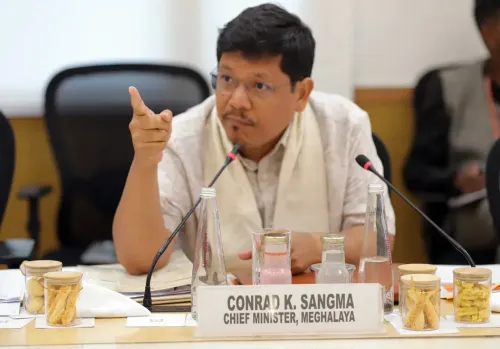
Meghalaya Chief Minister Conrad K. Sangma on Monday, 25 May presented a detailed reform roadmap to Union Education Minister Dharmendra Pradhan in New Delhi, acknowledging that Meghalaya has ranked among the lowest states on the Performance Grading Index (PGI) for three consecutive years. The meeting centred on structural interventions the state government is undertaking to reverse that trend and improve learning outcomes.
The Core Problem: Too Many Schools, Too Few Resources
Sangma pointed to a structural anomaly at the heart of Meghalaya's education challenge: despite a population of roughly 30 lakh, the state has nearly 14,600 schools — the highest among Northeastern states excluding Assam, surpassing Manipur, Mizoram, Arunachal Pradesh, and Tripura. This density has led to fragmented resource utilisation, layered grant-in-aid mechanisms, and administrative complexity that, according to Sangma, has persisted for decades.
The consequence is a system where student-teacher ratios are skewed, laboratories and digital facilities are spread too thin, and accountability is difficult to enforce at scale.
School Consolidation and Infrastructure Rationalisation
Addressing the overcrowding directly, the Chief Minister said 3,198 schools out of 14,582 have already been merged or deleted as part of a rationalisation drive. The consolidation is aimed at concentrating infrastructure — including laboratories and digital learning tools — and improving student-teacher ratios at the schools that remain.
The state is simultaneously streamlining multiple grant-in-aid systems to reduce administrative burden and redirect focus toward academic outcomes.
Teacher Reforms and the New Pay Structure
A unified pay structure has been introduced, including structured pay for Samagra Shiksha Abhiyan (SSA) teachers, with the stated aim of ensuring parity, improving teacher morale, and strengthening accountability. Sangma also highlighted DIKSHA-enabled training modules and self-paced learning programmes as tools to equip teachers with modern pedagogical methods.
To institutionalise teacher development, the state has announced the establishment of the Meghalaya Teachers Training Academy (MTTA), which will oversee teacher education under Samagra Shiksha and enhance continuous professional development hours.
Curriculum and Pedagogical Changes
Among the curricular reforms outlined were the implementation of the National Education Policy (NEP)'s three-language formula, compulsory teaching of Khasi and Garo, play-based learning at the foundational stage, contextualised textbooks, bag-less days, and the removal of summative assessments up to Class 2. These changes reflect a broader shift toward experiential and outcome-based learning in the state's schools.
CM LEAD Fellowship and the Road Ahead
Sangma briefed Pradhan on the newly launched CM LEAD Fellowship, under which 12 fellows will be deployed across the state's 12 districts to strengthen planning, coordination, and monitoring of education reforms on the ground.
'With a clear roadmap and strong political will, Meghalaya is poised to overcome its challenges and significantly improve its PGI performance in the coming years,' Sangma said, reaffirming the government's commitment to quality education for every child in the state. Whether these structural reforms translate into measurable PGI gains will be closely watched in the next annual assessment cycle.
Point of View
Not incidental — 14,600 schools for 30 lakh people is a legacy of political economy, not pedagogical design, and no amount of DIKSHA modules fixes that without hard consolidation. The 3,198 mergers are a start, but the real test is whether the state can sustain politically unpopular school closures in tribal and rural constituencies where local schools carry deep community identity. The CM LEAD Fellowship is an interesting accountability layer, but 12 fellows across 12 districts is thin coverage for a reform of this scale. The PGI has been a blunt instrument that states have learned to game; Meghalaya's leadership deserves credit for publicly admitting the rankings, but the Centre should insist on independent learning-outcome audits rather than taking PGI improvement as the sole success metric.
NationPress
10 Oct 2026
Frequently Asked Questions
Why has Meghalaya ranked at the bottom of the Performance Grading Index?
Meghalaya has ranked among the lowest states on the PGI for three consecutive years, according to Chief Minister Conrad Sangma. The state's unusually high number of schools — nearly 14,600 for a population of 30 lakh — has led to fragmented resources, poor student-teacher ratios, and administrative complexity that have collectively dragged down learning outcomes.
What is the CM LEAD Fellowship announced by Conrad Sangma?
The CM LEAD Fellowship is a newly launched initiative under which 12 fellows will be deployed across Meghalaya's 12 districts to strengthen planning, coordination, and monitoring of education reforms. It is designed to provide on-the-ground oversight of the state's PGI improvement roadmap.
How many schools has Meghalaya merged or closed so far?
According to Sangma, 3,198 schools out of 14,582 have already been merged or deleted as part of the state's school rationalisation drive. The consolidation aims to improve student-teacher ratios and concentrate infrastructure such as laboratories and digital facilities.
What is the Meghalaya Teachers Training Academy?
The Meghalaya Teachers Training Academy (MTTA) is a newly established body that will oversee teacher education under Samagra Shiksha and enhance continuous professional development hours for teachers across the state. It is part of the broader push to improve pedagogical quality alongside structural reforms.
What curriculum changes is Meghalaya introducing under NEP?
Meghalaya is implementing the National Education Policy's three-language formula, making Khasi and Garo compulsory, introducing play-based learning and contextualised textbooks at the foundational stage, observing bag-less days, and removing summative assessments up to Class 2 — all aimed at shifting toward experiential, outcome-based learning.