CM Conrad Sangma Joins Students for Miyawaki Plantation Drive
Synopsis
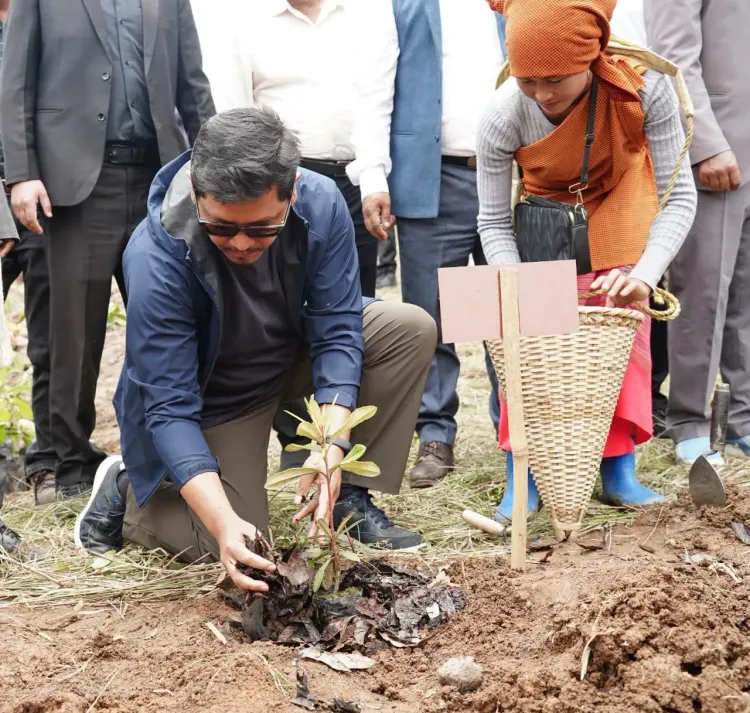
Meghalaya Chief Minister Conrad Sangma joined students at Mawrah village on World Environment Day, June 5, 2026, to plant Miyawaki tree saplings. The drive underscores the state's push for native-species restoration, water security, and biodiversity conservation aligned with India's Green India Mission and international land-restoration commitments.
Key Takeaways
CM Conrad Sangma participated in a Miyawaki sapling plantation at Mawrah village on World Environment Day, June 5, 2026 .
The event involved students, reinforcing school-linked community conservation as a state strategy.
The Miyawaki method uses dense native-species planting to rapidly restore forest canopy and biodiversity.
Indian states have been piloting Miyawaki plantations since 2019 under state climate action plans.
The initiative aligns with India's Green India Mission and the UN Decade on Ecosystem Restoration (2021–2030) .
Meghalaya's Northeast setting places it within the Indo-Burma biodiversity hotspot , making local afforestation efforts especially significant.
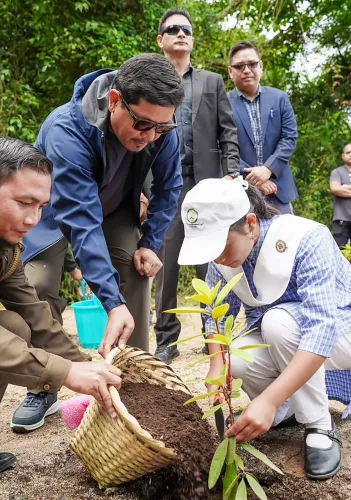
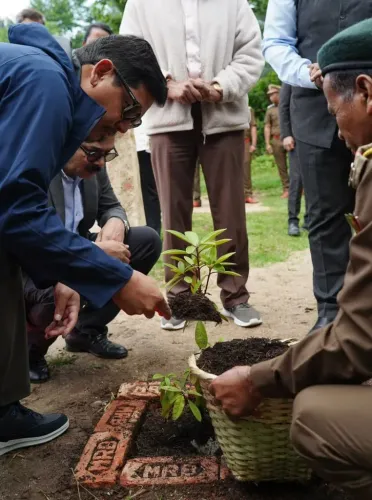
Meghalaya Chief Minister Conrad Sangma joined students at Mawrah village on Friday, June 5, 2026 — observed globally as World Environment Day — for a Miyawaki tree sapling plantation drive, reaffirming the state government's commitment to environmental restoration and sustainable development.
Context
Posting on X, CM Sangma said the initiative was aimed at 'reaffirming our commitment to environmental restoration and a greener, more sustainable future,' adding that 'small steps towards conservation today will help secure water, biodiversity, and livelihoods for generations to come.' The event at Mawrah village brought together students and community members in a hands-on afforestation activity timed to coincide with World Environment Day.
The Miyawaki method, developed by Japanese botanist Akira Miyawaki, involves planting native species in dense clusters to accelerate canopy formation. Indian states began piloting the technique from 2019 onward as part of urban and degraded-land restoration efforts under state climate action plans.
Policy Backdrop
Meghalaya, like other Northeast Indian states, has integrated community and school-based afforestation into its climate-resilient development strategy. The region faces acute pressures from deforestation, erratic rainfall, and biodiversity loss — challenges that directly threaten the water security and livelihoods of rural communities.
Miyawaki plantations align with India's Green India Mission, one of the eight missions under the National Action Plan on Climate Change, which targets the restoration of 10 million hectares of degraded forest land. The method's emphasis on native species also supports India's international land-restoration pledges under the UN Decade on Ecosystem Restoration (2021–2030).
CM Sangma, who also serves as national president of the National People's Party (NPP), has positioned environmental stewardship as a pillar of the party's governance agenda in the state since the NPP-led coalition came to power.
Stakeholders and Impact
Students participating in the drive gain direct exposure to conservation practices, embedding environmental awareness at a formative stage. Rural communities in and around Mawrah village stand to benefit from improved local water retention, microclimate regulation, and biodiversity corridors that dense native-species forests can create over time.
Northeast India's forests are among the most biodiverse in the country, forming part of the Indo-Burma biodiversity hotspot. Grassroots plantation drives at the village level are increasingly seen as a cost-effective complement to large-scale government afforestation programmes, particularly in hilly, difficult-to-access terrain.
What's Next
Attention will now turn to whether Meghalaya scales such student-linked Miyawaki drives across other blocks and district headquarters, and whether the next state annual plan carries dedicated budget lines for native-species restoration. The timing of the event on World Environment Day suggests a broader public-mobilisation intent, potentially signalling a statewide campaign in the months ahead.
Point of View
A message with resonance in a state where forests are both livelihood and identity. Tying students to the exercise extends the political dividend by embedding environmental citizenship in the next generation. For Northeast India's governance discourse, such symbolic acts carry weight when backed by budget allocations; the real test will be whether Meghalaya follows through with dedicated funding in its next annual plan. Regionally, this fits a broader pattern of Northeast chief ministers using visible conservation gestures to signal alignment with national climate commitments while asserting local agency over ecological policy.
NationPress
21 Oct 2026
Frequently Asked Questions
What is the Miyawaki plantation method?
The Miyawaki method involves planting multiple native tree species in dense clusters, enabling rapid canopy formation and biodiversity recovery. Developed by Japanese botanist Akira Miyawaki, it is widely used in India for restoring degraded and urban land.
Why did CM Conrad Sangma join the plantation drive?
CM Sangma joined the Miyawaki sapling plantation at Mawrah village on World Environment Day, June 5, 2026, to reaffirm Meghalaya's commitment to environmental restoration, water security, and sustainable livelihoods.
Where is Mawrah village located?
Mawrah village is located in Meghalaya, the northeastern Indian state governed by CM Conrad Sangma's NPP-led coalition.
How does the Miyawaki drive connect to India's national climate goals?
Miyawaki plantations support India's Green India Mission, which targets restoration of 10 million hectares of degraded forest, and align with India's pledges under the UN Decade on Ecosystem Restoration running from 2021 to 2030.
What role do students play in Meghalaya's afforestation efforts?
Students are involved as active participants in community plantation drives, gaining conservation awareness while contributing to local biodiversity and water-security goals — a model Northeast states have increasingly adopted in their climate strategies.