Kerala CM Satheesan at Southern Zonal Council: Centre must ease financial burden
Synopsis
At a high-level southern regional meeting chaired by Home Minister Amit Shah, Kerala CM Satheesan revealed a stark fiscal imbalance: the state spent ₹1,493 crore under Ayushman Bharat but received only ₹151 crore back from the Centre — a 90% shortfall that crystallises Kerala's broader argument that cooperative federalism is falling short of its promise.
Key Takeaways
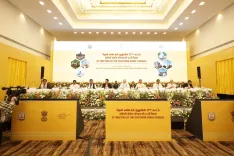
Satheesan raised multiple state grievances at the 31st Southern Zonal Council meeting in Chennai on 20 August , chaired by Home Minister Amit Shah .
Kerala spent ₹1,493 crore under Ayushman Bharat last policy year but received only ₹151 crore from the National Health Authority — roughly 90% borne by the state.
KSRTC paid over ₹2.16 crore in toll charges in June alone ; Satheesan demanded full or concessional toll exemption for state transport undertakings.
Nearly 63% of Kerala's 586 km coastline is actively eroding, displacing thousands of fishing families; the state urged Centre to fund coastal protection under disaster mitigation funds.
Kerala has operationalised 54 of 56 Fast Track Special Courts, including 14 e-POCSO courts , with investigation-timeline compliance above 78% .
Satheesan proposed a dedicated Inter-State Police Nodal Officer in each southern state for coordinated action on narcotics, organised crime, and cyber threats.
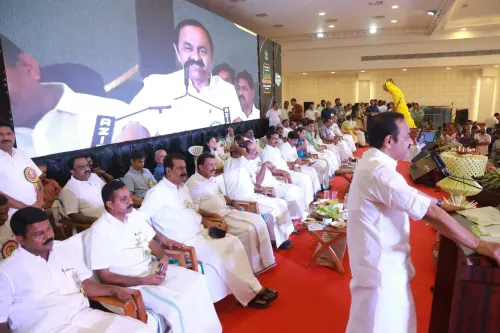
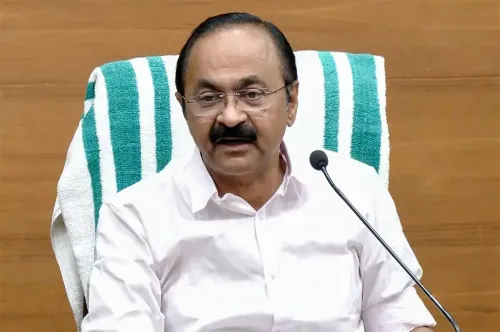
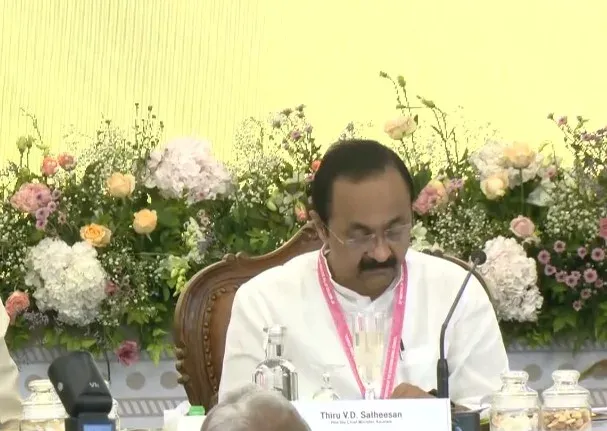
Kerala Chief Minister V.D. Satheesan on Thursday, 20 August made a forceful pitch for greater federal equity at the 31st Southern Zonal Council meeting in Chennai, chaired by Union Home Minister Amit Shah. Raising a wide range of state-specific concerns — from healthcare cost-sharing and toll charges to coastal erosion, rail links, and offshore mining — Satheesan argued that Kerala could not continue absorbing a disproportionate share of centrally mandated expenditures.
Ayushman Bharat: Kerala's Steepest Grievance
The sharpest criticism from the Chief Minister was directed at the Ayushman Bharat health insurance scheme. Satheesan stated that Kerala had spent approximately ₹1,493 crore under the scheme during the last policy year, yet received only about ₹151 crore in assistance from the National Health Authority — leaving the state to shoulder nearly 90 per cent of the total expenditure.
He demanded state-specific premium structures in place of a uniform national rate, alignment of eligibility criteria with the National Food Security Act database, and a revision of the Central share based on actual expenditure incurred on centrally-sponsored beneficiaries.
Toll Relief, Coastal Erosion, and Rail Connectivity
Satheesan also sought financial relief for the Kerala State Road Transport Corporation (KSRTC), noting that the public transporter paid more than ₹2.16 crore in toll charges in June alone, despite serving remote and underserved communities. He called for either a complete toll exemption for state transport undertakings or substantially concessional rates.
Coastal erosion was flagged as one of Kerala's gravest climate vulnerabilities. With a coastline of approximately 586 km and nearly 63 per cent of it classified as actively eroding, the Chief Minister said thousands of fishing families faced recurring loss of homes and livelihoods. He urged the Centre to permit coastal protection and rehabilitation of erosion-displaced families under disaster response and mitigation funds.
On rail connectivity, Satheesan sought renewed momentum for the Thalassery–Mysore and Nilambur–Nanjangud railway lines, saying Kerala had completed preliminary work on its side and required the cooperation of Karnataka and the Railway Ministry to finalise alignment and the Detailed Project Report.
Forest Corridors, Offshore Mining, and Law Enforcement
Opposing blanket night-traffic bans through forest stretches connecting Kerala with Karnataka and Tamil Nadu, Satheesan called instead for scientifically determined least-sensitive time windows and regulated convoy movement — arguing that wildlife protection and public mobility need not be mutually exclusive.
On offshore sand mining, the Chief Minister urged that mineral blocks off the Kerala coast not be auctioned until rigorous scientific assessment and a robust standard operating procedure were in place, even as the state expressed willingness to cooperate in auctioning bauxite, beach sand, and critical mineral blocks onshore.
Satheesan reported that Kerala had operationalised 54 of 56 sanctioned Fast Track Special Courts — including 14 e-POCSO courts — and that compliance with prescribed investigation timelines had risen to more than 78 per cent. He sought assured and continued funding for the scheme.
Call for Southern Solidarity and Inter-State Policing
Proposing stronger inter-state coordination on narcotics trafficking, organised crime, illegal migration, and cyber threats, Satheesan suggested that every southern state designate a senior police officer as an Inter-State Police Nodal Officer for real-time intelligence sharing, joint operations, and coordinated border patrolling.
Framing the Southern Zonal Council as a platform for cooperative federalism, the Chief Minister said the southern states should stand together on matters affecting their people while working with the Centre toward mutually beneficial solutions. With the 31st Council meeting serving as the backdrop, Kerala's demands for financial fairness and greater state autonomy were placed squarely at the top of the regional agenda.
Point of View
493 crore spent, ₹151 crore reimbursed — are not rhetorical; they reflect a structural design flaw that disproportionately penalises states with higher healthcare utilisation. Kerala's relatively advanced public health infrastructure means it draws more from schemes like Ayushman Bharat, yet the uniform premium model does not account for this. The broader pattern — southern states contributing more in taxes, receiving less in devolution, and absorbing more in scheme costs — is a tension that the Zonal Council format, by design, cannot resolve. That Satheesan chose this forum to make the case on record suggests Thiruvananthapuram is building a dossier, not just venting.
NationPress
20 Aug 2026
Frequently Asked Questions
What did Kerala CM Satheesan demand at the Southern Zonal Council meeting?
Kerala Chief Minister V.D. Satheesan raised demands covering Ayushman Bharat cost-sharing reform, toll exemption for KSRTC, coastal erosion funding, progress on two railway lines, regulated forest-corridor traffic, a moratorium on offshore mineral auctions, and sustained funding for Fast Track Special Courts. The meeting was held in Chennai on 20 August and chaired by Home Minister Amit Shah.
What is Kerala's grievance with the Ayushman Bharat scheme?
Kerala spent approximately ₹1,493 crore under Ayushman Bharat in the last policy year but received only about ₹151 crore from the National Health Authority — meaning the state bore nearly 90% of the expenditure. Satheesan demanded state-specific premiums, eligibility alignment with the National Food Security Act database, and reimbursement based on actual expenditure on centrally-sponsored beneficiaries.
Why is coastal erosion a major issue for Kerala?
About 63% of Kerala's roughly 586 km coastline is classified as actively eroding, threatening the homes and livelihoods of thousands of fishing families. Satheesan urged the Centre to allow coastal protection works and rehabilitation of displaced families to be funded under disaster response and mitigation funds.
Which railway projects did Kerala raise at the Southern Zonal Council?
Kerala sought renewed momentum for the Thalassery–Mysore and Nilambur–Nanjangud railway lines. Satheesan said the state had completed preliminary work on its side and called for cooperation from Karnataka and the Railway Ministry to finalise alignment and the Detailed Project Report.
What inter-state policing proposal did Kerala put forward?
CM Satheesan proposed that every southern state designate a senior police officer as an Inter-State Police Nodal Officer to enable real-time intelligence sharing, joint operations, and coordinated border patrolling — aimed at tackling narcotics trafficking, organised crime, illegal migration, and cyber threats.