CM Sawant Commends Goa Police Cyber Fraud Bust Across 11 States
Synopsis
Goa Police dismantled an inter-state cyber fraud network spanning 11 states, arresting key accused and exposing 313 mule bank accounts tied to fraud worth over ₹2.5 crore. Chief Minister Pramod Sawant commended the operation and reaffirmed zero tolerance for cyber criminals.
Key Takeaways
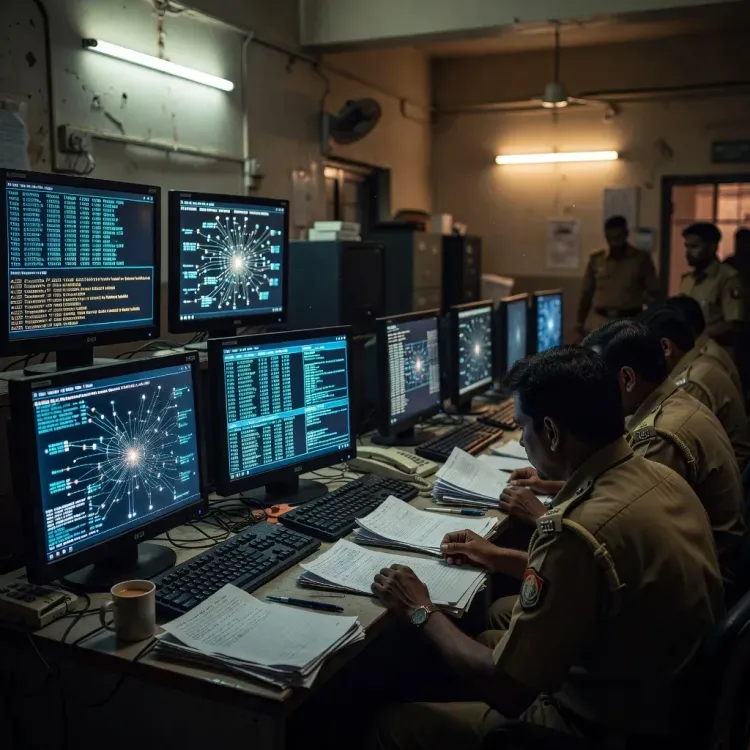
Goa Police conducted an intelligence-led operation dismantling a cyber fraud network across 11 states .
313 mule bank accounts were identified, linked to fraud worth over ₹2.5 crore .
Key accused were arrested as part of the inter-state crackdown.
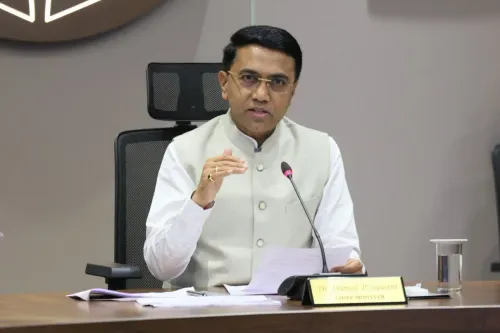
CM Pramod Sawant praised the Goa Police team's professionalism and reaffirmed zero tolerance for cyber criminals.
The operation aligns with the national I4C framework established by the Ministry of Home Affairs in 2018 for inter-state cyber crime coordination.
An inter-state cyber fraud ring spanning 11 states has been dismantled by Goa Police in what Goa Chief Minister Pramod Sawant is calling a landmark intelligence-led operation — one that exposed 313 mule bank accounts linked to fraud worth over ₹2.5 crore.
How the operation unfolded
The Goa Police cracked open an organised cyber fraud network that had spread its roots across more than a dozen states, arresting key accused and tracing a web of mule bank accounts used to launder stolen money. Mule accounts — legitimate bank accounts misused by fraudsters to move illicit funds — are a signature tool of organised digital crime syndicates, making their exposure particularly significant.
CM Sawant praised the team's 'professionalism and dedication,' stating that the government maintains 'zero tolerance for cyber criminals' and remains committed to building a 'safe, secure, and cyber-resilient Goa.'
Goa Police and the national cyber crime grid
The operation fits squarely into a national pattern. The Ministry of Home Affairs established the Indian Cyber Crime Coordination Centre (I4C) in 2018 precisely to enable inter-state coordination against organised cyber offences — the kind of cross-border network Goa Police has now cracked. State police forces across India have been building out dedicated cyber cells, and intelligence-sharing frameworks under the IT Act have made multi-state arrests increasingly feasible.
Goa, despite its relatively small size, has seen its police force emerge as an active participant in these coordinated takedowns — a signal that smaller states are no longer passive bystanders in the fight against digital financial crime.
What 313 mule accounts reveal about organised fraud
The sheer number — 313 mule bank accounts — tells a story beyond a single bust. Organised cyber fraud syndicates typically recruit or coerce ordinary account holders to receive and forward stolen funds, creating layered transaction chains that are deliberately hard to trace. Exposing this many accounts in a single operation suggests either a well-coordinated network or a centralised handler — and gives investigators a map for follow-up action both within Goa and across the states involved.
For victims of digital financial fraud, whose numbers have grown sharply across India in recent years, operations like this represent one of the few concrete mechanisms for accountability in a crime category that remains chronically under-prosecuted.
The next test is whether the intelligence gathered from 313 accounts and a network spanning 11 states translates into sustained prosecutions — because dismantling a network is only half the job; convicting the architects is what actually deters the next one.
Point of View
Suggesting deliberate alignment with the BJP-led federal government's digital security narrative. For a small state, a multi-state bust of this scale is a reputational asset that Sawant will likely leverage ahead of state assembly sessions to demonstrate administrative effectiveness. The real policy test, however, is whether Goa's cyber cell receives sustained investment to convert intelligence wins into a durable prosecution record.
NationPress
3 Aug 2026
Frequently Asked Questions
What did Goa Police uncover in the cyber fraud operation?
Goa Police dismantled an inter-state cyber fraud network spanning 11 states, arrested key accused, and exposed 313 mule bank accounts linked to fraud worth over ₹2.5 crore.
What is a mule bank account in cyber fraud?
A mule bank account is a legitimate bank account that fraudsters misuse — often by recruiting or coercing account holders — to receive and transfer stolen money, making it harder for investigators to trace the original perpetrators.
What did Goa CM Pramod Sawant say about the operation?
CM Pramod Sawant commended the Goa Police for their professionalism and dedication, and reaffirmed that his government has zero tolerance for cyber criminals and is committed to making Goa cyber-resilient.
What is the I4C and how does it help states fight cyber crime?
The Indian Cyber Crime Coordination Centre (I4C) was set up by the Ministry of Home Affairs in 2018 to improve coordination among state police forces against organised, inter-state cyber offences — exactly the kind of network Goa Police has now busted.
Is organised cyber fraud increasing in Indian states?
Yes. Indian states have reported rising cases of organised cyber fraud involving mule bank accounts and inter-state networks, prompting police forces to conduct coordinated intelligence-led operations under existing IT Act frameworks.