CM Sawant Cuts Education Loan Rate to 4% for EWS, OBC, PwD Students
Synopsis
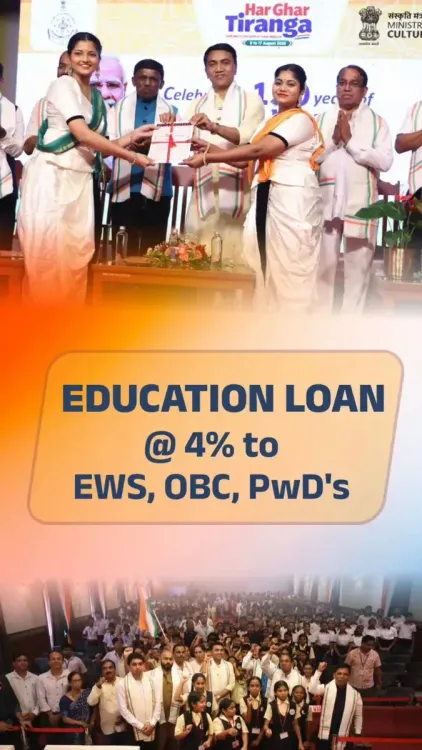
Goa Chief Minister Pramod Sawant has announced education loans at a concessional 4% interest rate for students from EWS, OBC, and PwD categories, significantly undercutting standard market rates and expanding access to higher education for the state's most financially vulnerable student communities.
Key Takeaways
Goa CM Pramod Sawant announced education loans at a 4% interest rate for EWS, OBC, and PwD students.
The rate is roughly half or less of the standard education loan rates of 8–12% offered by most lenders.
The scheme targets three constitutionally recognised categories: Economically Weaker Sections, Other Backward Classes, and Persons with Disabilities .
The announcement builds on the national Central Sector Interest Subsidy Scheme (CSIS) framework launched in 2009 .
Specific details — partnering banks, maximum loan amounts, and application timelines — are pending official government notification.
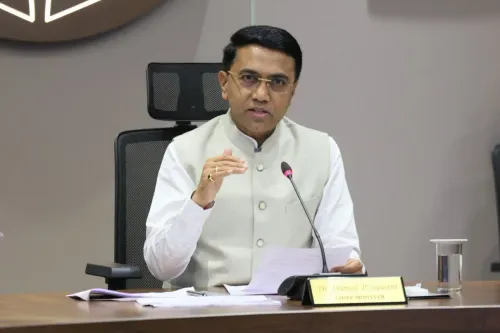
A sharply reduced interest rate of 4% on education loans — that is the relief Goa Chief Minister Pramod Sawant has announced for students from Economically Weaker Sections (EWS), Persons with Disabilities (PwD), and Other Backward Classes (OBC), a move aimed squarely at making higher education a real option rather than a financial gamble.
Who benefits and what the 4% rate means
Education loans in India typically carry interest rates ranging from 8% to 12% depending on the lender and the borrower's profile. Pegging the rate at 4% for these three constitutionally recognised categories — EWS, OBC, and PwD — effectively cuts the cost of borrowing in half or more for students who are statistically the least likely to have family assets to fall back on. The announcement targets the precise demographic where loan aversion is highest and dropout risk is steepest.
Where this fits in India's education loan subsidy landscape
The move builds on a well-established national precedent. The Central Sector Interest Subsidy Scheme (CSIS), launched in 2009, already provides interest relief on education loans during the moratorium period for EWS students under central government programmes. State-level interventions like this one layer additional relief on top of that framework, often with broader eligibility or deeper rate cuts. Goa's BJP-led government has periodically announced targeted education and social welfare measures, and this announcement continues that pattern — though specific details on partnering banks, loan limits, and application timelines are yet to be formally notified.
What officials and students will be watching next
The announcement raises immediate practical questions: which banks will participate, what is the ceiling on the loan amount eligible for the concessional rate, and when does the scheme open for applications. Official Goa government notifications spelling out eligibility criteria and implementation mechanics will be the next critical step — and for thousands of students planning admissions in the current academic cycle, the timing of those details matters enormously.
For a state that punches above its weight in per-capita income but still carries pockets of deep educational inequality, a subsidised loan at 4% could be the difference between a degree and a door that never opens — and the government knows it.
Point of View
It also carries electoral logic: EWS, OBC, and PwD students represent a broad coalition of voters whose loyalty is contested. The real test will be implementation fidelity — whether partnering banks actually disburse at 4% without hidden conditions, and whether the scheme reaches first-generation college aspirants in Goa's interior talukas rather than only urban applicants already navigating the banking system.
NationPress
11 Aug 2026
Frequently Asked Questions
What is the new education loan interest rate announced by Goa CM Pramod Sawant?
Goa Chief Minister Pramod Sawant has announced a concessional interest rate of 4% on education loans for students from EWS, OBC, and PwD categories.
Who is eligible for the 4% education loan in Goa?
Students belonging to Economically Weaker Sections (EWS), Other Backward Classes (OBC), and Persons with Disabilities (PwD) are the target beneficiaries of the scheme as announced.
How does Goa's 4% education loan compare to normal bank rates?
Standard education loan interest rates in India typically range from 8% to 12%, making the announced 4% rate roughly half the usual cost of borrowing for eligible students.
Is there a central government scheme similar to Goa's education loan subsidy?
Yes. The Central Sector Interest Subsidy Scheme (CSIS), launched in 2009, provides interest subsidy on education loans during the moratorium period for EWS students; Goa's state-level scheme adds another layer of relief.
When will the Goa education loan scheme at 4% be available to apply for?
The exact application timeline, partnering banks, and loan limits have not yet been officially notified; students should watch for formal Goa government announcements on eligibility and implementation details.