CM Sawant Directs Relief Push After Vasco Sunday Market Fire
Synopsis
Goa Chief Minister Pramod Sawant has directed the Chief Secretary and senior officials to Vasco after a fire gutted the Sunday Market, committing financial compensation and a comprehensive damage assessment to affected traders and residents.
Key Takeaways
A fire broke out at the Sunday Market in Vasco , South Goa, prompting an immediate government response on October 29, 2026 .
Chief Minister Pramod Sawant has directed all concerned departments to conduct a comprehensive damage assessment.
The Chief Secretary of Goa and senior administration officials visited the site to evaluate damage on the ground.
The government has committed to 'appropriate financial compensation' for affected traders and their families.
Sawant appealed to traders, residents, and the public to cooperate with authorities and follow safety instructions.
The administration is closely monitoring the situation with safety and welfare of affected persons as the stated highest priority.
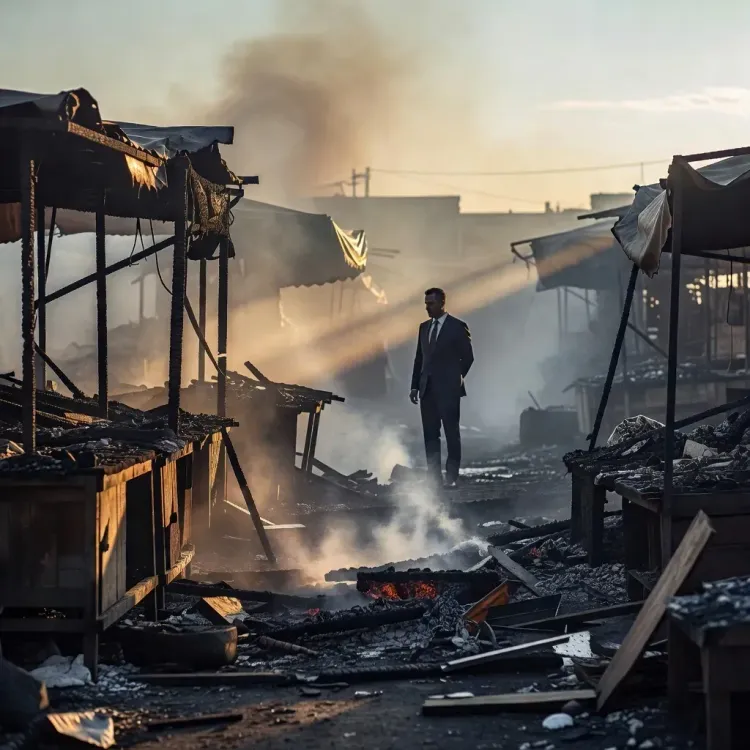
A fire tore through the Sunday Market in Vasco, South Goa, prompting Goa Chief Minister Pramod Sawant to activate the state machinery on Thursday, October 29, 2026 — directing senior officials to the site and committing financial compensation to affected traders and their families.
Chief Secretary on the ground as damage assessment begins
Within hours of the blaze, the Chief Secretary of Goa, accompanied by senior administration officials, was dispatched to Vasco to assess conditions firsthand. The visit is aimed at evaluating the scale of destruction and working out 'modalities for providing appropriate financial compensation' — the CM's own words — to those who lost their livelihoods.
Sawant simultaneously directed all concerned departments to conduct a 'comprehensive assessment of the damage,' signalling that relief orders will follow the field report rather than precede it — a procedurally careful move under state disaster management frameworks.
Safety appeal to traders, residents, and the public
Beyond the immediate relief push, Sawant used the statement to issue a public safety appeal, urging traders, residents, and the broader community around the affected area to cooperate with authorities and follow safety instructions being issued on the ground. The measures, he stressed, are 'being implemented strictly in the interest of public safety.'
Vasco is Goa's largest port town and a significant commercial hub in South Goa district. The Sunday Market is a weekly fixture drawing both traders and residents, making the fire's impact on local livelihoods potentially acute.
Government's commitment to affected traders
CM Sawant's statement was notably direct on the government's obligations: 'The Government stands firmly with the affected traders and their families and is committed to extending all necessary assistance and support.' That language — committing to assistance and support — puts the administration on record ahead of the formal damage report, raising public expectations for swift disbursal once assessments are complete.
Indian state governments routinely deploy this two-track response after local fire incidents: on-ground evaluation by the Chief Secretary, followed by compensation orders under state relief norms. What matters now is how quickly Goa converts the assessment into actual payouts for traders who have lost inventory, stalls, and income.
The damage report from the Chief Secretary's visit will be the next critical signal — and traders watching the administration's follow-through will judge this government not by the statement, but by the cheque.
Point of View
Signal state presence, and set relief expectations. The commitment to compensation ahead of the assessment report is a political choice as much as an administrative one, raising the bar for follow-through. For a BJP-led government in Goa, where Vasco's trading community represents a significant constituency, visible responsiveness to a local livelihood crisis carries both governance and electoral weight. The real test will be the speed and quantum of the eventual payout.
NationPress
29 Oct 2026
Frequently Asked Questions
What happened at the Sunday Market in Vasco, Goa?
A fire broke out at the Sunday Market in Vasco, South Goa, prompting Goa Chief Minister Pramod Sawant to direct a government response including a damage assessment and financial compensation for affected traders.
What action has Goa CM Pramod Sawant taken after the Vasco fire?
CM Sawant directed all concerned departments to conduct a comprehensive damage assessment, deployed the Chief Secretary and senior officials to the site, and committed financial compensation to traders and families affected by the fire.
Will traders affected by the Vasco Sunday Market fire get compensation?
CM Sawant has publicly committed to 'appropriate financial compensation' for those affected. The Chief Secretary's on-ground visit is aimed at working out the modalities for disbursal once the damage assessment is complete.
Where is Vasco and why is the Sunday Market significant?
Vasco is Goa's largest port town located in South Goa district. The Sunday Market is a weekly commercial hub drawing traders and residents, making a fire there a significant livelihood crisis for the local community.
What safety instructions has the Goa government issued after the Vasco market fire?
CM Sawant appealed to traders, residents, and the general public in the affected area to cooperate with authorities and strictly adhere to safety instructions being issued by the administration.