CM Sawant hands 120 housing allotment letters in Dabolim
Synopsis
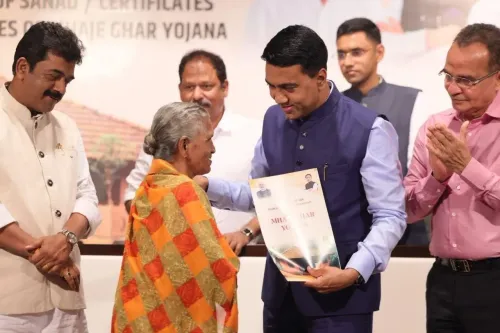
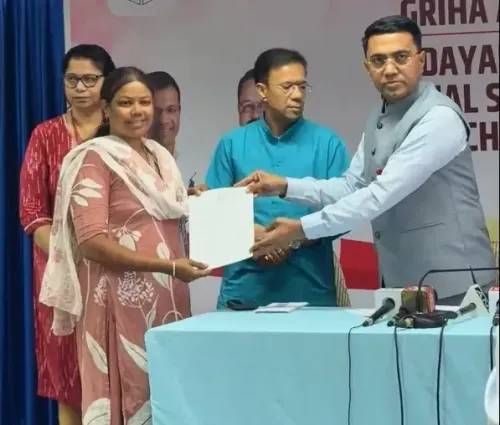
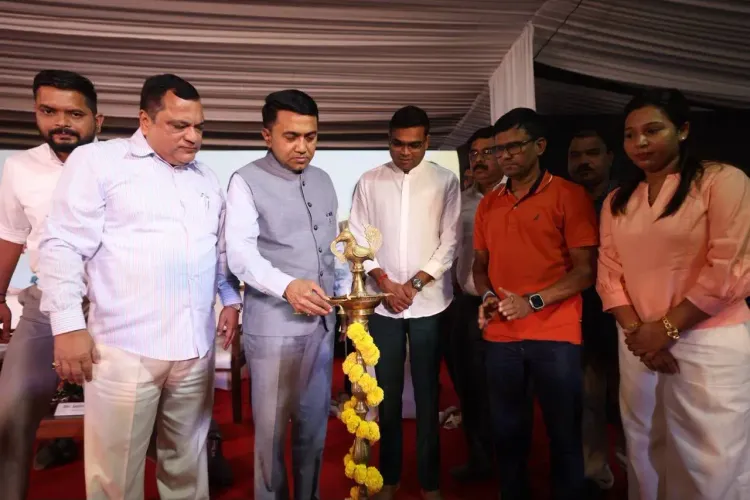
Goa Chief Minister Pramod Sawant distributed 120 Goa Housing Board allotment letters at New Vaddem, Dabolim on July 31, 2026, prioritising municipal sanitation workers from Vasco among beneficiaries who have waited generations for formal housing tenure.
Key Takeaways
120 Goa Housing Board allotment letters were distributed at New Vaddem, Dabolim on July 31, 2026 .
Municipal sanitation workers from Vasco were explicitly named among the beneficiaries.
Many recipients have lived without regularised housing for multiple generations .
The drive is part of Goa's broader pattern of incremental housing regularisation in urban and port-area localities.
Chief Minister Pramod Sawant personally presided over the distribution, framing it as a matter of dignity and security.
Further phases of Goa Housing Board allotments are anticipated, with pending claims still in the pipeline.
Decades of waiting ended Friday morning at New Vaddem, Dabolim, as Goa Chief Minister Pramod Sawant personally distributed 120 Goa Housing Board allotment letters to families who have lived without regularised homes for generations — among them, municipal sanitation workers who have cleaned Vasco's streets for years without ever holding formal tenure over a home.
Sanitation workers front and centre at New Vaddem
The event at New Vaddem was not a routine administrative handover. Sawant specifically called out Vasco's municipal sanitation workers — essential workers whose daily labour keeps one of Goa's busiest port cities functional — as among the day's beneficiaries. For many, the allotment letter represents the first piece of formal documentation their families have ever received on housing. That detail alone shifts this from a welfare statistic into something far more concrete: a legal identity tied to a home.
The Goa Housing Board, the state body responsible for developing and allotting affordable units across Goa, has periodically conducted such drives targeting families with longstanding regularisation claims. Urban and port-area localities like New Vaddem have historically concentrated multi-generational occupants — families who settled near industrial and port zones and remained in administrative limbo for decades.
What 120 letters mean in Goa's housing picture
Goa's housing regularisation challenge is not new. Successive state administrations have pursued incremental allotment drives to convert long-pending occupancy claims into formal tenure, particularly for essential-service workers in municipal and port zones. The July 31, 2026 distribution continues that pattern — but the public presence of the Chief Minister at the event, and the explicit naming of sanitation workers, signals an intent to frame housing access as a dignity issue, not merely a bureaucratic clearance.
Sawant stated that the government is 'committed to ensuring that every deserving family receives the security they deserve' — a formulation that leaves open further phases of allotment. The Goa Housing Board's pipeline of pending claims means Friday's 120 letters are unlikely to be the last word.
The next test is whether subsequent phases arrive on a defined timeline — or whether, as with many housing regularisation drives, momentum stalls once the cameras leave.
Point of View
Where land tenure disputes have festered for decades. By converting long-pending claims into formal letters, the administration generates a tangible, photographable proof point ahead of any electoral cycle. The real measure of ambition, however, will be whether the Goa Housing Board accelerates subsequent phases or reverts to the slow-drip pace that has historically left such drives incomplete.
NationPress
14 Sept 2026
Frequently Asked Questions
What happened at New Vaddem Dabolim on July 31 2026?
Goa Chief Minister Pramod Sawant distributed 120 Goa Housing Board allotment letters to deserving beneficiaries at New Vaddem, Dabolim, including municipal sanitation workers from Vasco who had waited generations for formal housing.
Who are the beneficiaries of the Goa Housing Board allotment in Dabolim?
The 120 beneficiaries include long-term housing applicants and municipal sanitation workers from Vasco who have served the city for years but lived without regularised homes.
What is the Goa Housing Board?
The Goa Housing Board is a state government body responsible for developing and allotting affordable housing units across Goa, including periodic regularisation drives for families with longstanding occupancy claims.
Why are sanitation workers highlighted in Goa's housing allotment?
Municipal sanitation workers in Vasco were specifically called out because, despite years of essential public service, many had never held formal documentation for their homes, making them a priority for housing regularisation.
Will there be more Goa Housing Board allotments after this?
Chief Minister Sawant indicated the government remains committed to ensuring every deserving family receives housing security, suggesting further phases of allotment are expected as pending claims remain in the Goa Housing Board pipeline.