CM Sawant: Goa mining revival on track, livelihoods to return
Synopsis
Goa Chief Minister Pramod Sawant declared on 30 September 2026 that sustainable mining has been revived in compliance with all legal norms, promising livelihood recovery for mining-belt communities while warning that unnamed forces are attempting to obstruct the state's progress.
Key Takeaways
CM Pramod Sawant declared on 30 September 2026 that sustainable mining has been revived in Goa under all stipulated rules and norms.
Sawant pledged that communities affected by the mining halt will 'soon regain their livelihoods.' He alleged that unnamed 'forces' are seeking to hinder Goa's progress, framing mining revival as a political battleground.
The Supreme Court of India had ordered a halt to all Goa mining leases in 2012 over illegal extraction and environmental violations.
Post-2012 regulatory reforms — including e-auctions and fresh environmental clearances — have formed the legal pathway for any restart.
Pending lease auctions, environmental impact assessments, and court compliance proceedings remain the key milestones to watch.
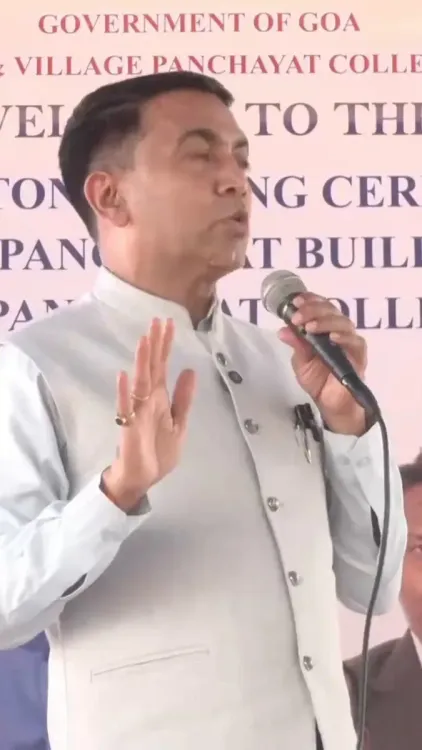
Goa's long-fractured mining economy is back in the political spotlight — and Chief Minister Pramod Sawant is putting his credibility squarely on the line. On Wednesday, 30 September 2026, the BJP leader posted a pointed message on X, asserting that sustainable mining has been revived in Goa in full compliance with rules and norms, and promising that affected communities would soon recover their livelihoods — while warning that unnamed forces are working to block the state's progress.
A sector scarred by the 2012 Supreme Court hammer
To understand why Sawant's words carry weight — and why they are contested — you have to go back to 2012. That year, the Supreme Court of India ordered a sweeping halt to mining operations across Goa after official reports documented large-scale illegal extraction and serious environmental violations. The shutdown was not a bureaucratic formality; it gutted livelihoods across the state's mining belt, leaving thousands of workers, truck operators, and dependent families without income almost overnight.
The years that followed saw successive state and central administrations attempt to rebuild the regulatory architecture — fresh environmental clearances, e-auction frameworks for leases, compliance audits — all aimed at enabling a controlled, court-sanctioned restart. Progress was slow, litigation persistent, and the human cost in rural communities quietly compounding.
Sawant's compliance claim and the political charge
The Chief Minister's post carries two distinct messages. The first is administrative: that the resumption of mining has been achieved within 'all stipulated rules and norms' — a deliberate echo of the Supreme Court's own language from its 2012 order and subsequent directions. The second is political: that 'some forces' are seeking to 'hinder Goa's progress.' Sawant does not name these forces, a rhetorical move familiar in Goa's mining politics, where opposition parties, environmental groups, and competing business interests have all, at different points, challenged the pace and terms of resumption.
For the communities in Goa's mining belt, the promise is concrete: livelihoods, Sawant says, will 'soon' return. That word — soon — will be the one they hold him to.
What the mining belt is watching now
The immediate pressure points are clear. Pending mining lease auctions, fresh environmental impact assessments, and compliance proceedings — in both the state assembly and the courts — will determine whether the Chief Minister's confidence translates into operational reality. Goa's economy has long balanced on two pillars: tourism and iron ore. When one falters, the other rarely compensates fully for the communities most exposed.
Sawant's framing — sustainable revival, rule-bound process, community focus — is also a signal to investors and to New Delhi that Goa is open for regulated extraction, not the unchecked activity that triggered the 2012 crisis in the first place.
The mining belt has heard promises before. This time, the Chief Minister is staking his political narrative on delivery — and the clock is running.
Point of View
Rather than a repeat offender. However, the vagueness around 'some forces' and the unverified scale of actual resumption leave the claim vulnerable to challenge from both environmental litigants and opposition parties. The real test will come in the courts and the lease auction rooms, not on X.
NationPress
30 Sept 2026
Frequently Asked Questions
Why was mining stopped in Goa?
The Supreme Court of India ordered a halt to all mining leases in Goa in 2012 after official reports found large-scale illegal extraction and serious environmental damage. The ban severely impacted thousands of workers and dependent communities across the state's mining belt.
Has mining actually resumed in Goa?
Chief Minister Pramod Sawant has stated that sustainable mining has been revived in Goa in compliance with all legal norms. However, the full operational scale of the resumption and the extent of livelihood restoration remain subject to ongoing lease auctions and environmental clearance processes.
Who are the 'forces' Sawant says are hindering Goa's progress?
Sawant did not name specific individuals or groups. In Goa's mining politics, opposition parties, environmental advocacy groups, and competing business interests have all, at different times, challenged the terms and pace of mining resumption.
How important is mining to Goa's economy?
Iron ore mining has historically been one of Goa's two primary economic pillars alongside tourism. The 2012 Supreme Court-ordered halt devastated rural communities in the mining belt, making resumption a major political and economic issue for successive state governments.
What happens next for Goa's mining sector?
Key milestones include the outcome of pending mining lease auctions, fresh environmental impact assessments, and compliance proceedings in both the state assembly and the courts. These will determine whether the Chief Minister's promise of livelihood recovery materialises on the ground.