Shivraj Singh Chouhan: Cabinet Approves Rabi MSP Hike for 2027-28
Synopsis
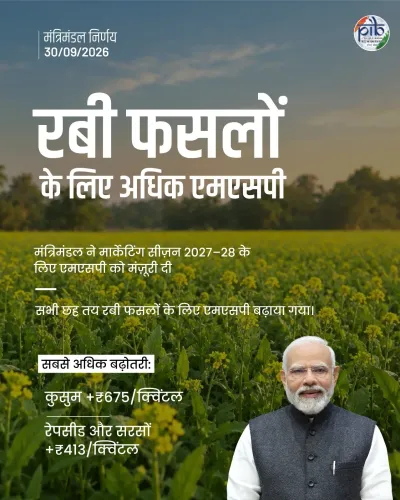
The Union Cabinet chaired by PM Narendra Modi approved higher MSPs for six rabi crops — wheat, barley, gram, lentil, mustard, and safflower — for marketing year 2027-28. Agriculture Minister Shivraj Singh Chouhan announced the decision, framing it as a festive-season commitment to farmer welfare.
Key Takeaways
Cabinet approval: The Union Cabinet, chaired by PM Narendra Modi , approved an MSP hike for rabi crops for marketing year 2027-28 .
Six crops covered: The revised MSP applies to wheat, barley, gram, lentil (masur), mustard, and safflower (kusum) .
Policy benchmark: Since 2018 , government policy mandates MSP at a minimum of 1.5 times the all-India weighted average cost of production.
Annual mechanism: MSP is fixed annually for 23 crops based on CACP recommendations to shield farmers from market price volatility.
Festive timing: The announcement was made ahead of the festive season, framed by Agriculture Minister Shivraj Singh Chouhan as a gesture of farmer welfare.
Next to watch: State-level procurement agency operations and official gazette notification of exact per-quintal MSP rates for 2027-28.
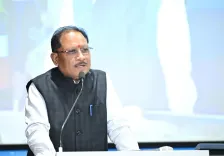
Six crops. One Cabinet decision. And a government signalling — right at the doorstep of the festive season — that the minimum floor beneath every farmer's harvest is moving up. Union Agriculture Minister Shivraj Singh Chouhan announced on Wednesday, September 30, 2026 that the Union Cabinet, chaired by Prime Minister Narendra Modi, has approved a hike in the Minimum Support Price (MSP) for rabi crops for marketing year 2027-28.
Six Crops, One Floor: What the Cabinet Cleared
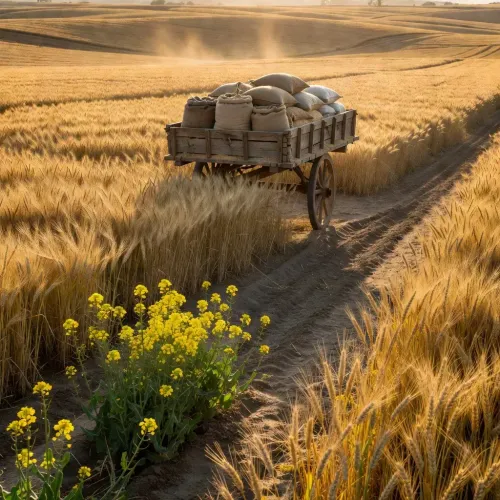
The revised MSP covers six rabi crops: wheat, barley, gram (chana), lentil (masur), mustard (sarson), and safflower (kusum). These are the principal winter-sown crops harvested across India's agricultural heartland — from the wheat belts of Punjab and Haryana to the mustard fields of Rajasthan and the gram-growing tracts of Madhya Pradesh. Chouhan, posting in Hindi, said the higher MSP will 'ensure increased income for farmers on their produce' — a direct echo of the government's long-standing commitment to make farming economically viable.
In his post, the Minister expressed gratitude to Prime Minister Modi, calling the decision 'important and dedicated to farmer welfare on the occasion of the festive season.' The timing — ahead of Navratri and Diwali — carries deliberate political and symbolic weight.
The 1.5x Cost Pledge Behind Every MSP Revision
MSP is not a new instrument. The central government sets price floors for 23 crops each year, based on recommendations from the Commission for Agricultural Costs and Prices (CACP), to protect farmers from market volatility. The floor is meant to guarantee that no farmer sells below the cost of growing. In 2018, the Cabinet formalised a benchmark: MSP must be fixed at a minimum of 1.5 times the all-India weighted average cost of production for notified crops — a commitment successive governments have cited in every subsequent revision announcement. The 2027-28 rabi revision follows that same annual rhythm.
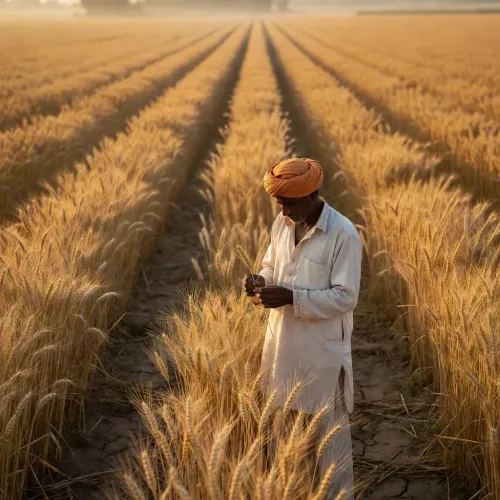
Rabi crops are sown in October-November and harvested in March-April. The MSP announcement ahead of sowing is intended to guide planting decisions — when a farmer in Madhya Pradesh or Rajasthan knows the floor price before putting seeds in the ground, the logic runs, they can plan with confidence.
Chouhan's Political Footprint on Farmer Policy
As a four-term former Chief Minister of Madhya Pradesh and now the Union Agriculture Minister, Shivraj Singh Chouhan has made farmer welfare a defining political identity. His tenure at the Centre has seen him champion schemes from crop insurance to soil health cards, and his messaging consistently frames every Cabinet decision through the lens of the 'annadata' — the provider of food — a term he used again in this post. That vocabulary is not incidental; it reflects the BJP's broader electoral calculus with rural India, where farmer income and input costs remain persistent pressure points.
The specific percentage increases and exact rupee-per-quintal rates for marketing year 2027-28 are yet to be confirmed through official government releases. What the Cabinet approval sets in motion is the formal policy signal — state procurement agencies will now align their operations accordingly as the sowing window opens.
What Follows the Approval
Cabinet approval of MSP is the starting gun, not the finish line. The real test is procurement: whether state agencies buy at or above the announced price, and whether the benefit reaches farmers who are not connected to government procurement mandis. Watch for state-level procurement operation announcements from major rabi-producing states, and for any subsequent Cabinet moves on the Kharif MSP cycle or modifications to the procurement architecture. The festive-season framing may also preview further farm-welfare announcements before the winter session of Parliament.
For now, six crops have a higher floor. The harvest is months away — but the number that matters most to millions of farmers was set today.
Point of View
Timed to influence sowing decisions and signal government intent ahead of the festive season. For the BJP, MSP revisions carry outsized electoral significance — rural distress has historically been a vulnerability, and pre-harvest announcements serve as both policy instrument and political messaging. The real measure of impact, however, lies downstream: in state procurement operations and how many farmers actually sell at or above the announced floor. Chouhan's consistent 'annadata' framing underscores the government's effort to consolidate farmer-community support, particularly in states like Madhya Pradesh, Rajasthan, and Haryana where rabi crops dominate agricultural income.
NationPress
30 Sept 2026
Frequently Asked Questions
What is MSP and why does it matter for farmers?
Minimum Support Price (MSP) is a government-guaranteed price floor for specific crops, ensuring farmers receive at least that amount per quintal regardless of market conditions. It protects against price crashes and is set annually for 23 crops based on CACP recommendations.
Which crops got an MSP hike for rabi marketing year 2027-28?
The Cabinet approved higher MSPs for six rabi crops: wheat, barley, gram (chana), lentil (masur), mustard (sarson), and safflower (kusum) for marketing year 2027-28.
What is the 1.5 times cost formula for MSP?
In 2018, the Indian government committed to fixing MSP at a minimum of 1.5 times the all-India weighted average cost of production for notified crops. This formula is cited in every subsequent annual MSP revision as the baseline benchmark.
When are rabi crops sown and harvested in India?
Rabi crops are sown in October-November and harvested around March-April. The MSP announcement ahead of the sowing season helps farmers plan their crop choices with a guaranteed price floor in mind.
What happens after the Cabinet approves MSP?
After Cabinet approval, state government agencies and the Food Corporation of India align their procurement operations to buy crops at the announced MSP. The official gazette notification confirms exact per-quintal rates, and state mandis operationalise the procurement during the harvest window.